
As a full-time outdoor writer, a guidebook author, and a person who relies on time spent in nature for my mental health, I hike a lot. I also spent seven years writing about hiking gear at the head office of one of Canada’s largest outdoor retailers.
That means that I can be pretty picky about gear. And since I already own so much gear, I’m selective about new gear since, I’m usually happy to keep using the same things that already work.
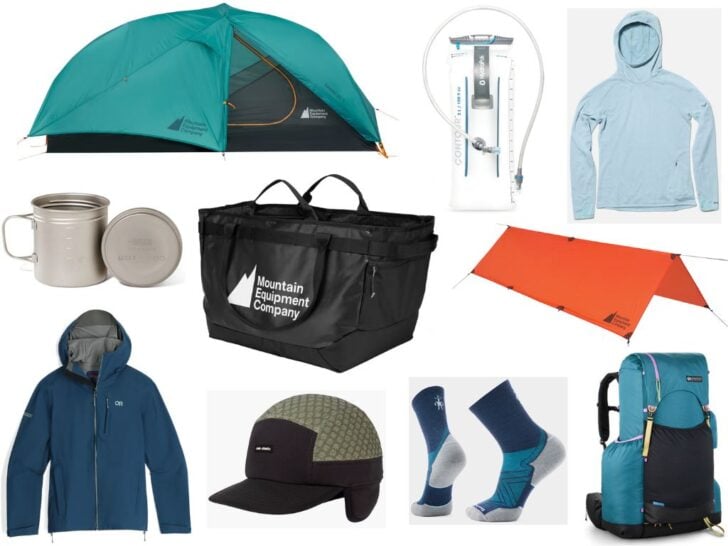
Every year, I make a list of the best new gear I tried out. The 10 items that made my list of my favourite gear of 2025 are things that I used over and over and am looking forward to using in the years to come.
Hey there: I bought most of the gear in this post with my own money, but a few of the products in this post were gifts from brands. I also received lots of other gear that didn’t make the cut, so you can be sure that I only share products that I really use and love. As well, some of the links in this post are affiliate links, which means I earn a small commission at no cost to you. Thanks for your support. -Taryn
Gossamer Gear Mariposa 60 Backpack
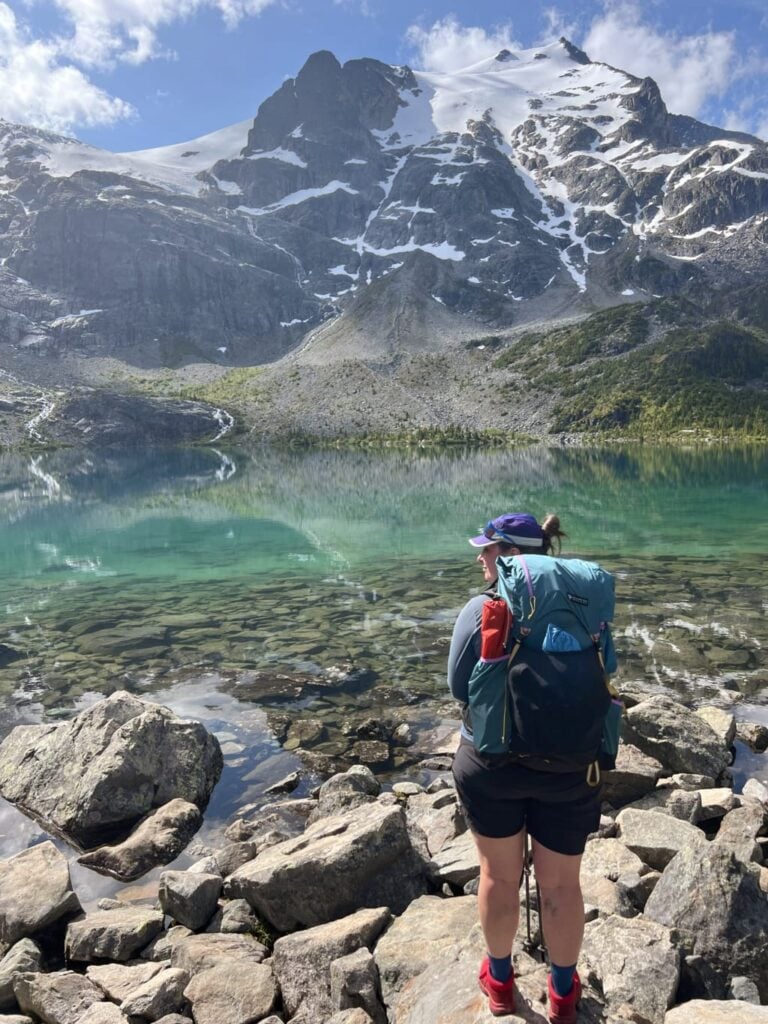
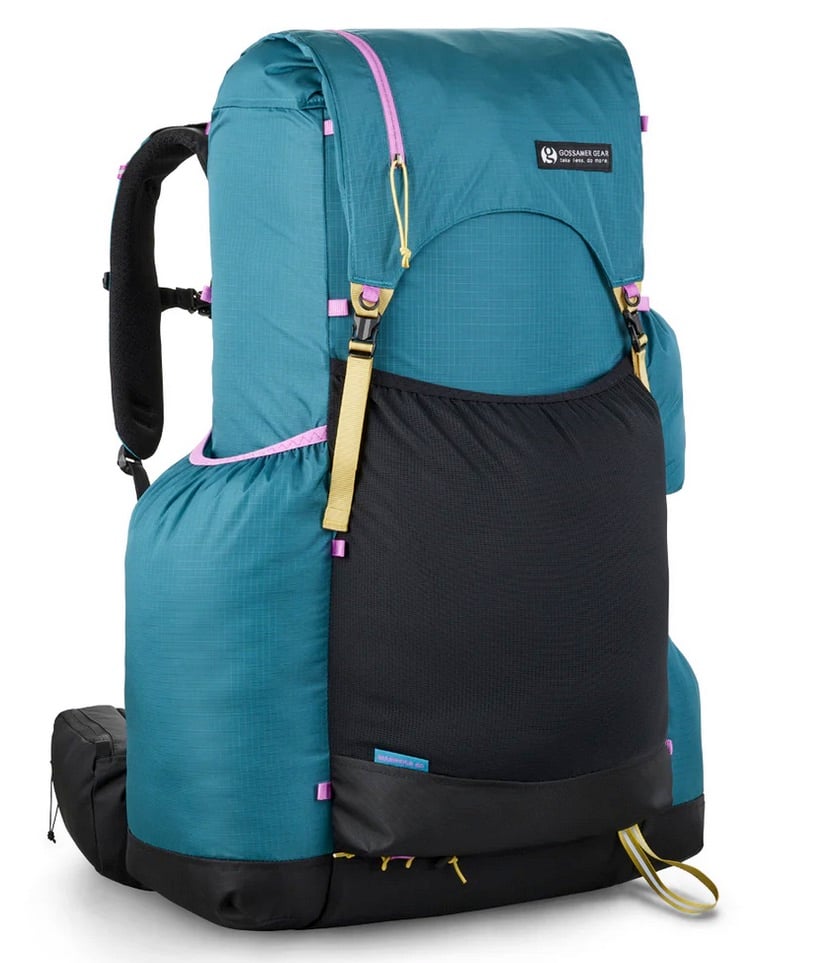
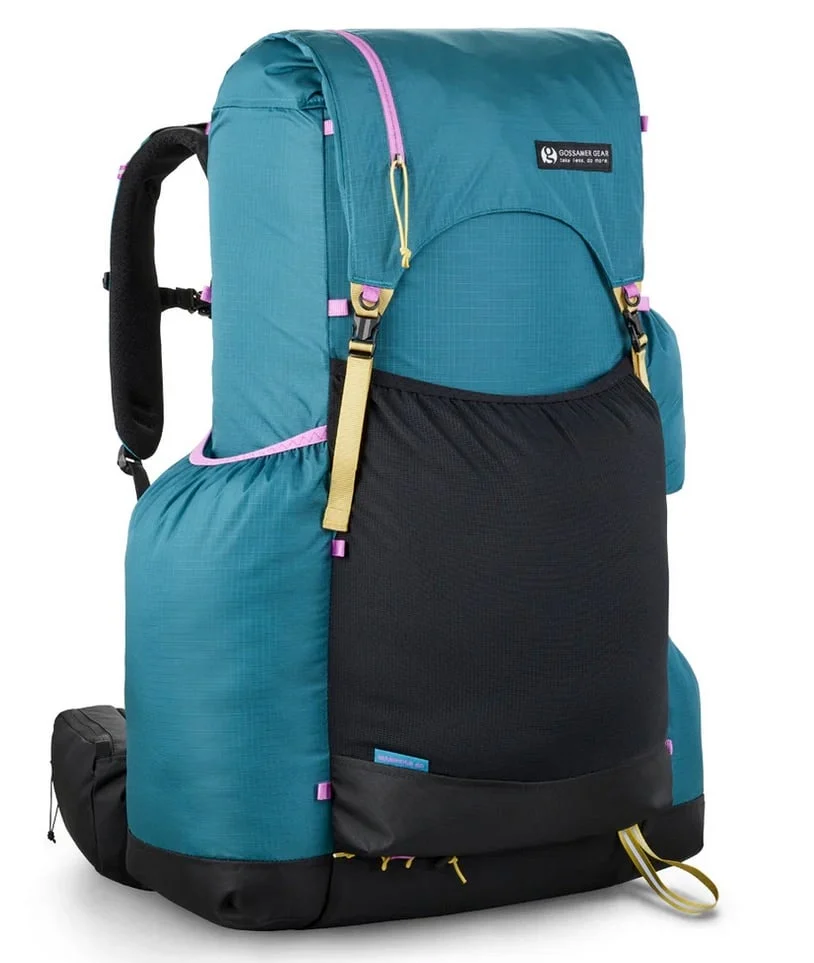
I own a lot of backpacks… but this year I added one more to the collection: the Gossamer Gear Mariposa 60. While I’m not an ultralight hiker, I have reduced my base weight a lot over the last few years. (See my tips for reducing your backpacking weight.)
That means that I can finally start using the Mariposa (an ultralight backpack) since my gear weighs less and is less bulky. It has a removable frame and belt so you can customize the suspension for the load you’re carrying.
So far, I’ve taken it on a few shorter warm-weather backpacking trips and have been impressed with how comfortable it is carrying loads up to about 25 lbs (not UL, I know, but sometimes I’m carrying insulating layers or more decadent food).
My favourite feature by far is the removable foam back panel. It’s easy to slide it out to use as a sit pad in camp or on the side of the trail. I hate parking my sweaty butt directly in the dirt so, previously, I always carried a folding Therm-a-rest Z-seat. Now I don’t need it!
However, the biggest challenge with this pack has been adjusting to the UL mentality and culture it is designed for.
This pack does carry 60L if you fill all of the external pockets (some of which are quite big). But the main compartment only carries 36L. I’m used to carrying a traditional pack that has most of the volume in the main body (probably around 50L of 60L) and then a small amount in the pockets.
That means I have had to totally adjust my packing system. On dry trips, that’s no problem. But if there is rain in the forecast, I have to put some things in waterproof stuff sacks or use a rain cover since so much of my gear needs to go in the external pockets.
Overall, I can see myself continuing to use this pack on shorter trips for years to come, especially as I continue to lighten my gear.
Specs: 60L capacity with a removable frame, belt, and foam back panel. Weight: 946g
Check prices:
MEC Spark UL 1-Person Tent
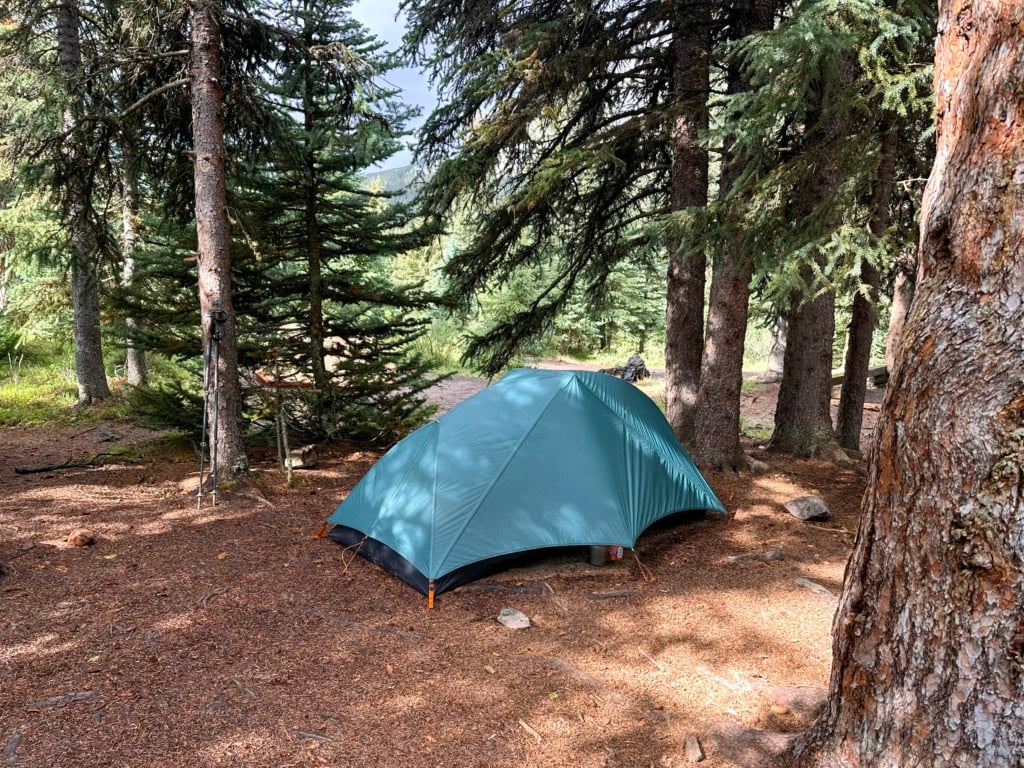
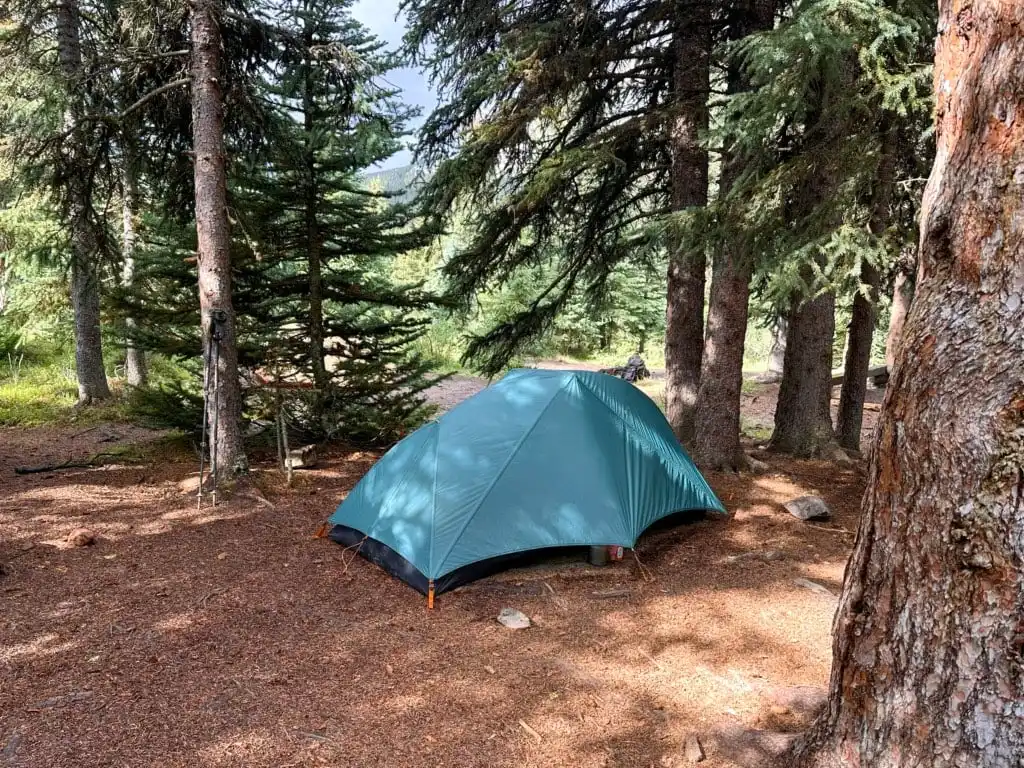

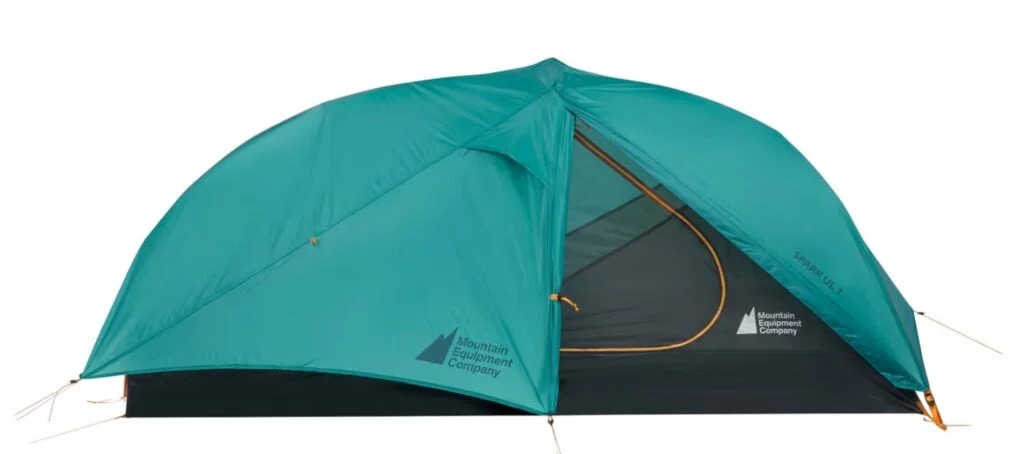
My husband and I don’t always have vacation schedules that align, so I’ve started to do more trips without him. We still love our Big Agnes Copper Spur UL 3 tent (it’s on my list of fave gear from 2024), but it’s way too much for one person. This year, I tried out the MEC Spark UL 1-person tent.
We own an older version of the Zpacks Hexamid tent, but it’s a single-wall tent. We’ve had a lot of condensation issues with it (even when pitched well and vented), so we wanted to go with a double-wall tent to replace it. We camp in humid weather and near water a lot, so condensation is often a factor.
I’m really impressed with the performance of the Spark tent, especially considering that it is a fraction of the price of its direct competitors, the MSR Hubba Hubba 1-person and Big Agnes Copper Spur 1-person. It’s lighter than both of those tents and has similar features.
The Spark UL 1-person tent is made of pretty lightweight materials (15d sil-nylon), but it doesn’t feel exceptionally fragile, and it has good waterproof coatings. The tent held up well to some big thunderstorms and snow on the Skoki Loop in the Rockies.
It’s worth noting that this tent isn’t totally freestanding – you do have to peg out the two foot corners. This isn’t a big deal for me since I’m used to trekking pole tents. I found it fairly straightforward to pitch.
This tent has two features I really love. First, it uses magnets on the vestibule door, rather than a zipper. So much easier to get in and out, and so much quieter!
Second, it has a great stuff sack that lets you cinch the tent down super small. My husband took this tent on a 2-week bikepacking trip in the UK and found it so much easier to strap to his bike since it was so much smaller than other tents he has used.
Specs: Semi-freestanding double-wall sil-nylon backpacking tent. Weight: 979 g
Check prices:
Vargo BOT 700 Pot
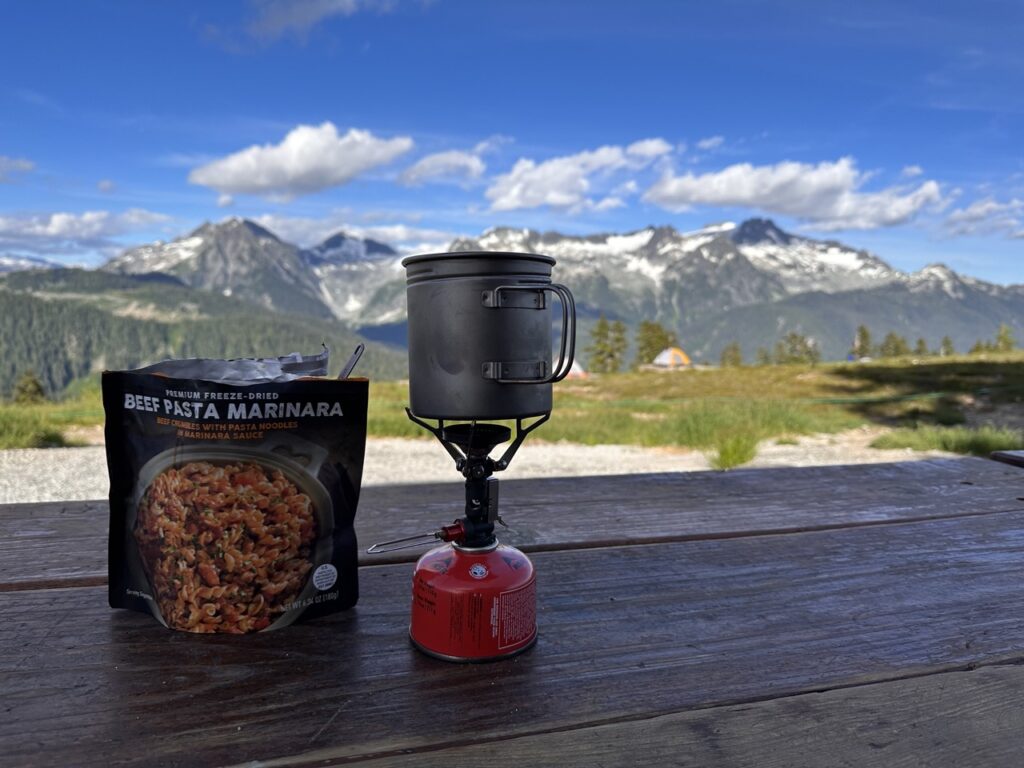
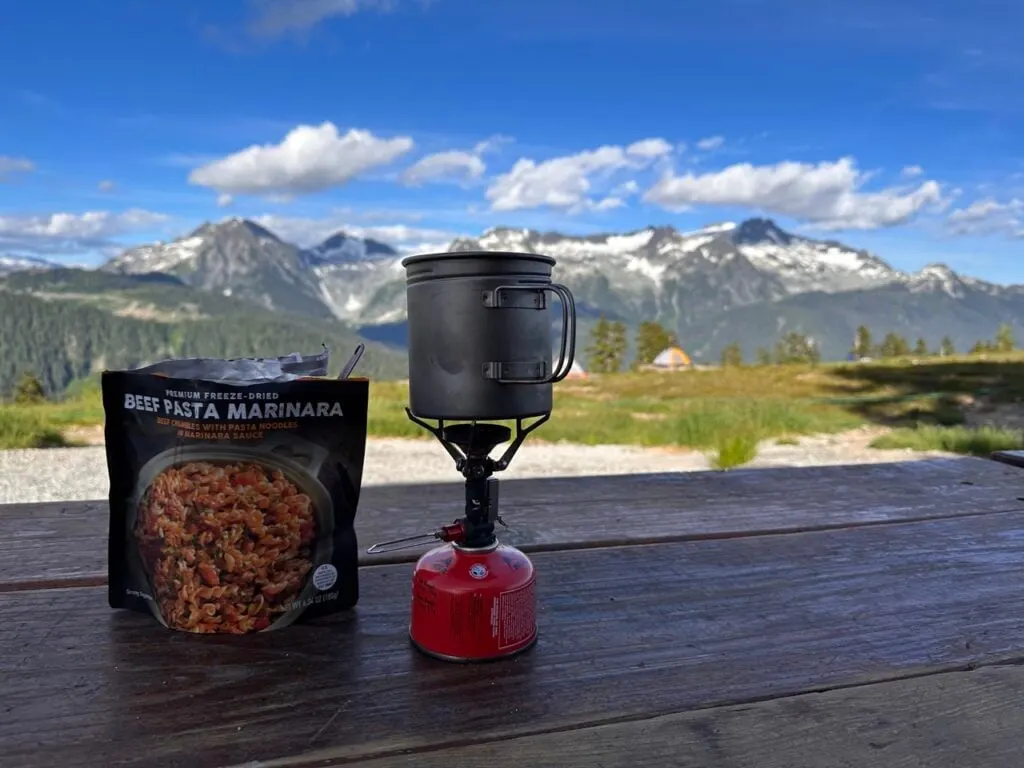
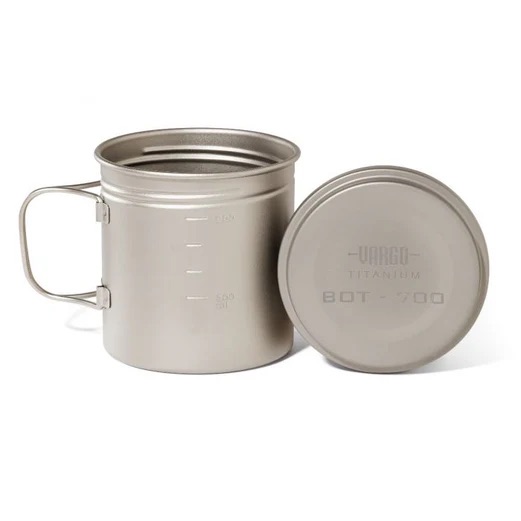
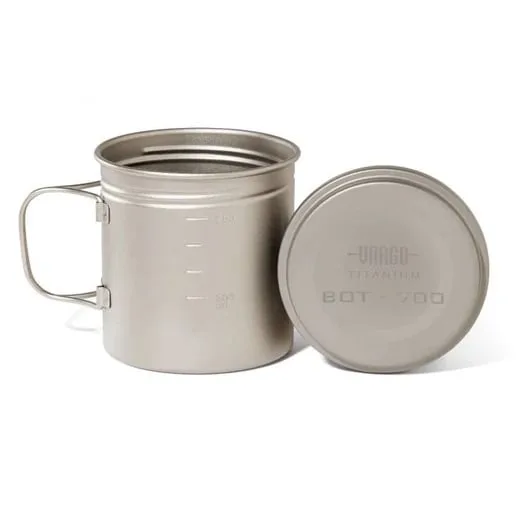
I have to admit that the Vargo BOT 700 pot in my house isn’t new… I just hadn’t used it much before this year. My husband uses this pot as part of his bikepacking kit, and when I started doing more solo backpacking trips (or trips where I wasn’t sharing a stove with friends), I decided to try it.
The BOT 700 is a tiny and lightweight 700 ml titanium pot. It has a screw-top lid, so you can also use it to pre-soak your dehydrated meals so they rehydrate faster. It has volume gradations on the side so I can easily measure the amount of water I need to add to commercial backpacking meals.
It’s also the perfect size to nest my MSR Pocket Rocket Deluxe, a mini fuel can, and a square of quick-dry towel (to prevent things from rattling around in transit, to use as a tiny potholder, and to wipe moisture off my pot and fuel can before I put them away). This is the perfect compact solo cook setup for me.
Specs: Made of titanium with folding handles. Holds 700 ml. Weight: 138 g.
Check prices:
Outdoor Research Aspire 3L Rain Jacket
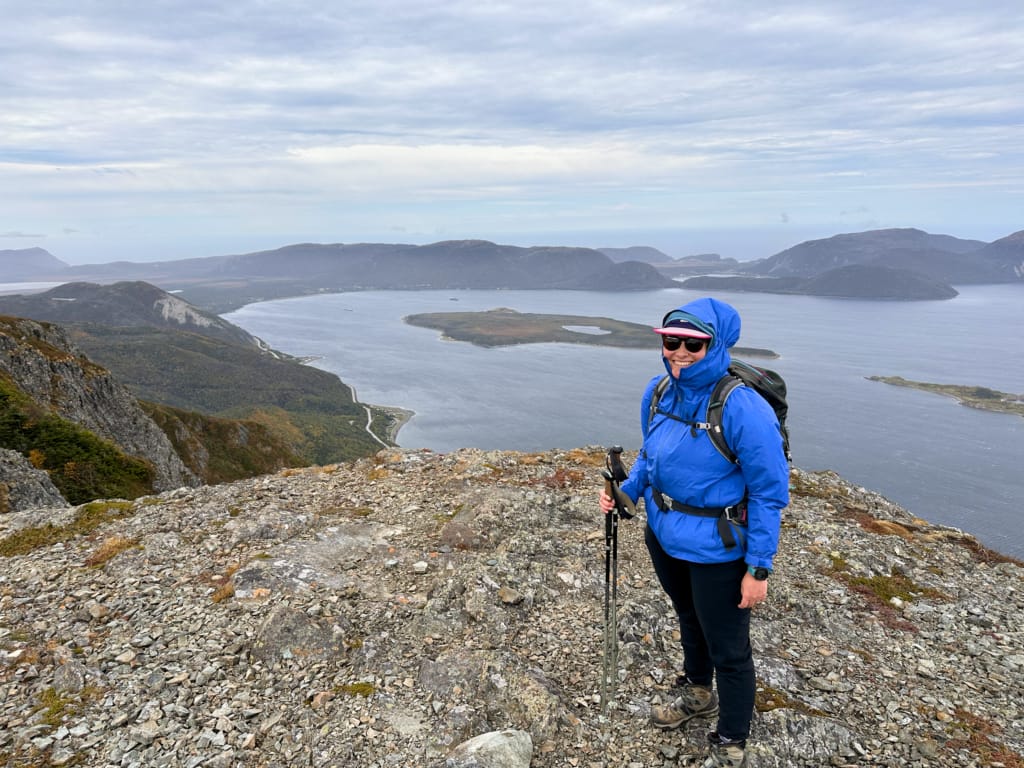
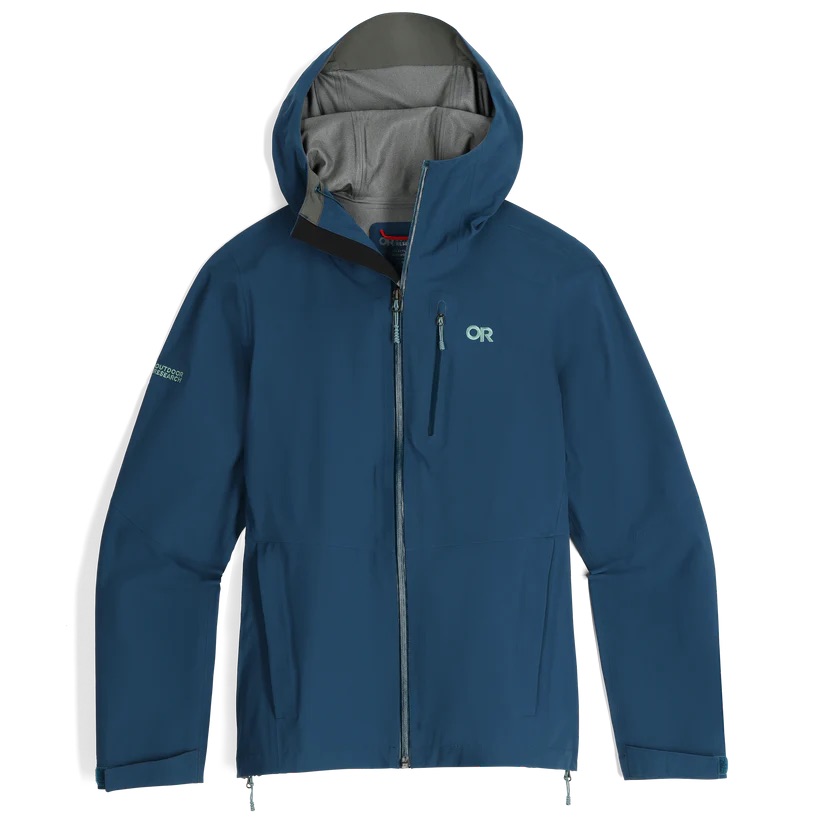
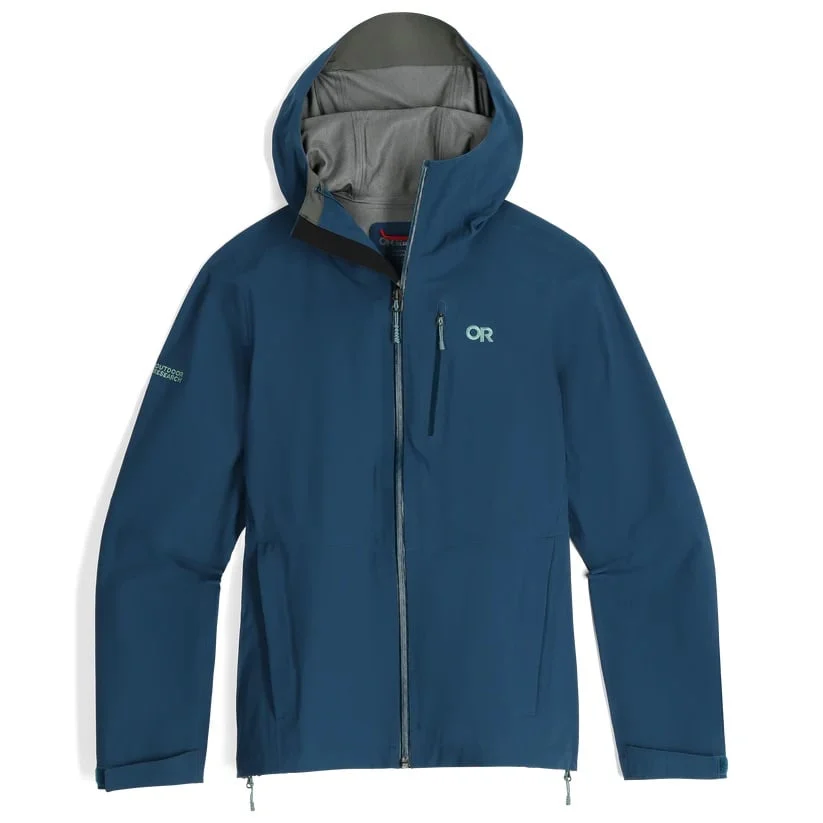
I own a lot of rain jackets, but I bought the Outdoor Research Aspire 3L Rain Jacket anyway for one big reason: the ventilation.
I’m a sweaty person. I have hyperhidrosis, a condition that causes me to sweat more than the average person. In cold and rainy weather, I want to stay as dry from rain as possible, while also letting my body heat vent out so I don’t sweat as much.
The Aspire Jacket uses Outdoor Research’s AscentShell Dry waterproof technology, which has pretty good waterproofing. It’s also fairly breathable on its own. (Since Gore-Tex no longer holds an exclusive patent for their technology, and there have been a lot of advances, most high-end rain jackets from hiking brands have pretty comparable waterproofing and breathability.)
However, the biggest difference with this jacket is the huge underarm vents. They open all the way down to the hem, which lets you open the jacket up like a poncho for maximum ventilation. (OR calls this TorsoFlo venting.)
The other reason I love these vents is that they have two-way zippers. As a curvier woman, I often find that rain jackets don’t fit me well in the hips. Since this jacket has two-way zippers on the sides, I can pop the side zippers up a few cms to get me a bit more room in the hips of the jacket. That achieves a much better fit than any other jacket I’ve tried.
This isn’t the lightest or most compact jacket on the market (and it’s not trying to be), but I find it packs down pretty small, so I’ve taken it on tons of backpacking and hiking trips.
Note: This jacket also comes in a plus-size version, which is great. The men’s version of this jacket is called the Outdoor Research Foray 3L Rain Jacket. It’s exactly the same except for the men’s fit.
Specs: Made of 40d nylon with a bit of stretch and OR AscentShell Dry waterproof breathable technology. Weight: 352g.
Check prices:
HydraPak Contour 3L Hydration Reservoir
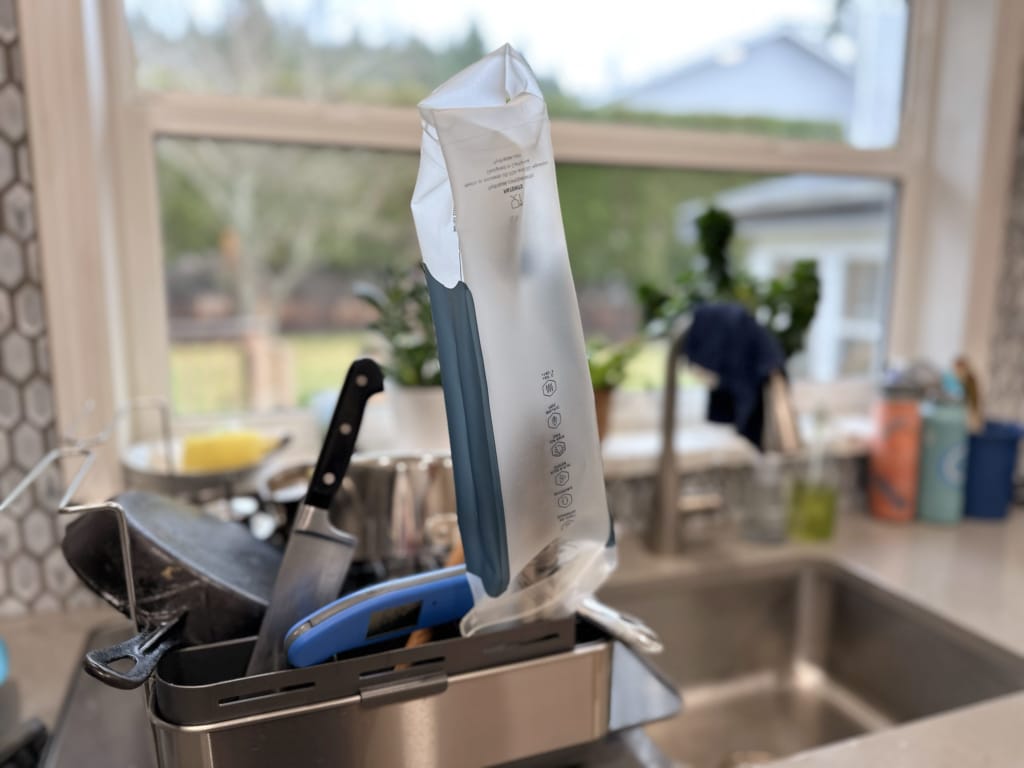
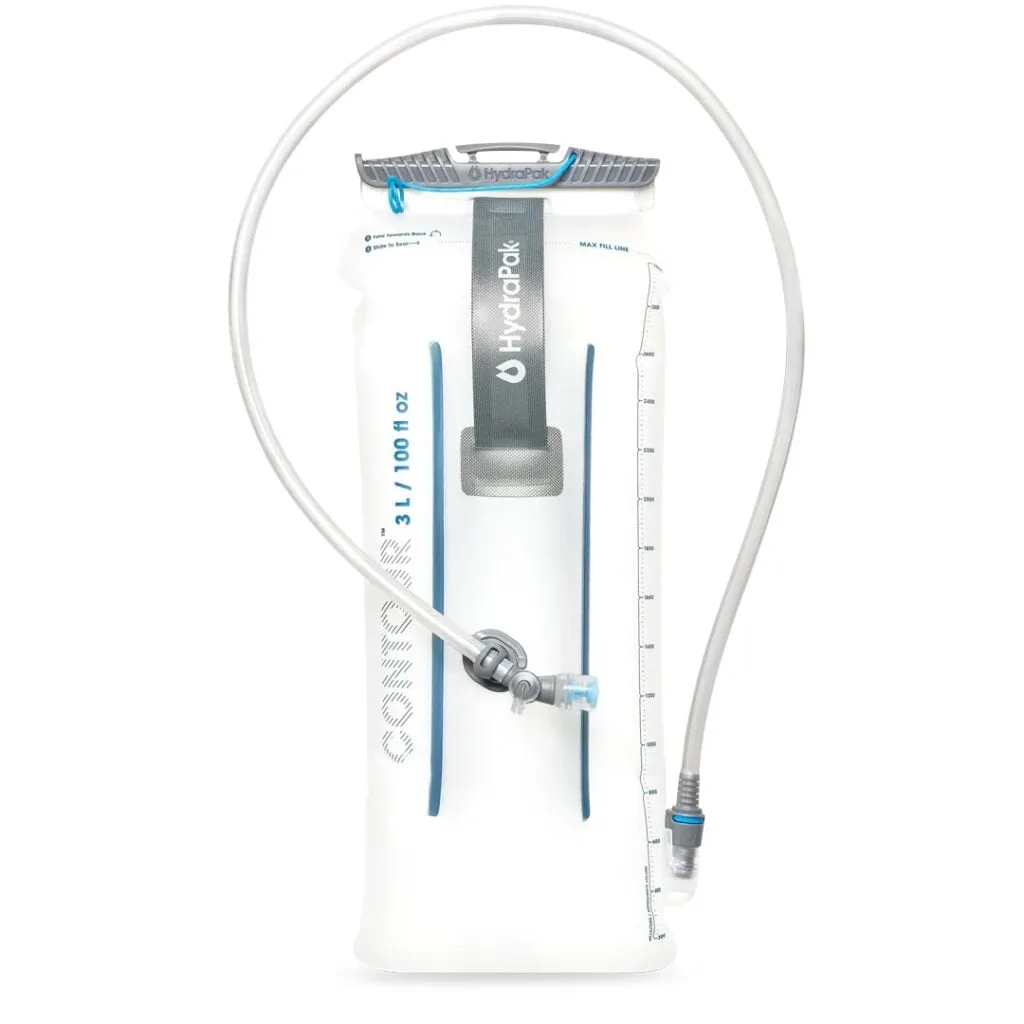
Ok, I know hydration reservoirs are out of style. All the cool UL kids are using Smartwater bottles or soft flasks. But hear me out!
I still like using a reservoir because I have hyperhidrosis, which means I sweat more than normal. That means I need to drink more water than the average person, and having a hose in front of my face makes it easier to do that.
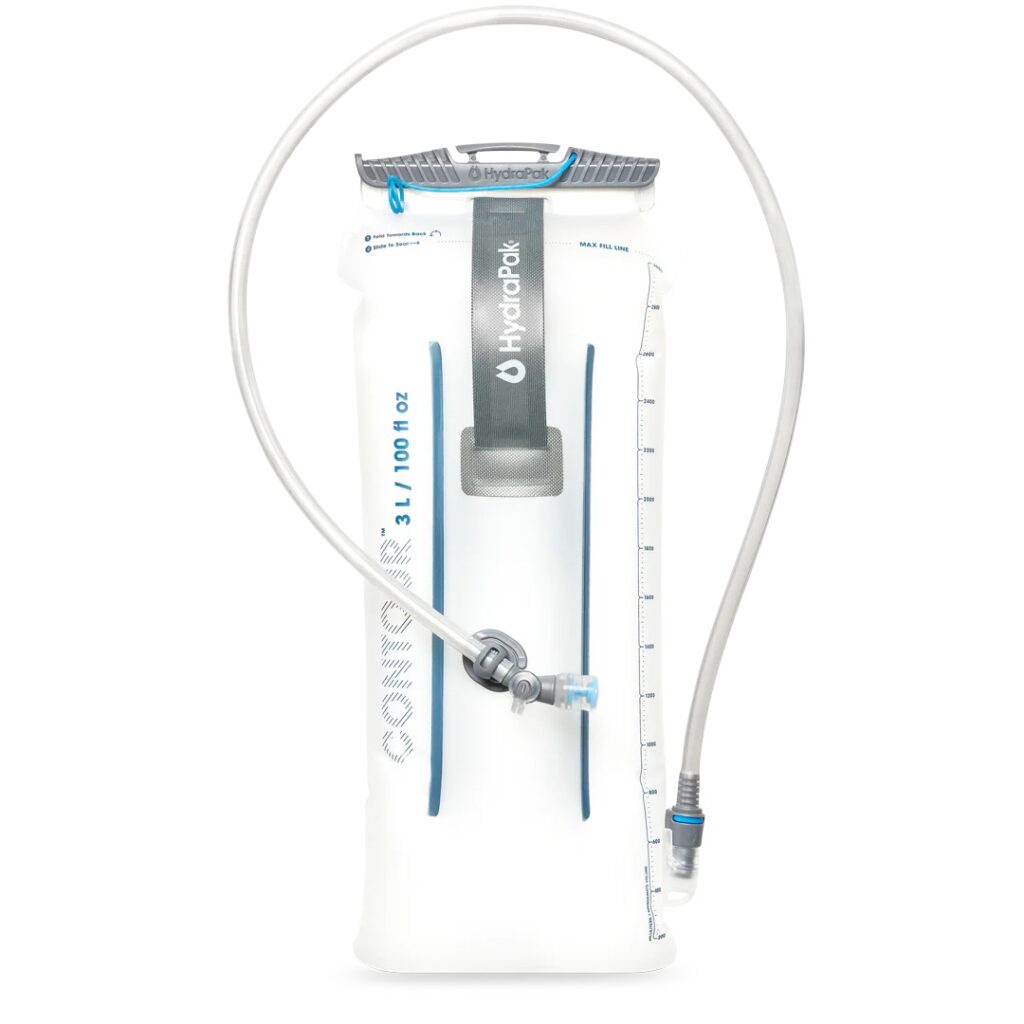
I’ve tried a few different reservoirs over the years, and I recently got the HydraPak Contour 3L. It’s fairly lightweight but still feels quite durable. It has all the usual features: a lockable bite valve, an easy disconnect tube, baffles to hold its shape, and a hanger on the top to clip it into different backpacks. It also doesn’t have a strong plastic taste like some others I’ve tried.
But by far the standout feature is that it is designed to be turned inside out. It even has a little tab inside you can grab to make inverting it easier. This makes it so much easier to clean it and to dry it!
I got the 3L version since it is a few grams heavier than the 2L version, but it gives me the extra capacity I sometimes need on long waterless stretches.
The only downside is that it doesn’t come with a bite valve cover – you have to buy it separately. I always use one to keep my valve out of the dirt when I put my pack down.
Specs: Holds 3L. Made of TPU plastic with a silicone bite valve. Weight: 155 g.
Check prices:

Smartwool Run Mid Crew Socks
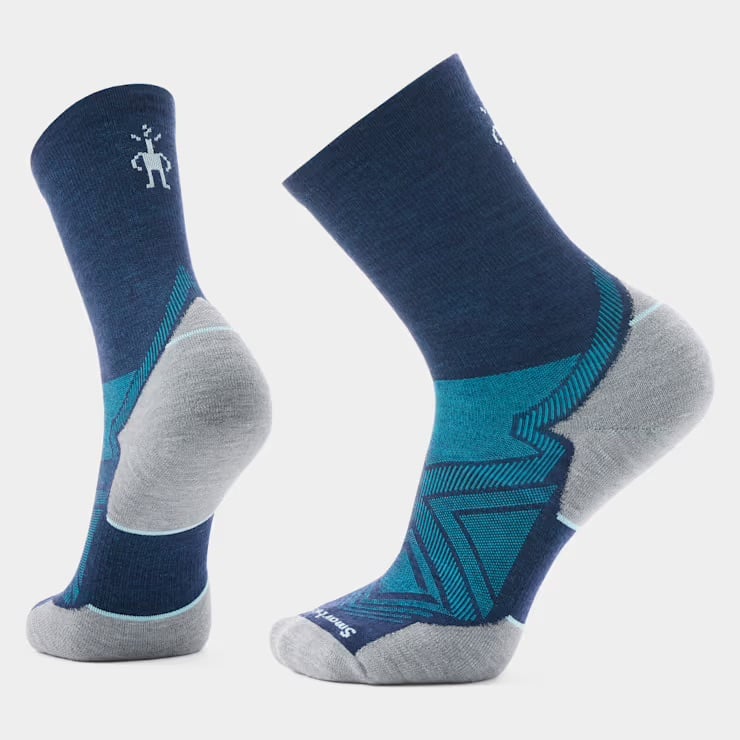
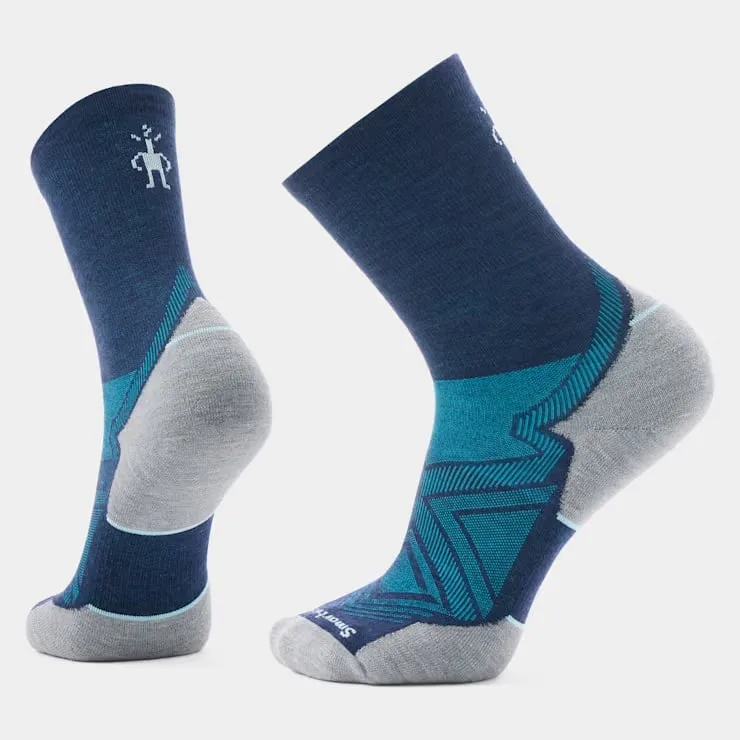
I’ve worn dozens of different wool hiking socks over the years, but my current hiking socks… aren’t hiking socks. I picked up a pair of the Smartwool Run Mid Crew Socks at my local trail running store this year, and they are my new favourites.
I find that hiking socks are often quite thick and bulky, which makes my feet sweaty in hot weather. And sweaty feet lead to blisters. (Read my tips for preventing blisters.)
These running socks have targeted cushioning. That means they are thicker and more padded in the heel and forefoot, and thin everywhere else. That makes them lighter and more breathable.
Like other Smartwool socks, they have a seamless toe and use a merino wool and nylon blend to balance durability with breathability and comfort. I like the women’s specific fit since I have narrow feet, but they also come in a unisex/men’s fit.
Specs: Made of 59% merino wool, 38% nylon, 3% elastane
Check prices:
MEC Scout UL Silicone Tarp
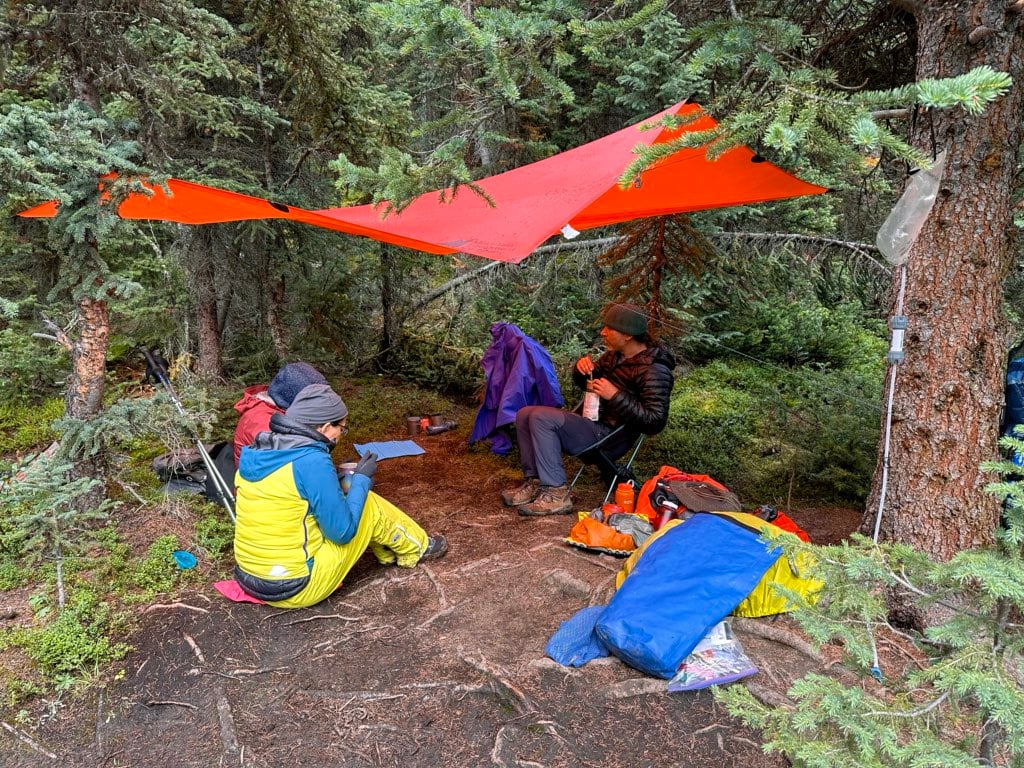
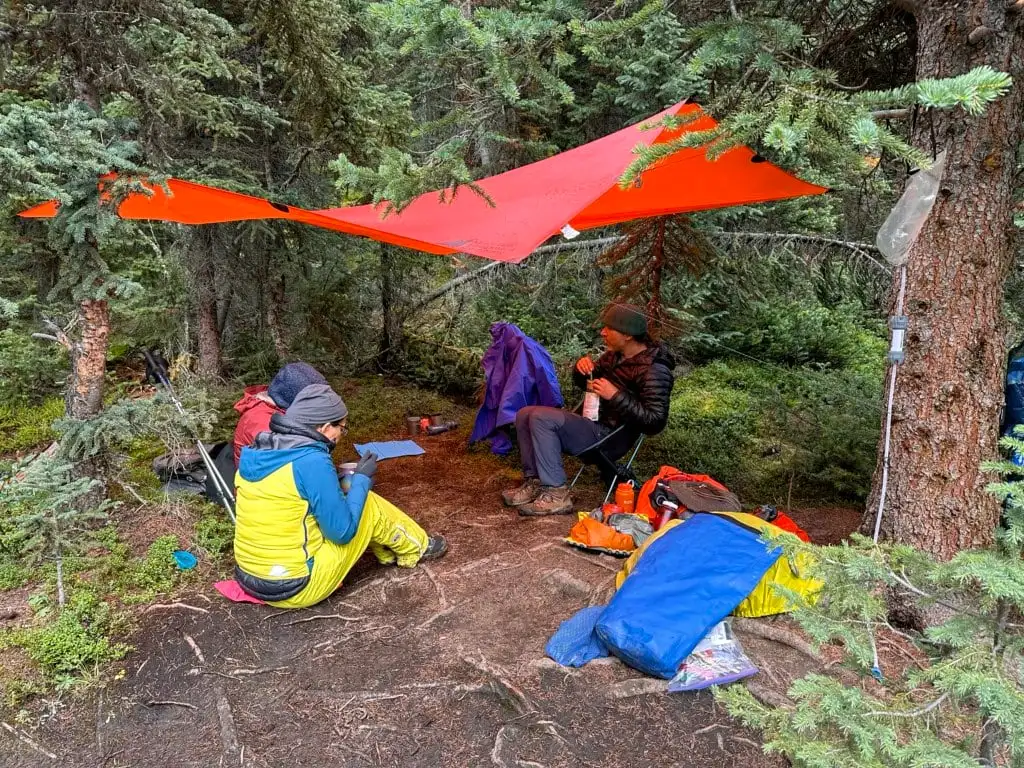

I’ve done lots of wet trips on Vancouver Island, in the Coast Mountains, and in the Rockies. Even if the forecast calls for sun, on a trip longer than three days, that forecast is pretty unreliable.
That’s why I always bring a tarp on longer group trips. It gives us a dry place to cook and hang out in camp. That means we aren’t getting wet and cold (which can lead to hypothermia), and we don’t have to deal with as much wet raingear.
But the biggest way a tarp is a game-changer is the mental aspect. It makes the trip sooo much more enjoyable to have a dry social space. Bringing a tarp saved my recent trip on the Skoki Loop (photo above), where we had rainstorms on and off for two days. We were able to play cards and drink tea under the tarp instead of hiding in our tents.
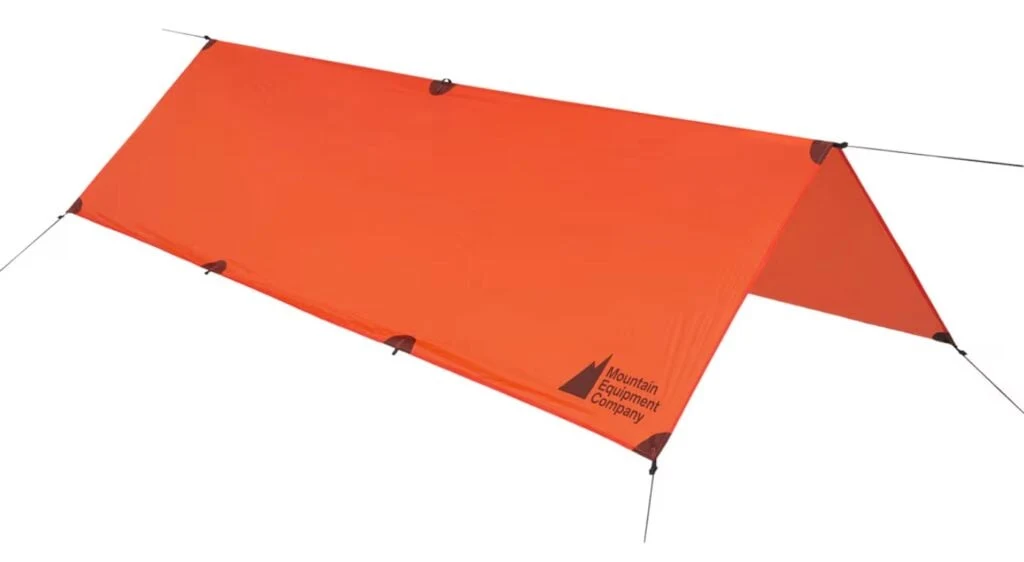
This year, I upgraded to the MEC Scout UL Silicone Tarp in the large size. (Our old sil-tarp was nearly 20 years old and had a badly frayed edge from an improper pitch that let it rub against a tree in a windstorm. It was time for a new tarp.)
The MEC Scout UL Silicone Tarp weighs just 415g and easily provides enough space for 5 or 6 people. Rigging it is fairly straightforward using the included guylines plus a few small Nite Ize Figure 9 carabiners – they make tensioning the tarp easy without having to know complicated knots.
Note: MEC also sells a PU version of this tarp that is cheaper but SO MUCH HEAVIER. If you’re backpacking, you need the UL Silicone version.
Specs: Made of 15d silicone-coated nylon. Includes 6 guylines with tension locks. Weight: 415g.
Check prices:
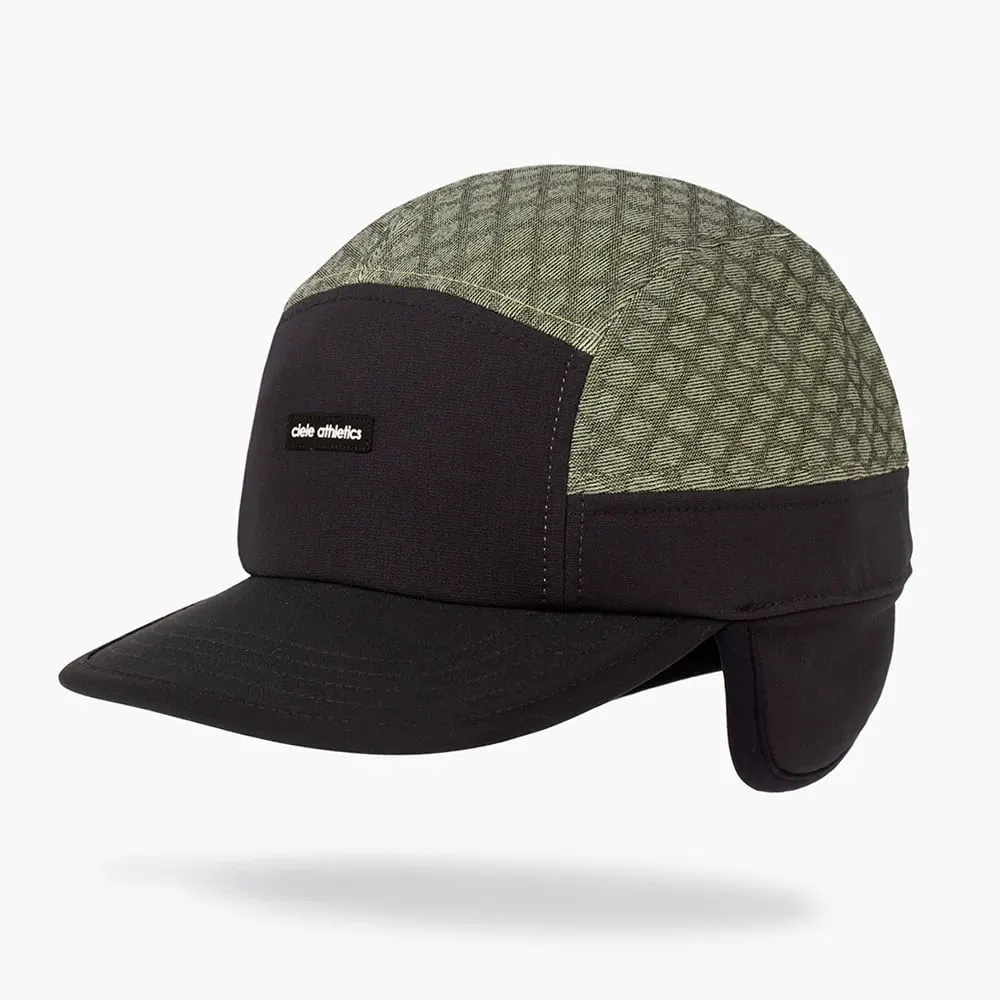
Ciele GOCap FLT WND
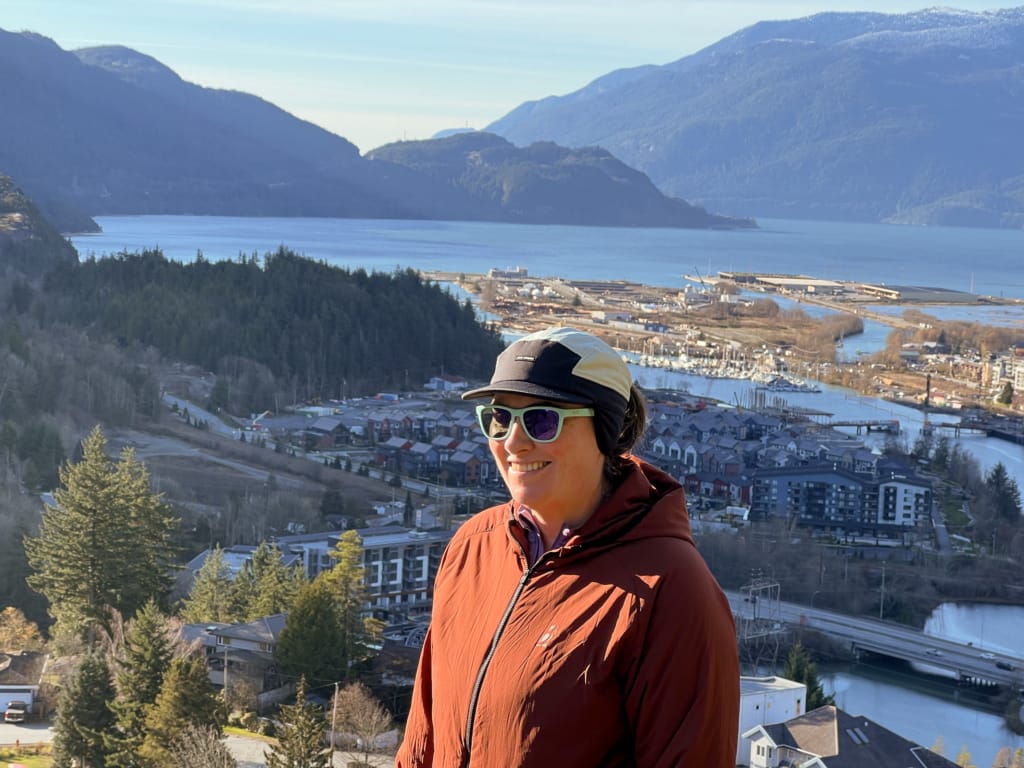
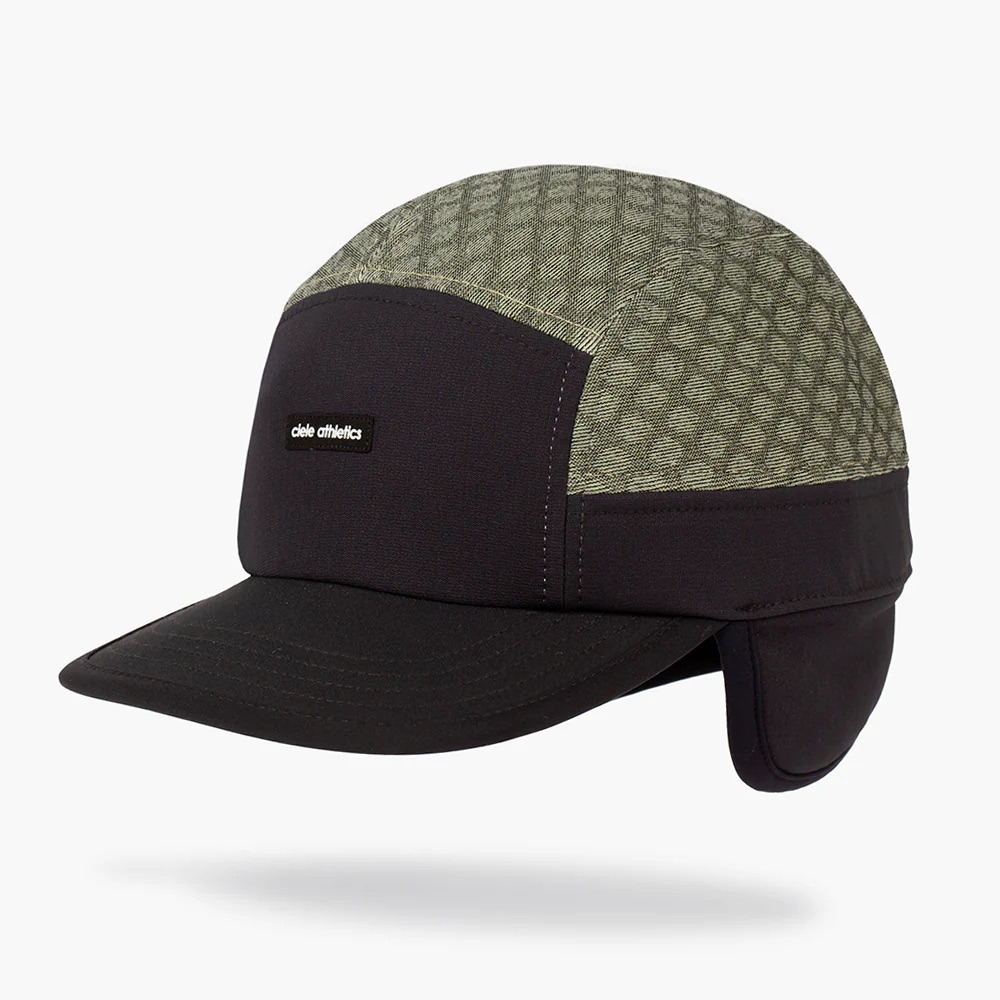
I’ve loved Ciele’s running hats for years. I included them in my fave gear of 2023 post, and I’ve been wearing them on all my hikes ever since. I challenge you to find a recent photo of me on this website where I’m not wearing one!
Baseball caps are awesome for hiking since they shade your face from the sun, keep sweat from running into your eyes, and keep your hair out of the way. But in the winter, I also want a bit of insulation. I’ve experimented with wearing a Smartwool headband over my baseball cap to cover my ears, but it wasn’t a good solution.
For me, the Ciele GoCap FLT WND hat is the ultimate winter hiking hat. I wore it a ton last winter and have started wearing it again now that the temps have dipped. There are two big reasons why it’s perfect:
Firstly, it’s made with wind-resistant and water-resistant fleece. The fleece on the top of the cap is more breathable, allowing sweat to escape.
Secondly, it has fold-down ear flaps made of wind-resistant fleece. I own this fleece baseball cap, and it is cute… but when it’s chilly out, I want my ears covered more than I want the top of my head covered! The Ciele hat solves that problem by including ear flaps. And, you can fold them up out of the way when your ears get too hot! So you don’t have to pack two different hats – this one does both.
The GoCap FLT WND hat has only one flaw… and it’s something that might not bug everyone. The fold-down ear flaps continue around to the back of the neck, which is great for extra warmth. But it means that those of us with long hair have our ponytails pushed further down onto our necks. At first, this drove me crazy since my hair was smushed into the sweatiest part of my neck.
But then I came up with a drastic solution: I cut a slit into the back of the hat and hand-stitched the edges to finish them. Now I can stick my ponytail out through the back of the hat!
Specs: Made of recycled polyester fleece that is wind- and water-resistant.
Check prices:
Mountain Hardwear Airmesh Long Sleeve Hoody
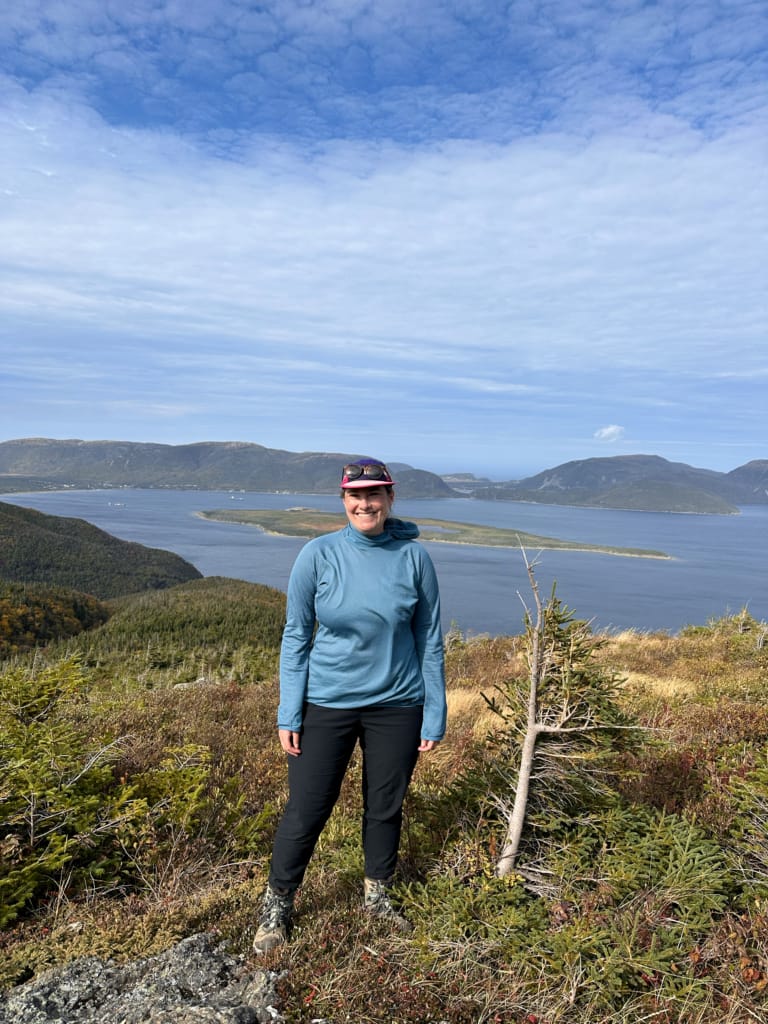
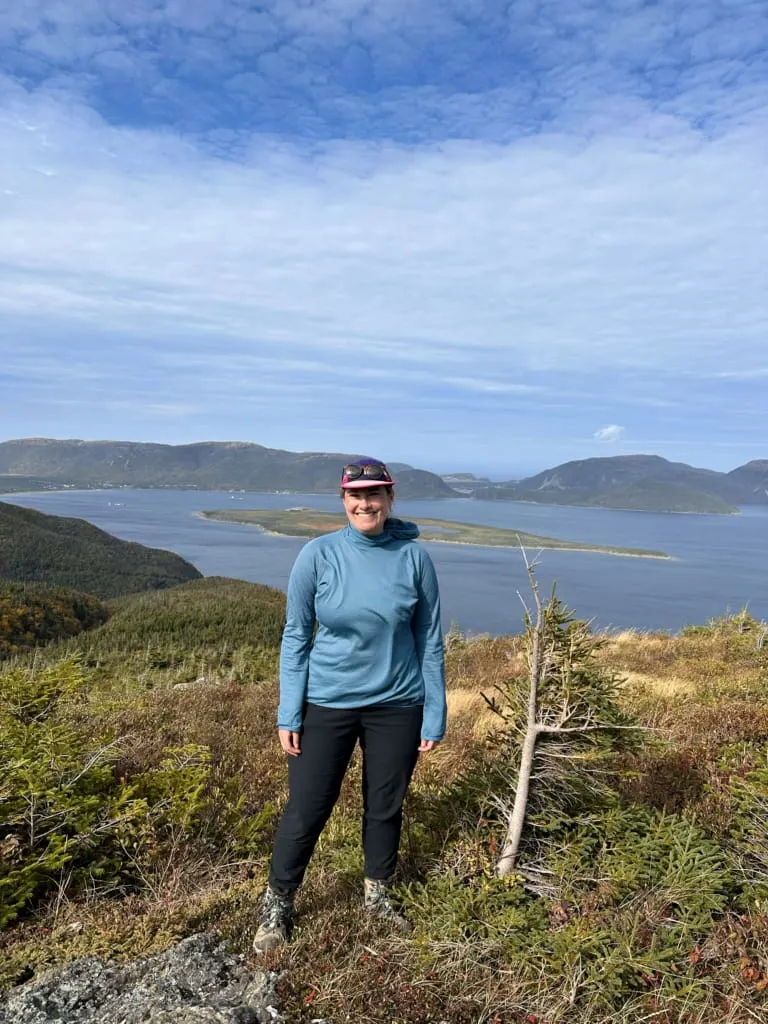
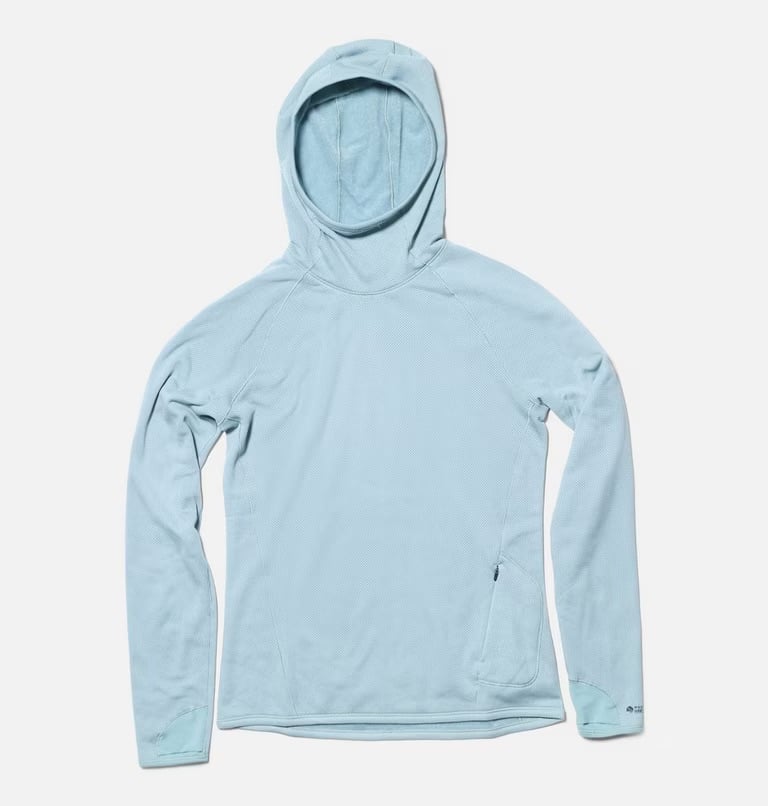
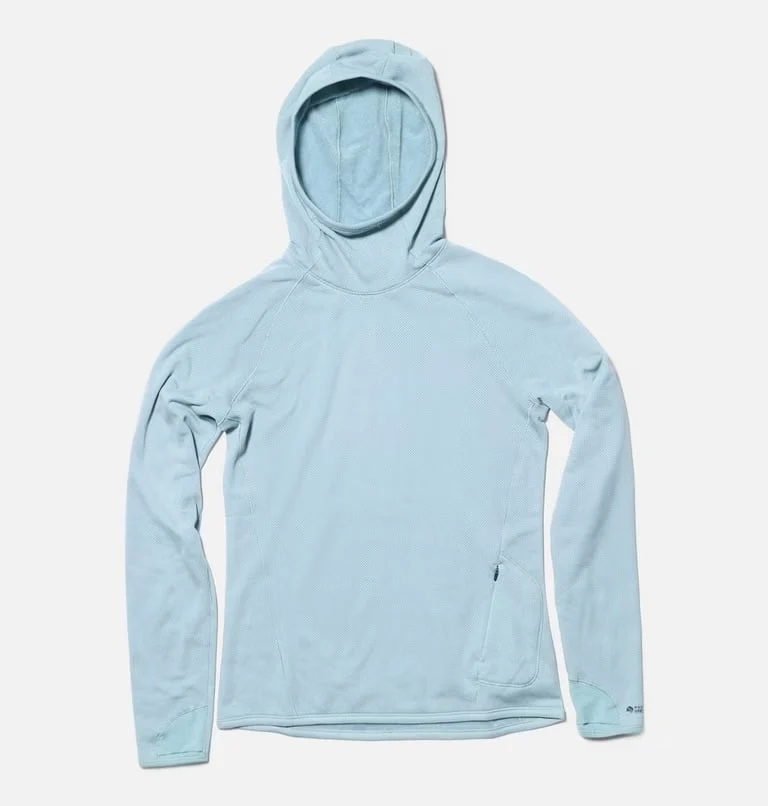
I was going to put the Mountain Hardwear Airmesh Long Sleeve Hoody on my best gear of 2024 list… but then Mountain Hardwear discontinued it. However, I’m so excited to see that they brought it back this winter!
I initially bought this shirt to wear for winter hiking, but I’ve found myself bringing it on summer backpacking trips to wear as a warm layer in camp and in the tent, too. It’s kind of a lightweight fleece, but it’s also a midweight base layer.
The Airmesh is kind of a weird shirt: On the outside, it looks like it’s made of mesh. But on the inside, it’s soft hollow-core yarn fleece that reminds me of muppet fur. The result is a super-technical shirt that wicks sweat and dries quickly but also provides tons of warmth by trapping warm air between those hollow-core fibres.
This shirt has the best warmth-to-weight ratio of any baselayer or lightweight fleece I’ve ever tried. It also dries way faster. The fabric is comparable to Alpha Direct, a favourite in the ultralight community. You can find it in lots of cottage gear company fleeces. But the Airmesh hoody is way cheaper!
Specs: Made of brushed polyester mesh fleece. Has thumb holes and a close-fitting hood. Weight: 159g.
Check prices:
MEC Outpost 60L Gear Tote
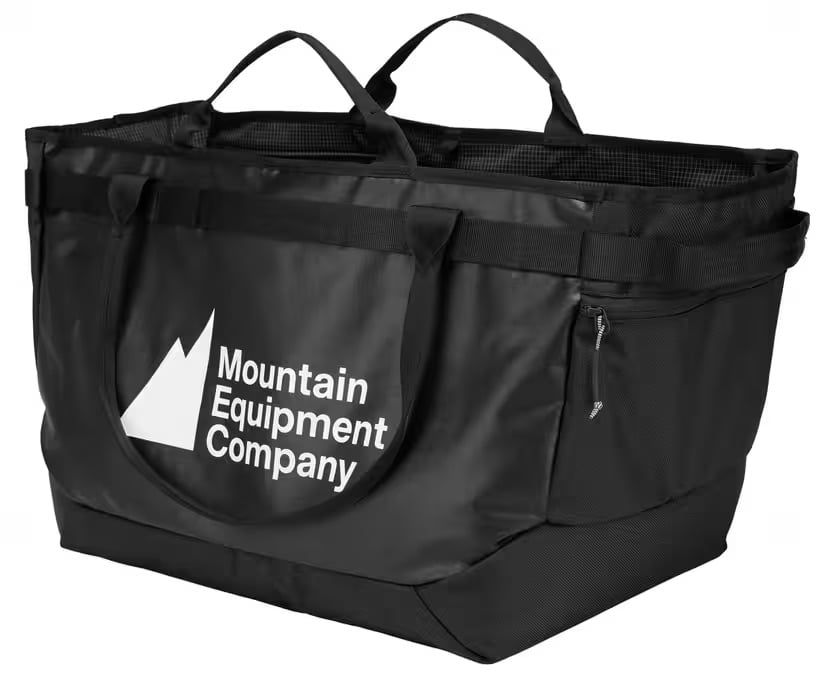
I take a lot of road trips with camping gear. I drive to the Rockies every year. Last year, I drove to Saskatchewan and back. A few years ago, we drove to Moab, Utah, and back.
Even though I’ve done long road trips tons of times, it’s always a struggle to keep our gear organized in the car. In the past, we’ve used a mix of big blue Ikea shopping bags, duffle bags, backpacks (because we have those in the car already), and Rubbermaid bins.
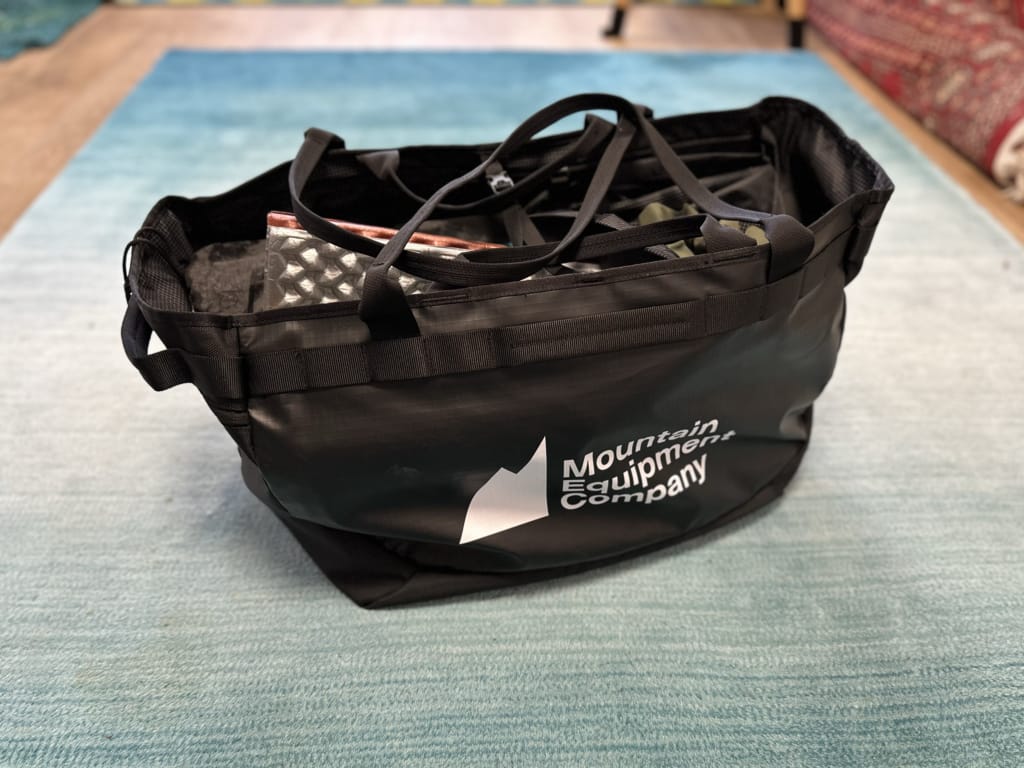
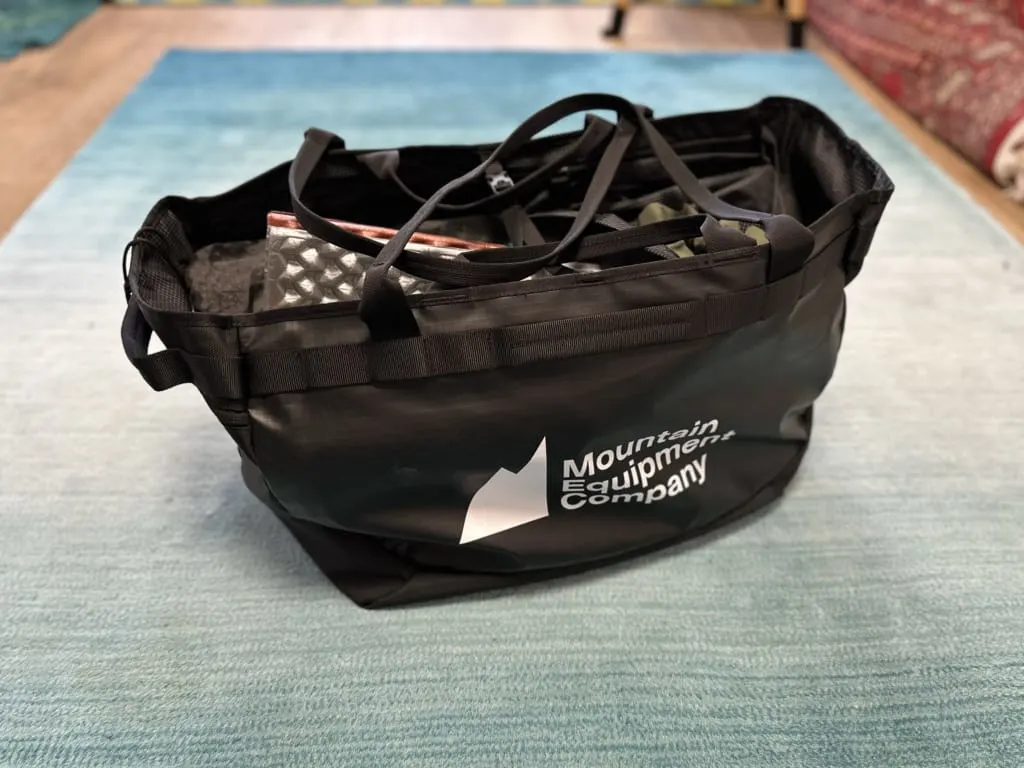
This year, I tried out the MEC Outpost 60L Gear Tote. It’s basically a cross between a duffle bag and a tote bag. It’s made of waterproof material that’s a bit stiff, so it holds its shape, but it also folds flat when you aren’t using it.
The bulkiness of the Rubbermaid bins and the floppiness of the Ikea bags and duffle bags drove me crazy! This Gear Tote is a happy medium between the two. It stays upright while you are using it but then folds flat to stow out of the way when its empty.
It doesn’t have a top zipper, similar to a tote bag, which I actually love since it’s easy to get at my gear quickly. (I store gear I need less often in packing cubes in a duffle.)
I also love that the gear tote has a removable interior divider, zippered pockets, and a compression strap so I can adapt it to carry various types of gear.
I’d like to get a few more of these gear totes, but they aren’t cheap, so I don’t know if it’s in the budget any time soon. As well, it only comes in one colour right now (black), and I’d love a few different colours so I can organize my gear better.
Specs: Made of 420d recycled nylon with a waterproof coating. Holds 60L. Weight: 750g
Check prices:
Final Thoughts
I’ve been pretty conscious about selecting outdoor gear over the last few years because I want to avoid over-consumption. Brands often want to send me their new things to try, and I’ve started saying no more and more often. I’m sure their stuff is great… but I don’t need a dozen down jackets or five different day packs when I already have ones that I love and have plenty of life in them.
What were your favourite pieces of hiking gear in 2025? Add them in the comments.
READ NEXT:
- Canadian Hiking Gear Brands to Support
- My Favourite Hiking Gear of 2024
- My Favourite Hiking Gear – 2023 Edition
- My Favourite Hiking Gear – 2022 Edition
- 20 Ways to Save Money on Hiking Gear


- 10 Best Things to Do in Saskatchewan - March 22, 2026
- The Best Things to Do in Saskatoon - March 17, 2026
- Grasslands National Park Travel Guide - February 4, 2026