
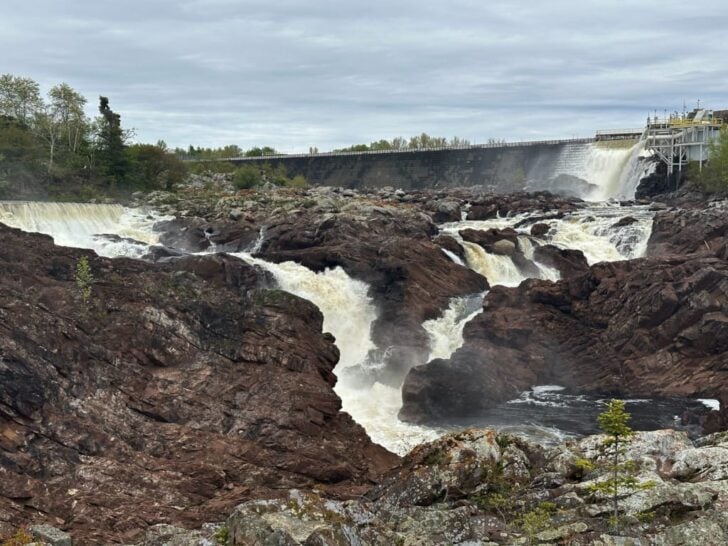
If you’re doing a road trip across Newfoundland, you’ll end up driving through the forested central part of the island. And since Highway 1 is the only route from east to west, you’ll go through Grand Falls-Windsor. I visited as part of a Newfoundland road trip, so here’s why I think you should slow down and spend a little bit of time here.
Known as GFW to locals, Grand Falls-Windsor is one of the largest towns in Central Newfoundland with a population of about 14,000 (although Gander is just a thousand people smaller). It’s a regional service hub for the area, but there are also lots of things to do in Grand Falls-Windsor for visitors.
Grand Falls-Windsor sits on the banks of the Exploits River, which is the longest river on the island of Newfoundland. The river goes through a gorge in town, which is (dare I say it?) gorgeous. In addition to river viewpoints, I also explored Grand Falls-Windsor’s other natural attractions, including zip lines, river rafting, nature trails, and a salmon interpretation centre.
GFW is a pretty unassuming little town, but once you dig deeper, you’ll find lots of things to do. It also makes an easy stopover on a cross-Newfoundland road trip thanks to its central location.
I’ve put together a complete Grand Falls-Windsor, Newfoundland travel guide for you. It includes:
- A Grand Falls-Windsor Quick Planning Guide: all the basics in one place
- A map of Grand Falls-Windsor that shows all the places I mention in this post
- Best things to do in Grand Falls-Windsor: trails, adrenaline sports, viewpoints, and more
- Where to eat in Grand Falls-Windsor: My picks for the best restaurants
- Where to stay in Grand Falls-Windsor: The B&B I stayed at and others I recommend
- Grand Falls-Windsor Travel Tips: How to get there? How long to spend? What’s the weather like? And lots more.
This is a sensitive wilderness area. Learn how to Leave No Trace to keep the wilderness wild. Make sure you are prepared by bringing the 10 Essentials. Get ready for adventure with this checklist of things to do before every hike.
Hey there: Thanks so much to Newfoundland and Labrador Tourism and Adventure Central Newfoundland for hosting me on my recent trip. My previous trips were at my on expense. All opinions in this post are my own. Some of the links in this post are affiliate links, which means I earn a small commission at no cost to you. Thanks for your support! – Taryn
Grand Falls-Windsor Quick Planning Guide
Why visit Grand Falls-Windsor? A Newfoundland road trip stop for outdoor adventure lovers
Location: Central Newfoundland and Labrador
Nearest major airport: Gander
Best time to visit: May-September
Ideal trip length: 1 night
Must-see stops: Exploits River Gorge, Salmonid Interpretation Centre
Grand Falls-Windsor, Newfoundland Map
To help you plan your trip and find your way around, I created a custom Google Map of Grand Falls-Windsor for you. It includes every place I mention in this post.
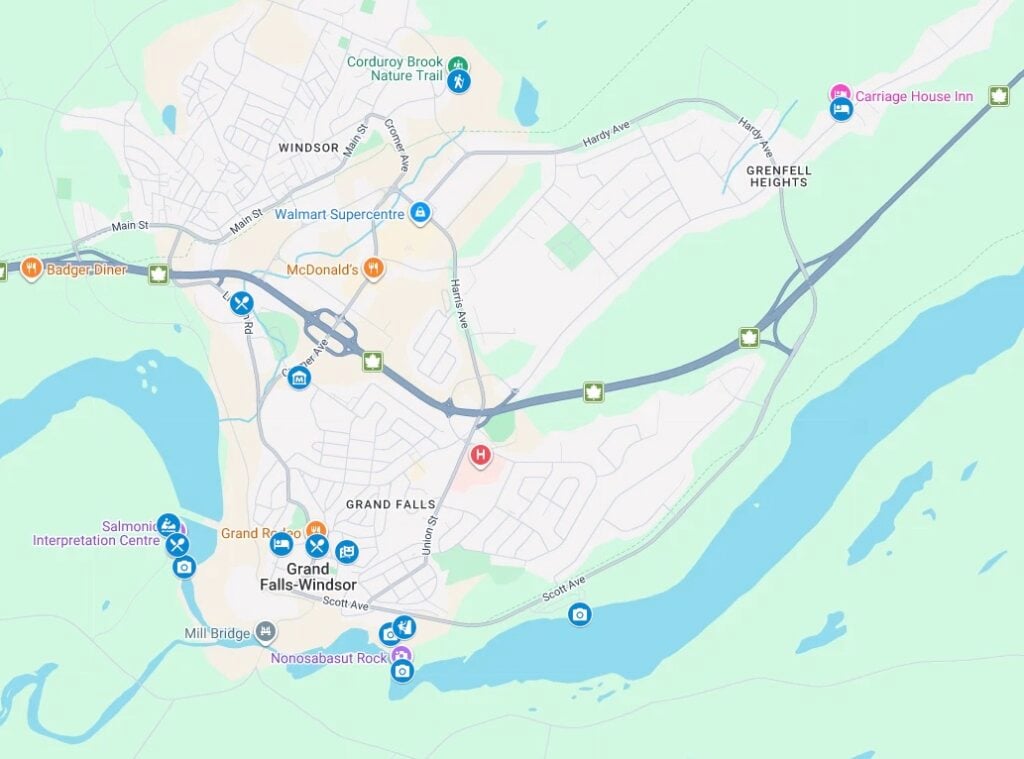
Best Things to Do in Grand Falls-Windsor, Newfoundland
Canyon Park
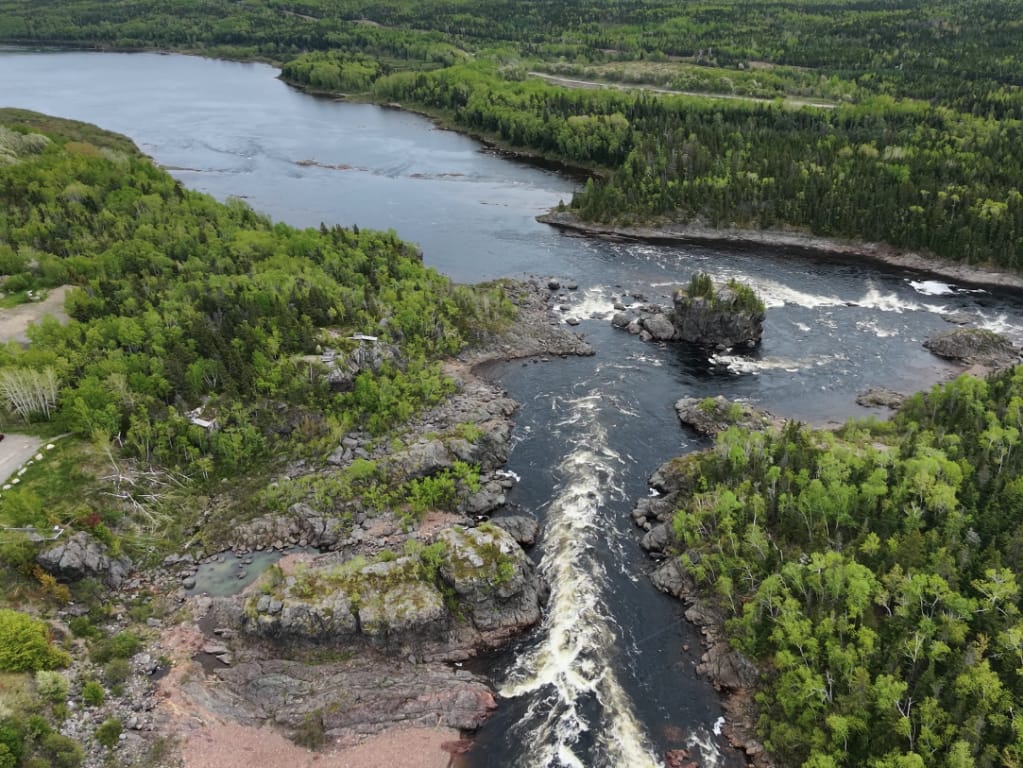
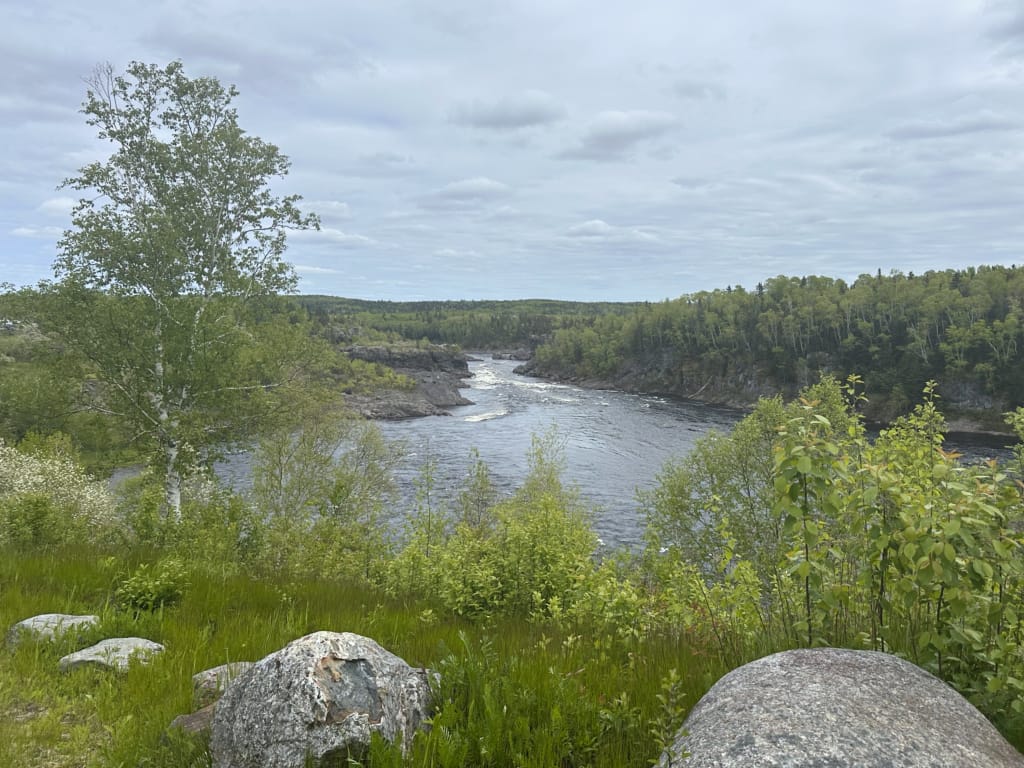
Grand Falls-Windsor sits next to the Exploits River. The town was built here to harness the river’s flow over a waterfall and through a gorge to generate hydroelectric power. While the namesake waterfall was tamed by dams, the gorge downstream is still spectacular.
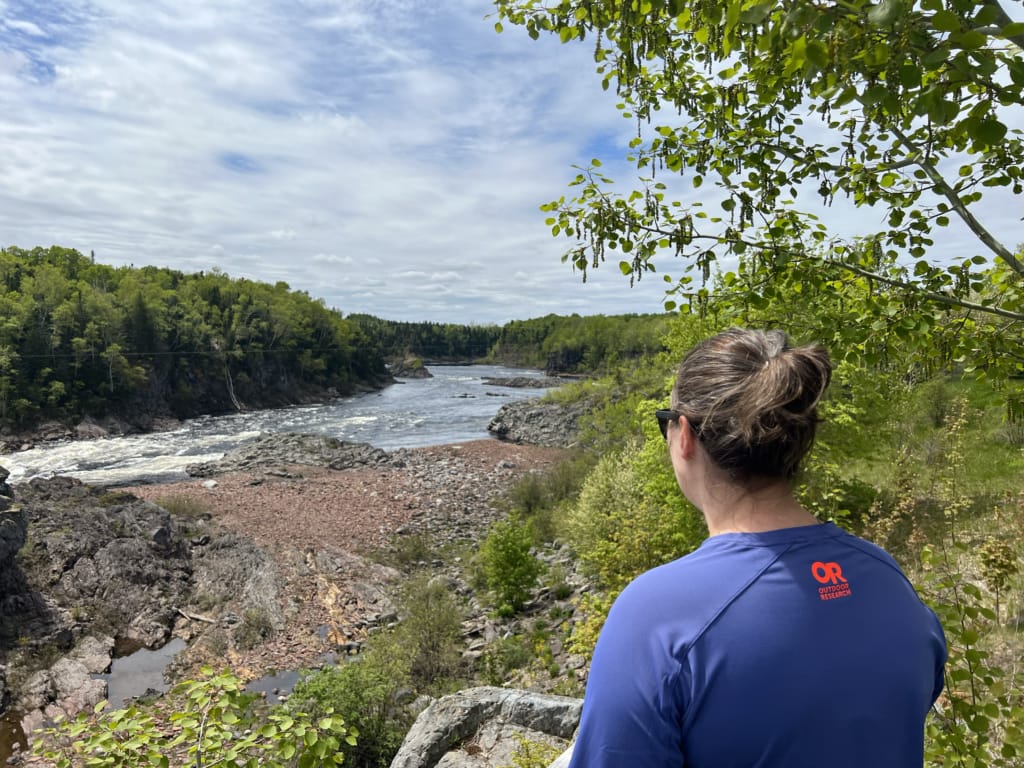
The best place to peer down into the gorge is at Canyon Park. It’s just off Scott Avenue, down an unsigned gravel driveway – look for the Exploits Extreme Ziplines signs. There is a lookout platform just beyond the parking area, and paths through the grass lead to other vantage points over the gorge as well as to zipline platforms. (More on the zip lines below.)
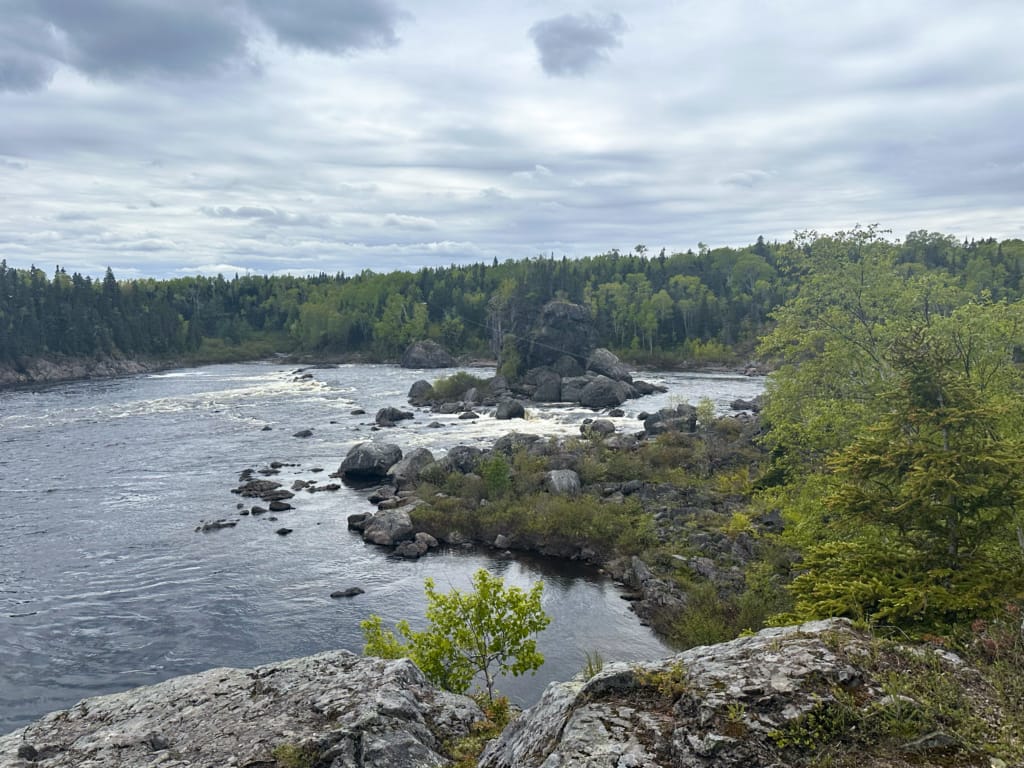
The river makes a sharp curve around a huge rock island in front of the viewing platform. This is Nonosabasut Rock, named after a Beothuk leader who was murdered by European settlers.
Note: There is another great park in Grand Falls-Windsor, Newfoundland, called Gorge Park, so it is easy to get the two parks confused. Gorge Park is a great park with a boat launch, campground, and waterfront pavilion. But it’s downstream of the actual gorge, so it doesn’t have the same great canyon views. You can actually follow the trail downstream from Canyon Park to Gorge Park.
Salmonid Interpretation Centre and Grand Falls Dam
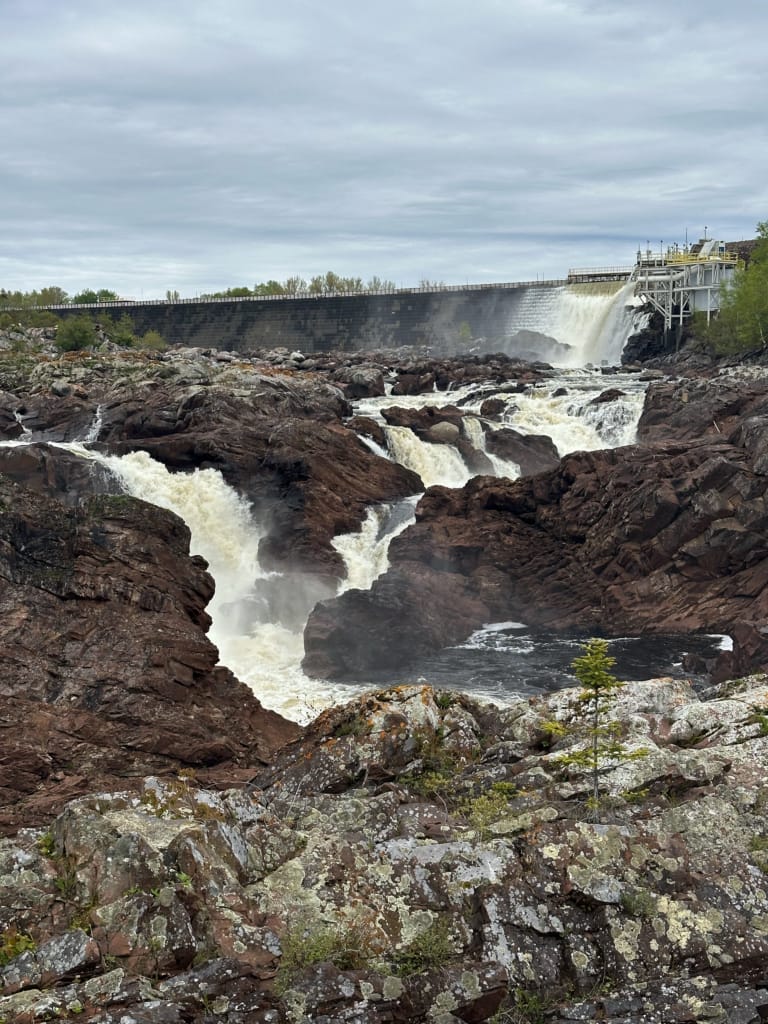
It’s worth driving a few minutes across the river to visit the Salmonid Interpretation Centre and Grand Falls Dam. One of the biggest reasons to visit Grand Falls-Windsor is the Exploits River. It is the longest salmon-bearing river in Newfoundland and home to the town’s best attractions: salmon viewing, ziplining, rafting, and viewpoints.
However, the Grand Falls Dam blocked their upstream migration. A unique fishway and fish ladder system was built in 1992 to allow fish to get around the dam.
At the Salmonid Interpretation Centre, you can learn about the life cycle of Atlantic Salmon. They also have a unique underwater river experience where you can view the salmon as they pass through the fishways. The best time to view the salmon is between mid-June and late August.
Outside the centre, you can walk across the top of the fishways and peer over the railings to see water spilling from Grand Falls Dam. The Dam is still used for power generation.
Corduroy Brook Nature Trails
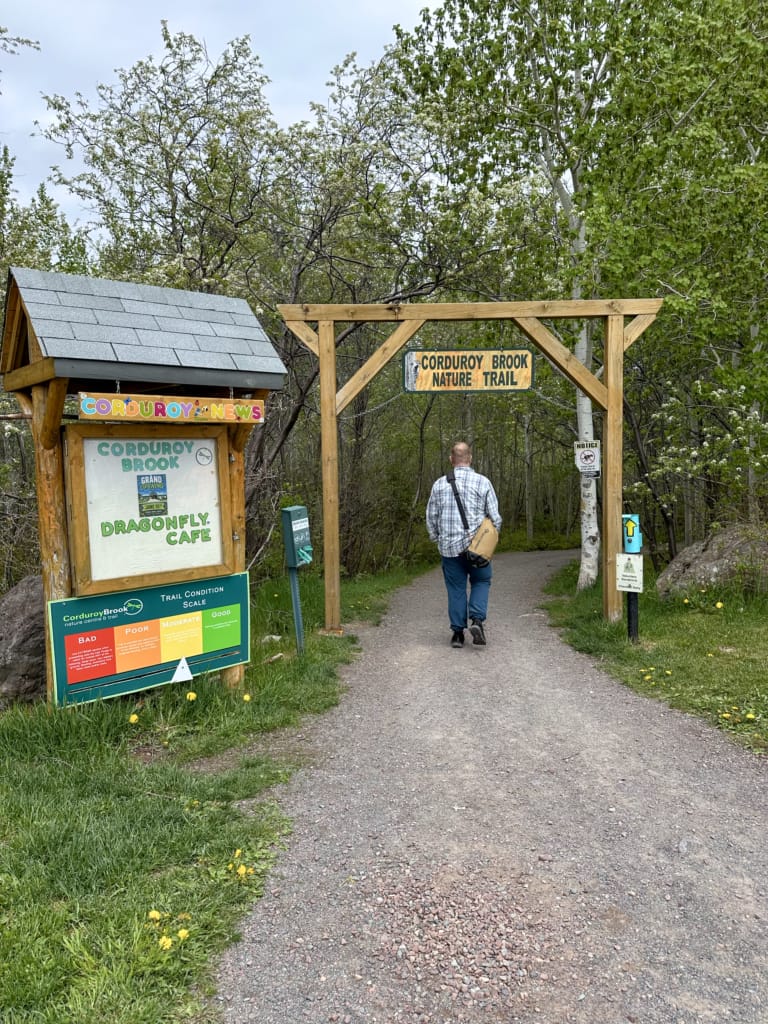
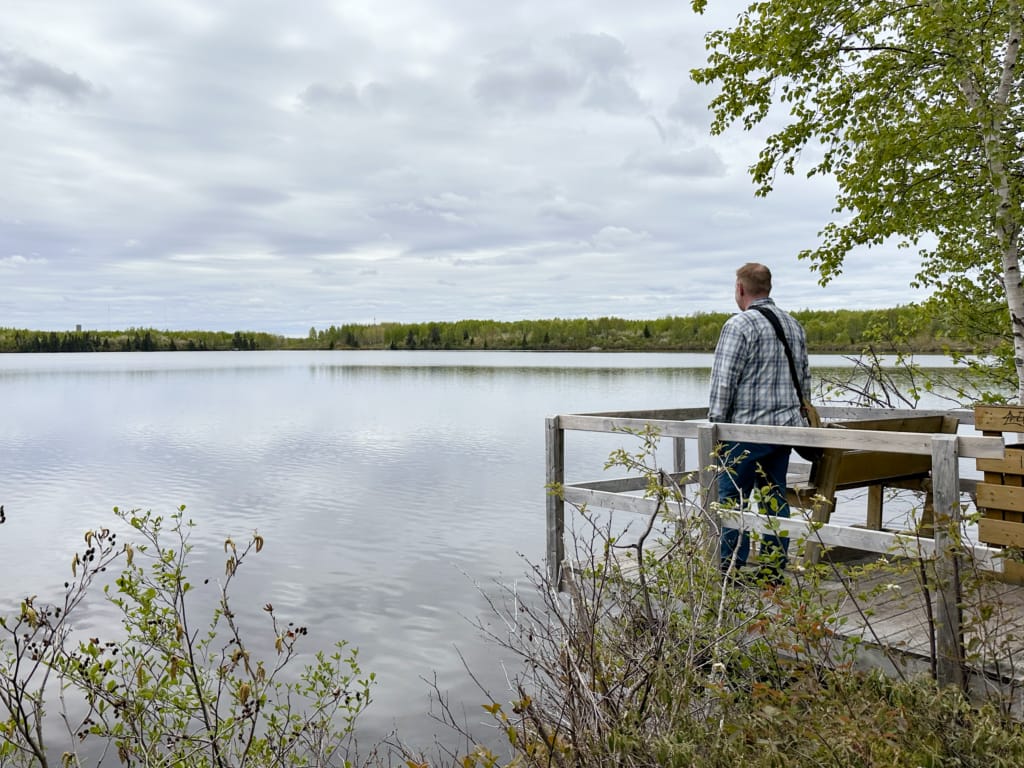
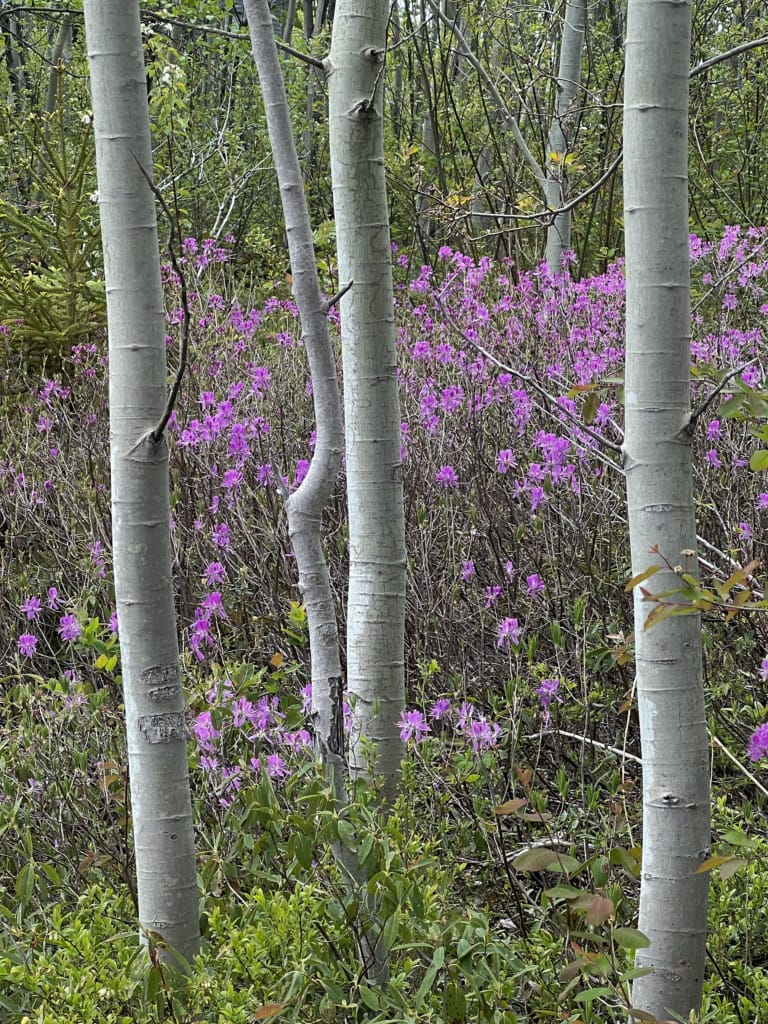
If you’re looking to stretch your legs, I recommend a walk on the Corduroy Brook Nature Trails – it’s one of the best attractions in Grand Falls-Windsor. The trail system stretches alongside streams, ponds, wetlands, and forests at the north end of town. We did a short loop around Corduroy Pond and managed to see lots of bird species and wildflowers.
The trail system starts at the Corduroy Brook Nature Centre, which has interpretive panels and other exhibits. The trails closest to the nature centre are the easiest, but they get rockier the further out you go. There are lots of info signs about plants and animals, as well as viewing platforms.
Pro tip: Bring insect repellent, especially if you visit in June.
Exploits Extreme Ziplines
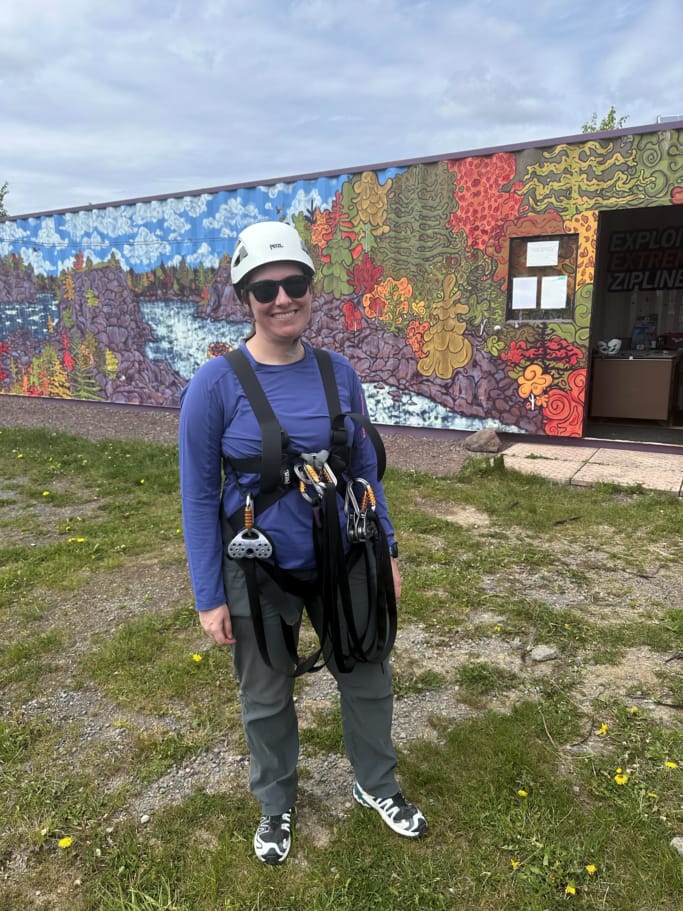
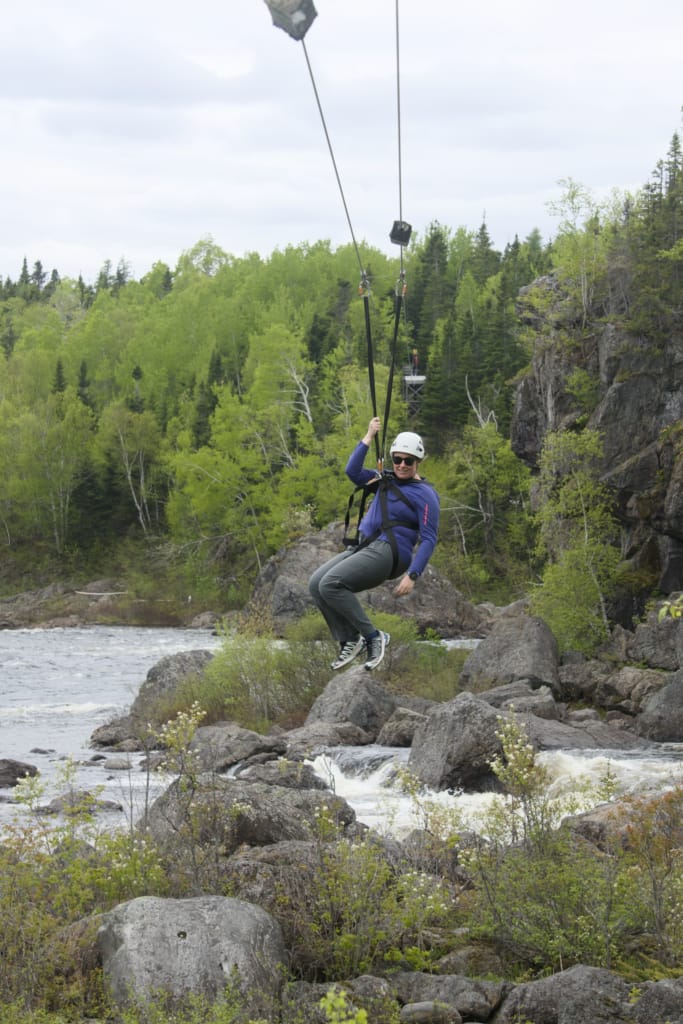
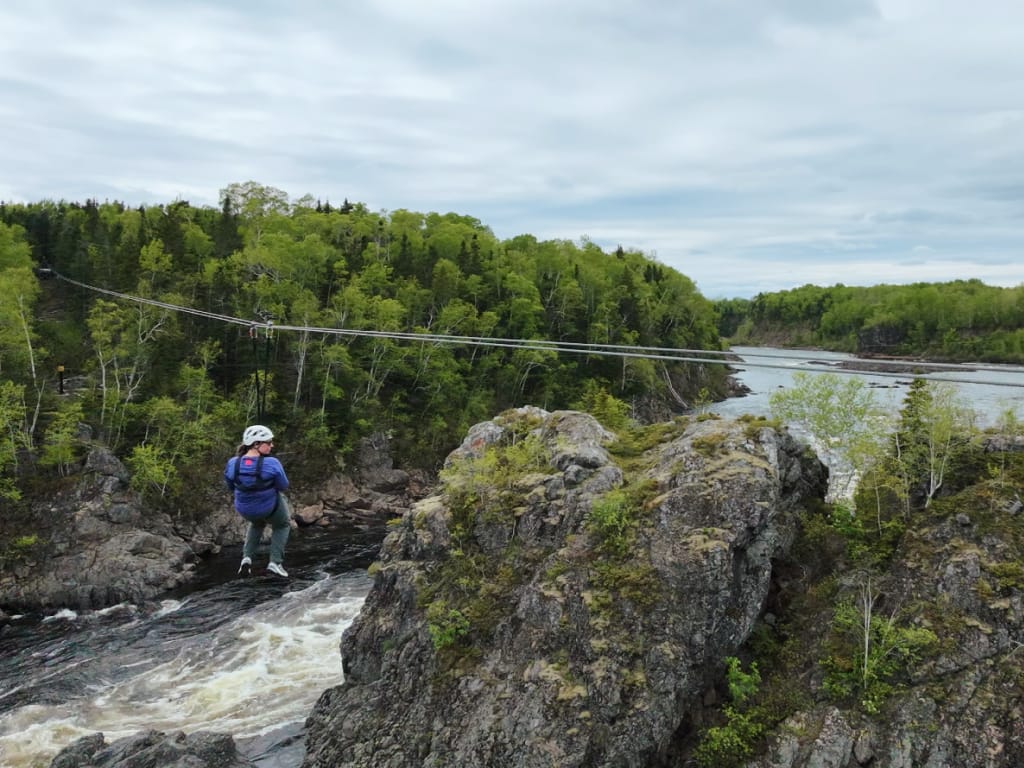
If you want a thrill, sign up for a tour with Exploits Extreme Ziplines. It’s one of the best things to do in Grand Falls-Windsor. Their ziplines go back and forth across the Exploits River in the most spectacular part of the gorge.
The lines are high above the river (40 to 70 feet), so you get a great view of the rushing rapids and steep canyon walls. The most exciting line is the last one, which passes right next to the sheer face of Nonosabasut Rock.
Exploits Extreme Ziplines is a family-run business. Chad, the owner, guided my tour alongside his university-aged daughter. His younger daughter came along too and was fearless: She had been on the ziplines so many times that she nonchalantly went upside-down right away! Chad shared that it had been his dream to move back home to GFW permanently to open his zipline business. He has plans to install even more ziplines across the gorge in the future.
I’ve also been on the Marble Mountain Ziplines near Corner Brook, and I’d say that the Exploits Extreme Ziplines are a totally different experience. The ziplines at Marble go through the forest and over a waterfall. Some of them aren’t that high, but a few are quite long. The Exploits ziplines all seemed very high off the ground, and they all go over the raging river. It was a real rush! It’s tough to compare the two ziplines since they are so different – I definitely enjoyed both.
Rafting Newfoundland
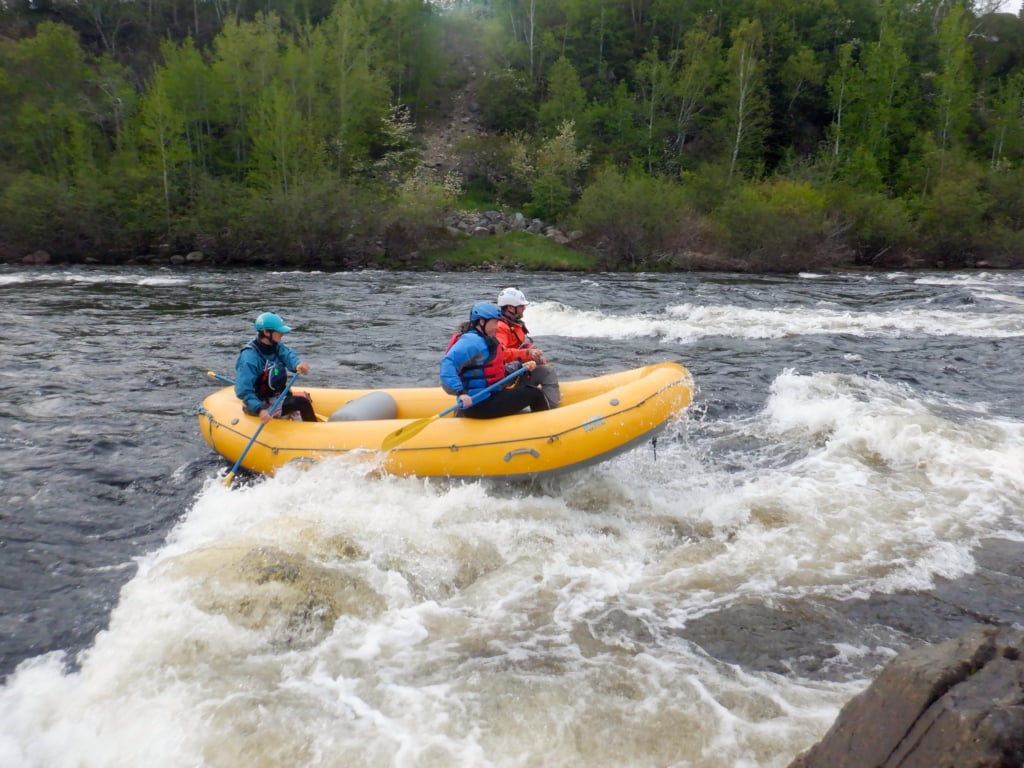
If you want to go whitewater river rafting in Newfoundland, Grand Falls-Windsor is the best place to do it. The Exploits River has the best whitewater in the province.
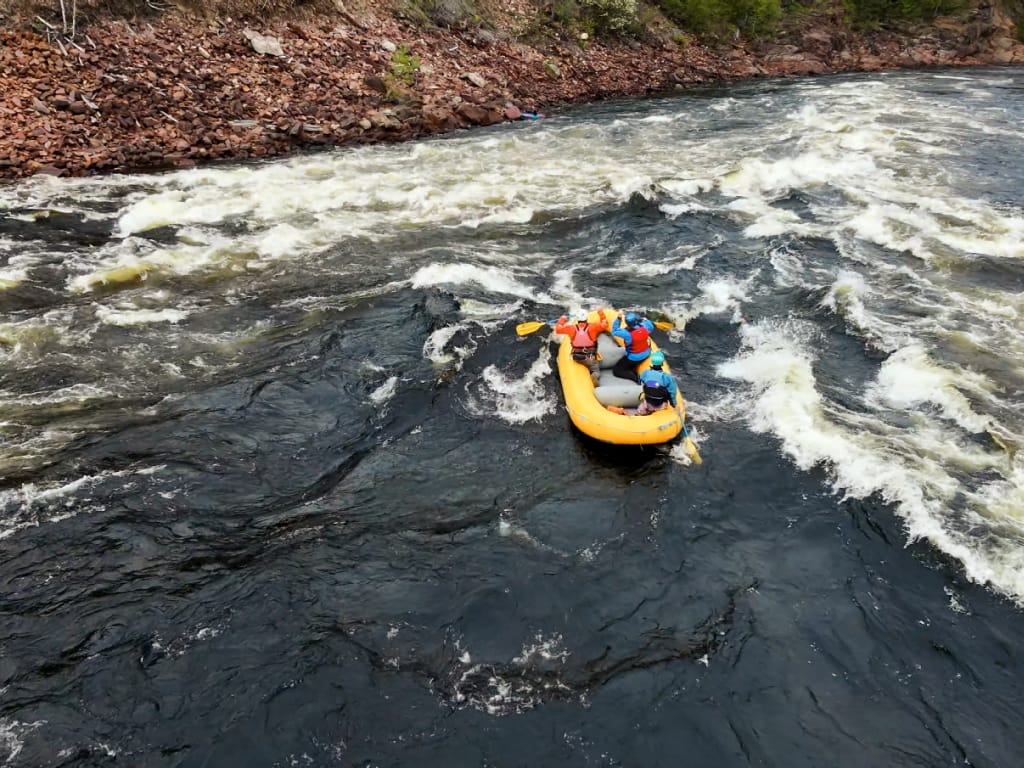
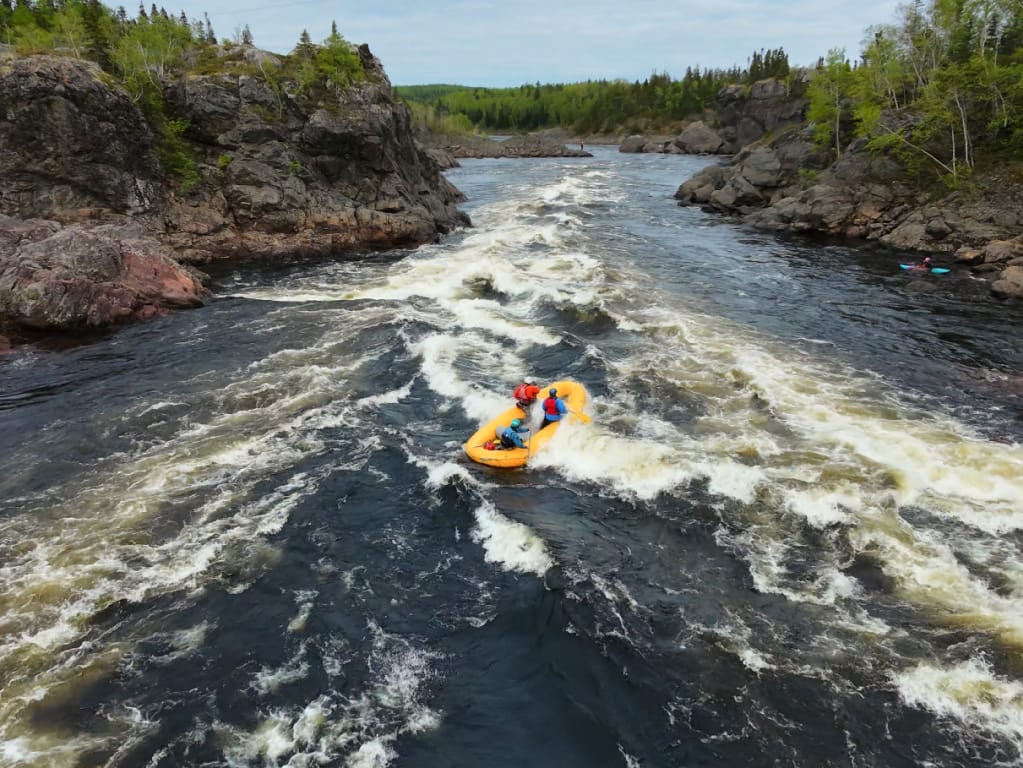
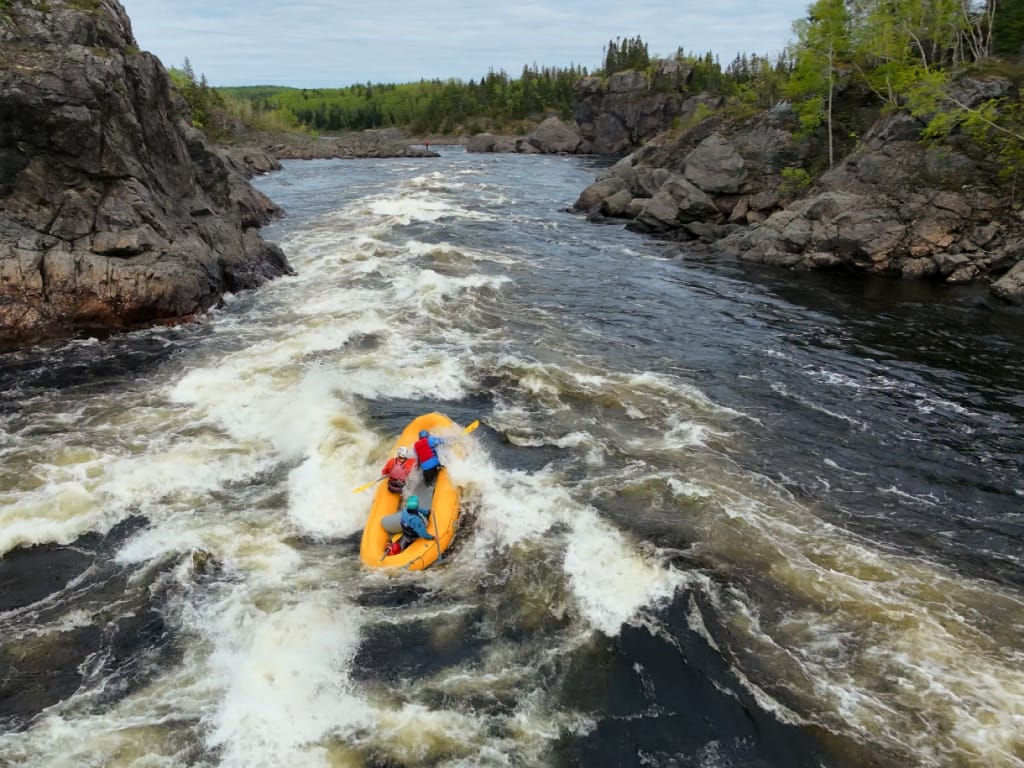
I went river rafting with Rafting Newfoundland and had a great time. Earlier in the day, I had gone ziplining across the river, so it was really cool to raft through the rapids I had seen from above. The whitewater section of the river is pretty short, but we ran a few of the rapids more than once, so it was definitely exciting.
The raft guides set me up with a wetsuit, helmet, and PFD, and then we drove to the launch point. Rafting NL offers river trips in several locations, but their canyon adventure in GFW has the most unique launch I’ve ever seen. The drop into the gorge is very steep, so they run the boat down the cliff on a zipline! (I walked down a trail to the bottom.)
After launching just below the dam, we rode the rapids past the power plant and into the heart of the gorge. Some of the biggest rapids were around Nonosabasut Rock. After that, we drifted downstream on the calmer water to the take-out point at the boat launch at Gorge Park.
If you’re nervous about rafting, don’t be! I told my guides I was fine with getting soaked, but didn’t want to fall out of the boat. They were great and chose lines through the rapids that would be lots of fun but wouldn’t push me too far outside of my comfort zone. And of course they also offer more mellow trips on other sections of the river (and on other rivers) if that’s what you’re looking for.
Bishop’s Falls
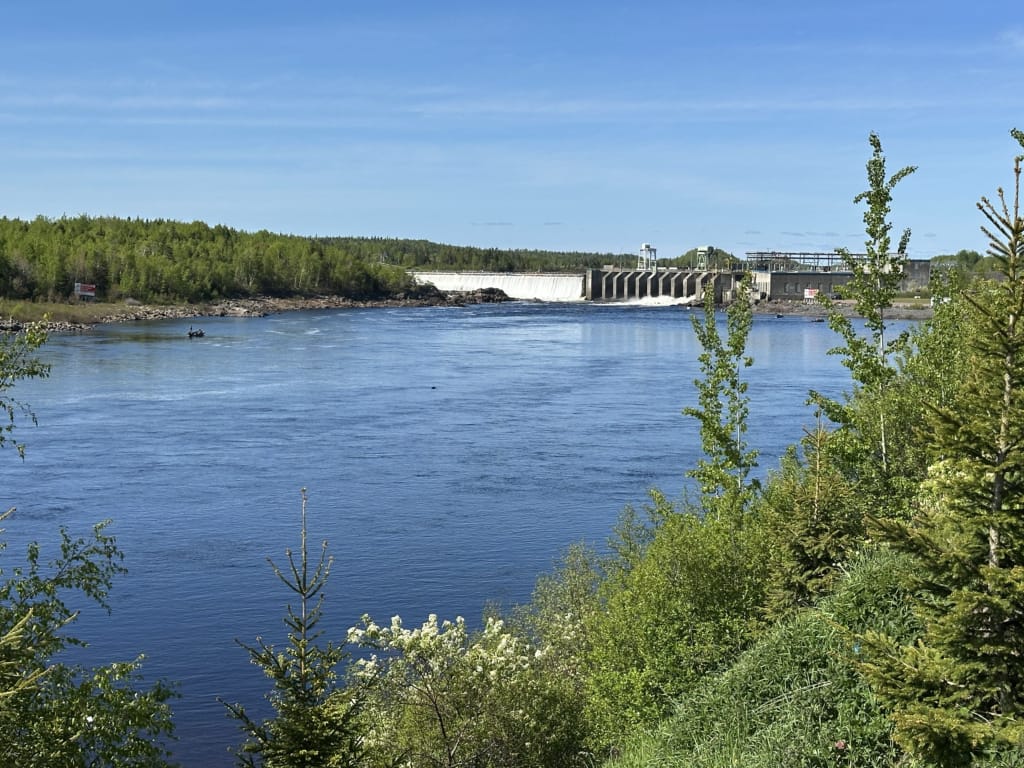
The town of Bishop’s Falls is just a few minutes away from Grand Falls-Windsor on the Exploits River. Like in Grand Falls, Bishop’s Falls is the site of a hydroelectric power dam. There are a few great viewpoints along the river that are worth visiting.
Fallsview Lookout on Main Street has a great viewing platform and parking. It looks down onto the river below the dam as well as across to a rocky island.
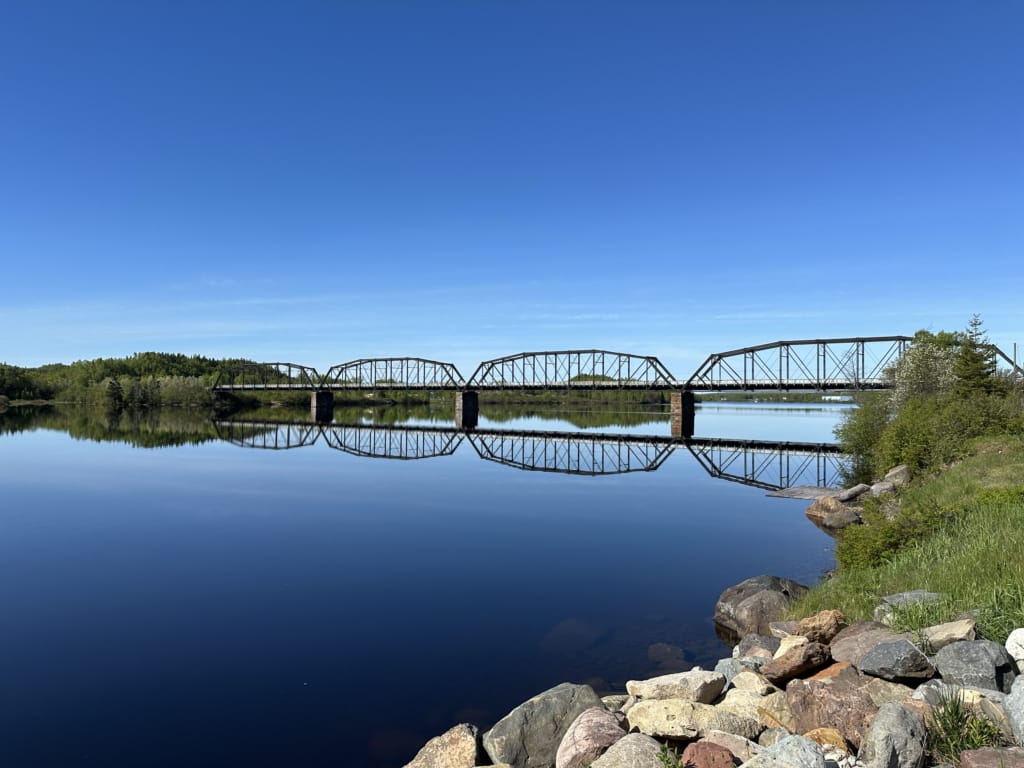
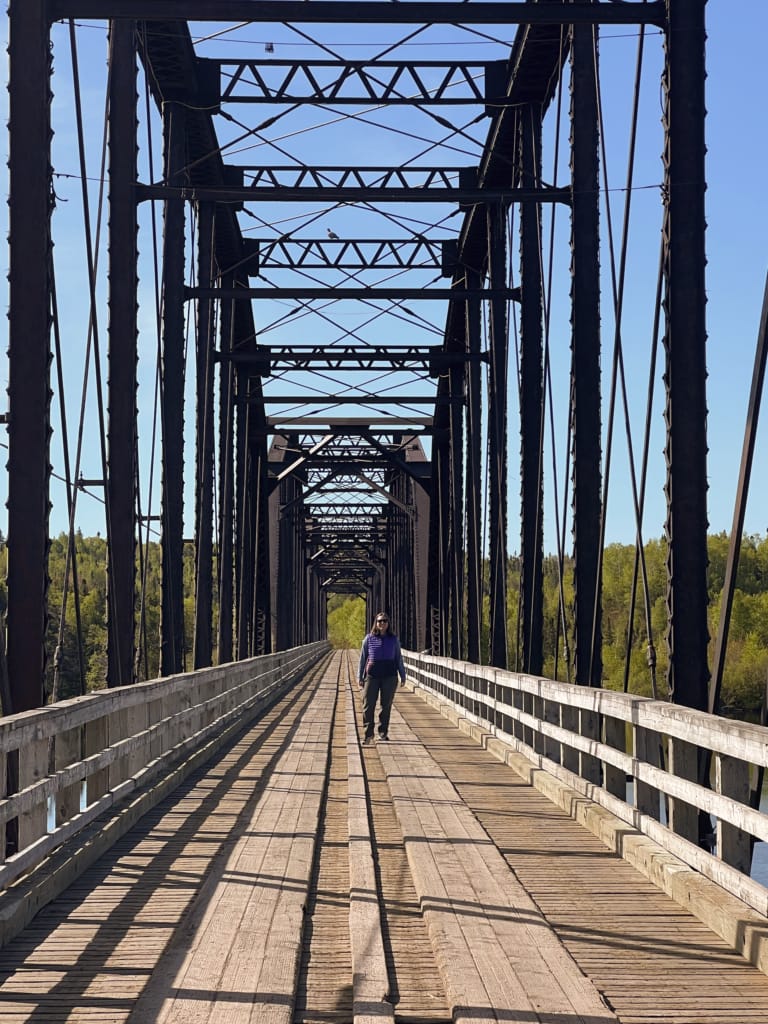
I also recommend stopping to explore the wooden trestle bridge on Riverside Drive. The bridge is part of the Newfoundland T’Railway, a multi-use trail that stretches across the province along the former route of the Newfoundland Railway. It’s the longest wooden trestle bridge east of Quebec. There is also a cute boardwalk along the river in this section.
More Attractions in Grand Falls-Windsor, Newfoundland
I only spent one day in Grand Falls-Windsor, so I didn’t have time to see everything. Here are a few more attractions that I’ve bookmarked for next time:
Thunder Brook Falls: A short hike to a waterfall just outside of town. There are several pools that I’ve heard are great for swimming on a hot day.
Salmon Fishing: The Exploits River is one of the best places for salmon fishing in Newfoundland, and we saw lots of people both on the banks and in boats fishing.
Demasduit Regional Museum: This small museum honours the life of Demasduit, a Beothuk woman who was kidnapped in this area by European settlers. It also tells the Indigenous and settler history of this part of Newfoundland.
Queen Street Dinner Theatre: Quintessential Newfoundland-style theatre with lots of music, all while you eat dinner. They offer several different shows each week.
Best Restaurants in Grand Falls-Windsor
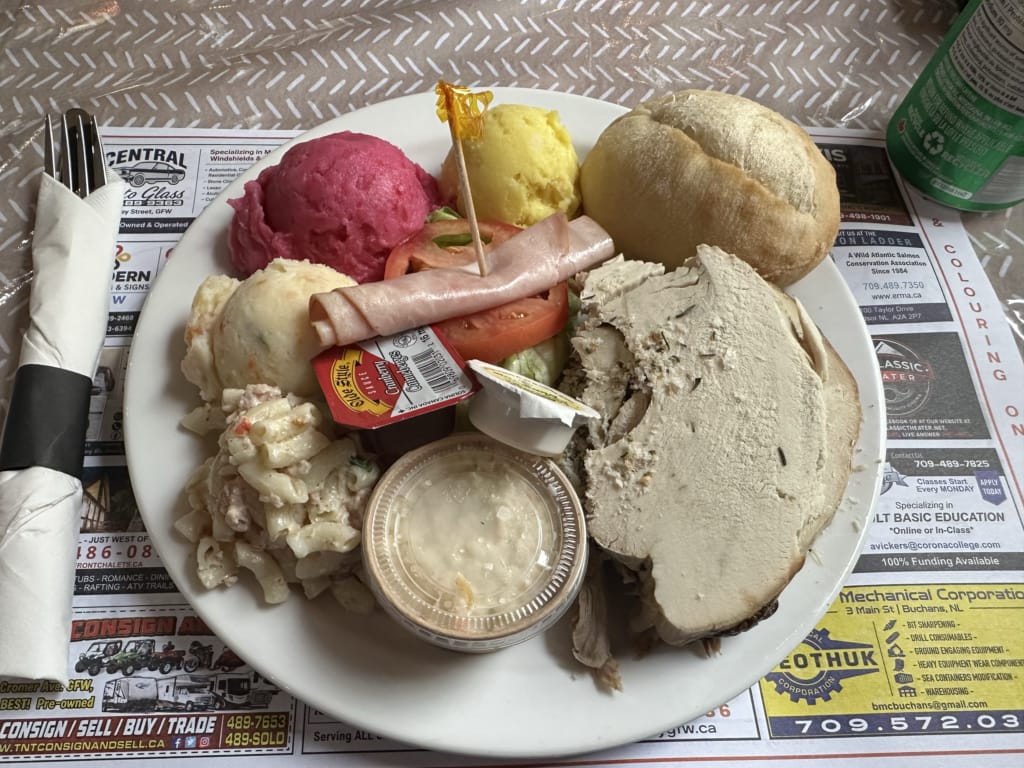
The Riverside Restaurant: This restaurant has the best spot in town: it’s perched on top of a cliff overlooking the Exploits River right by the Salmonid Interpretation Centre. They have a great patio. The menu features burgers, sandwiches, and the classic Newfoundland cold plate. Their version was huge – I was only able to finish half of it!
Lefty’s Pizzeria: This basic small-town pizza joint with a stone oven is a local’s favourite, open since 1981.
Grand Rodeo: Like many small-town Newfoundland restaurants, this place has a wide-ranging menu: salads, nachos, burgers, pasta, and an entire kabob section. I have no idea why it has a slight cowboy theme, though.
Best Hotels and B&Bs in Grand Falls-Windsor
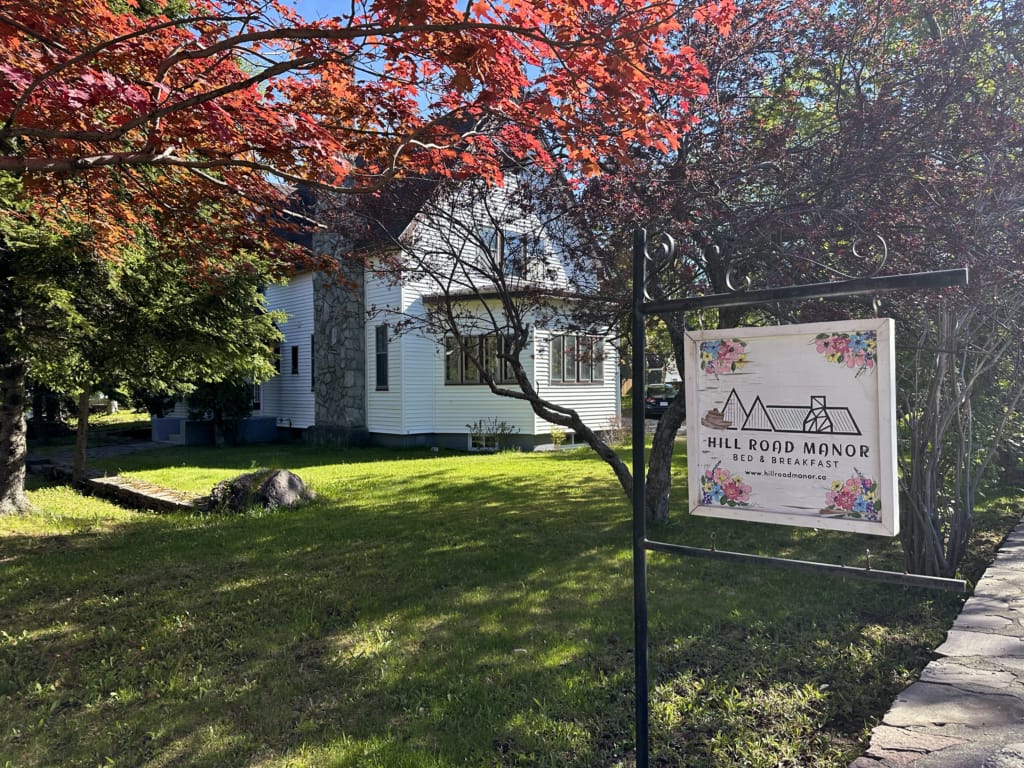
Hill Road Manor B&B: I stayed at the Hill Road Manor B&B during my time in Grand Falls-Windsor. It’s a gorgeous heritage house that dates back to the 1930s and was once the mill manager’s residence. Today, it’s owned by a local couple. It has a great central location on a quiet street, a few blocks from downtown Grand Falls.
It’s a true B&B since they serve a hot breakfast every morning. The B&B has five rooms, each with its own private bathroom. It also has common areas on the ground floor where you can hang out. I loved the antique furniture and local touches throughout.
The Carriage House Inn: I’ve also heard great things about The Carriage House Inn. It’s a 13-room B&B located on a rural property a few minutes outside of Grand Falls-Windsor. It’s been recently expanded and gets great reviews.
Planning Your Trip to Grand Falls-Windsor
How Do You Get to Grand Falls-Windsor
Grand Falls-Windsor is located almost in the very centre of the island of Newfoundland. It sits next to the Exploits River on Highway 1.
If you are flying in, Gander is the closest airport, 1.25 hours away by car. However, most people visit Grand Falls-Windsor as part of a cross-Newfoundland road trip. It’s about 2 hours from Deer Lake Airport, 3 hours from Corner Brooke, 4.5 hours from St. John’s, and 2 hours from Twillingate, so it’s a great stopover between those points.
You can get to Grand Falls-Windsor on the DRL bus, which passes through town once a day on its route between St. John’s and Port aux Basques. But there is no public transportation in Grand Falls-Windsor, or to the surrounding towns, so it makes the most sense to rent a car in Gander, Deer Lake, or St. John’s.
Best Time to Go
Summer is the best time to visit Newfoundland, so I recommend visiting Grand Falls- Windsor between May and late September. This is the time of year with the warmest and driest weather.
Some tourist businesses may not be open or will have limited opening hours outside of these months. Be sure to check hours online if you plan to visit in May and September.
How Many Days to Spend in Grand Falls-Windsor?
I recommend spending one day in Grand Falls-Windsor, Newfoundland. It’s a small place, so that’s enough time to see the major sights. I also recommend planning to spend the night here since it’s a great place to break up your journey on a Newfoundland road trip.
Grand Falls-Windsor One-Day Itinerary
Here is a quick one-day itinerary for GFW. It’s the perfect trip plan for a stopover on a road trip:
Morning: Stop at Canyon Park as soon as you get to town
Lunch: Riverside Restaurant
Afternoon: Salmonid Interpretation Centre, then ziplining or rafting
Dinner: Lefty’s or Grand Rodeo
Evening: Corduroy Brook Nature Trail
Overnight: Hill Road Manor B&B
Next morning: Stop at Bishop’s Falls on your way out of town
Grand Falls-Windsor Weather
Since Grand Falls-Windsor isn’t on the ocean, it isn’t as windy as many other places in Newfoundland. The inland location means that it has warmer summers and colder winters compared to the rest of the province.
In July and August, average daytime highs are around 22°C (72°F), while nighttime lows are about 12°C (54°F). It’s a bit cooler overall in May, June, and September.
It’s also worth noting that the lack of ocean breeze means that the mosquitoes and black flies can be a bit worse in Grand Falls-Windsor than they are in coastal towns. The bugs are at their worst in June and early July, but with long sleeves and insect repellent, they aren’t that bad.
Grand Falls-Windsor History
The Grand Falls-Windsor area was originally two towns: Grand Falls and Windsor. Grand Falls started as a pulp and paper company town in 1905 in the area south of Highway 1, close to the river.
However, the Newfoundland Railway didn’t pass through the town – it was a few miles north of the present-day Highway 1. A town grew up around what was at first called Grand Falls Station. When the town was officially incorporated in 1938, they called themselves Windsor, after the British royal family.
The two towns decided to amalgamate in 1991, using the name Grand Falls-Windsor. Today, the town has two downtown areas: one in Grand Falls and one in Windsor. It also has a large commercial area with lots of big box stores just east of Windsor and north of the highway.
The mill closed in 2009, which was an economic setback for the town since it was one of the largest employers. However, Grand Fall-Windsor is still an important service centre for Central Newfoundland, so it remains a regional hub city.
Indigenous Context in Grand Falls-Windsor
The Grand Falls-Windsor area is an important place in the Indigenous history of Newfoundland. At the time of European contact, the Beothuk people were pushed from their traditional coastal territories into the island’s interior. Their population dwindled.
One of the last Beothuk people was Demasduit, who was given the English name Mary March. After a group of Beothuks captured a boat and some fishing equipment in 1818, Demasduit was kidnapped in the Exploits River Valley, near present-day Grand Falls-Windsor, during an armed attack by settlers. She was held in St. John’s for several months before dying near what is now Botwood, during her journey home.
Her people retrieved her body, but later a Scottish explorer removed them and brought them to the National Museum of Scotland. They remained there until 2020, when they were returned to Newfoundland and stored at The Rooms Museum in St. John’s.
After the Beothuk died out, Mi’kmaq trappers and hunters moved into the Exploits River area. There are still many people with Mi’kmaq heritage in the Grand-Falls Windsor area today, and are recognized as members of the Qalipu First Nation.
The Demasduit Regional Museum in Grand Falls-Windsor tells the story of Demasduit’s life as well as the history of the Beothuk, early European settlers, and the Mi’kmaq people.
Final Thoughts
Before my most recent trip, I had driven through Grand Falls-Windsor a few times on Newfoundland road trips and had never really stopped for much besides gas and food.
After spending a bit of time in Grand Falls-Windsor, I think it’s more than just a convenient stop on the Trans Canada Highway. The river views are great, I loved both zip lining and rafting, and the Hill Road Manor B&B was one of the cutest places I’ve stayed in Newfoundland. It’s worth spending a day or two enjoying the Exploits River scenery, and it makes a great jumping-off point for other destinations in Central Newfoundland, like Twillingate.
If you’re planning your trip to Newfoundland, check out these other posts:
- 20 Incredible Things to Do in Newfoundland
- 16 Best Hikes in Newfoundland
- Things to Do in Gros Morne National Park
- 18 Best Things to Do in St. John’s, Newfoundland
- 10 Things To Do in Twillingate, Newfoundland
- Things to Do in Twillingate, Newfoundland: Icebergs, Hiking, and More - August 24, 2026
- 20+ Best Things to do in Squamish, BC (From a Local) - August 22, 2026
- Tenquille Lake Trail Hiking and Backpacking Guide - August 10, 2026