
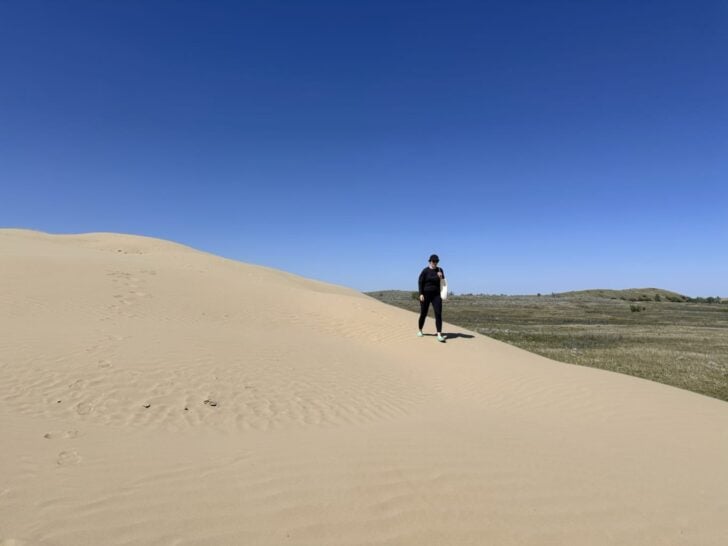
Canada’s prairie provinces are severely underrated… well, that’s my opinion anyway. When I drove across Canada during my university days, we didn’t have time to stop, so we sped through Saskatchewan. Years later, attending a conference in Saskatoon seemed like a good excuse to head back and figure out the best things to do in Saskatchewan.
Besides the conference, my main reason for visiting was to spend time in Grasslands National Park as part of my quest to visit all of Canada’s national parks. (I’m at 19 of 48.) But while I was planning my trip, I discovered all kinds of fun and quirky places I wanted to check out. These included sand dunes, Canada’s Dead Sea, and bootleggers’ tunnels!
Now that I’m back, I can confirm that Saskatchewan is indeed worth a visit. I spent two weeks in late May and early June road tripping across the province and had a great time. I hiked, kayaked, biked, ate great food, admired interesting art, and saw cool birds. And yes, I also climbed sand dunes, floated in salty water, and clambered through underground tunnels.
But of course I haven’t seen the whole province yet! I’d love to go back and see what else I can discover.
If you’re thinking about visiting, I’ve put together a quick list of the best things to do in Saskatchewan for you. This post includes:
- A map of Saskatchewan that shows all the places I mention in this post.
- The best things to do in Saskatchewan (in my opinion), including unique attractions, national parks, and more
- Saskatchewan Travel Tips: How to get there? How long to spend? What’s the weather like? And lots more.
Hey there: Thanks so much to Tourism Saskatchewan for hosting some of my experiences on this trip. All opinions in this post are my own. Some of the links in this post are affiliate links, which means I earn a small commission at no cost to you. Thanks for your support. -Taryn
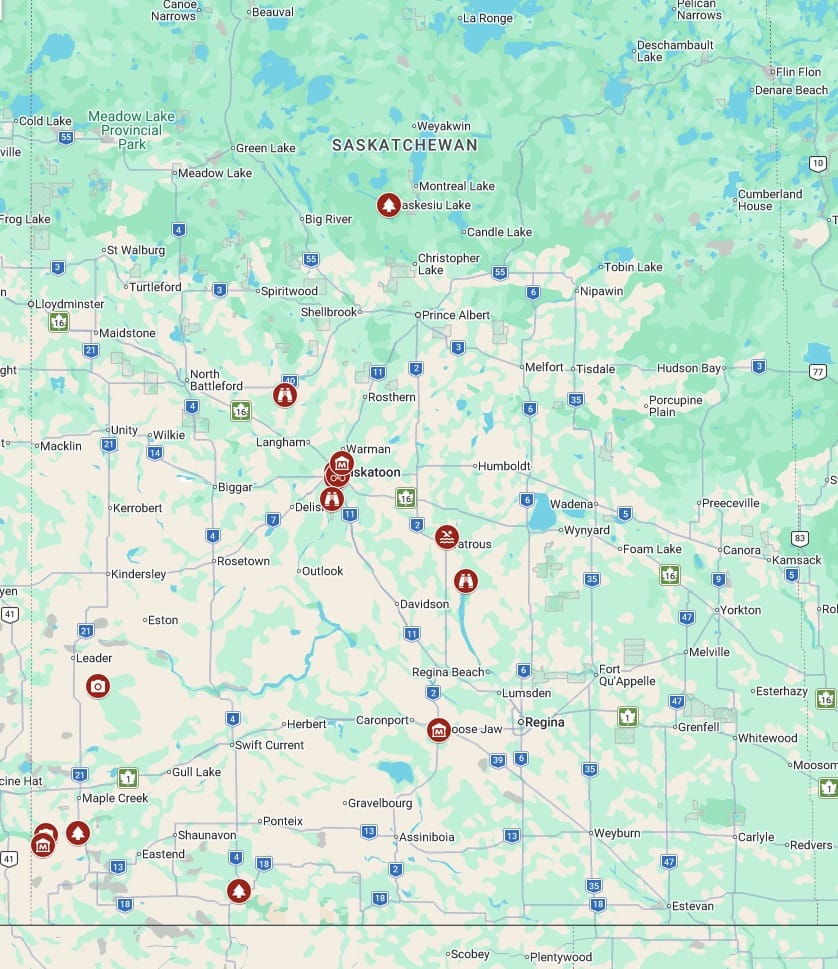
Map of Saskatchewan
To help you plan your trip and find your way around, I created a custom Google Map of Saskatchewan for you. It includes every place I mention in this post.
Best Things to Do in Saskatchewan
Grasslands National Park
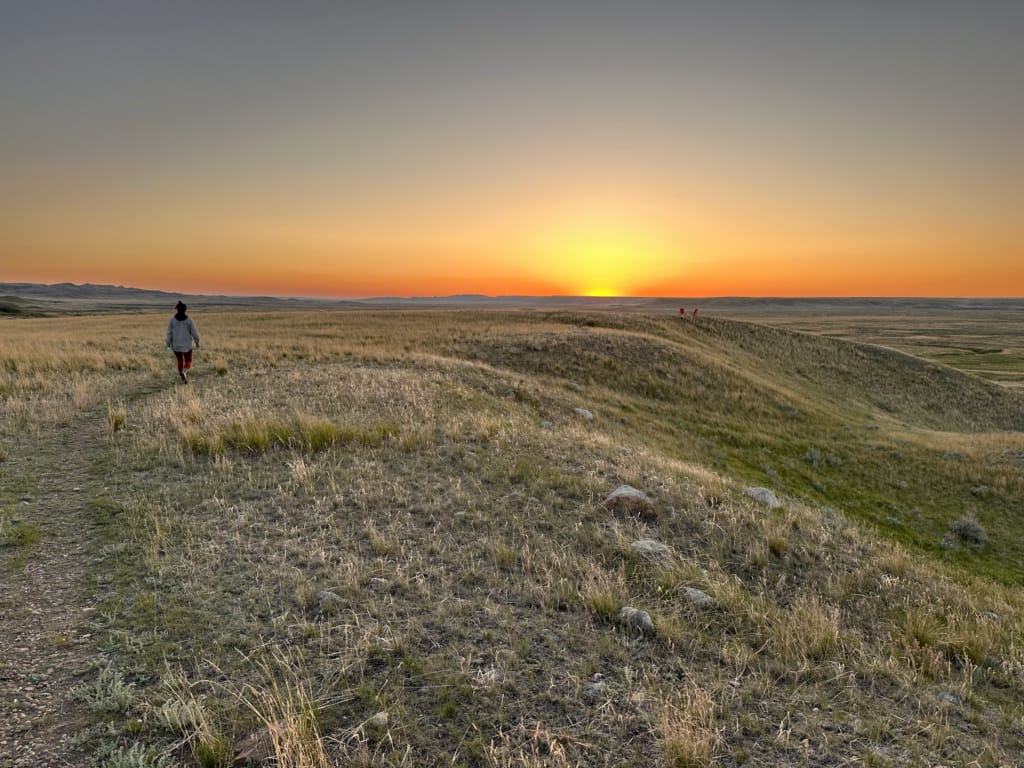
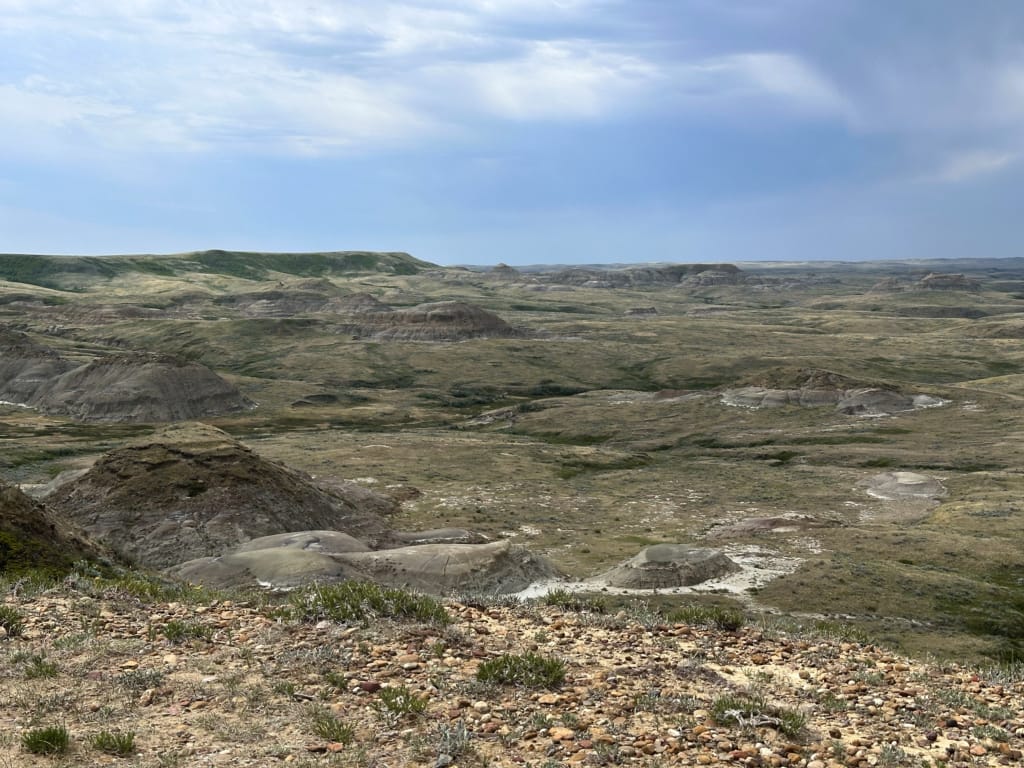
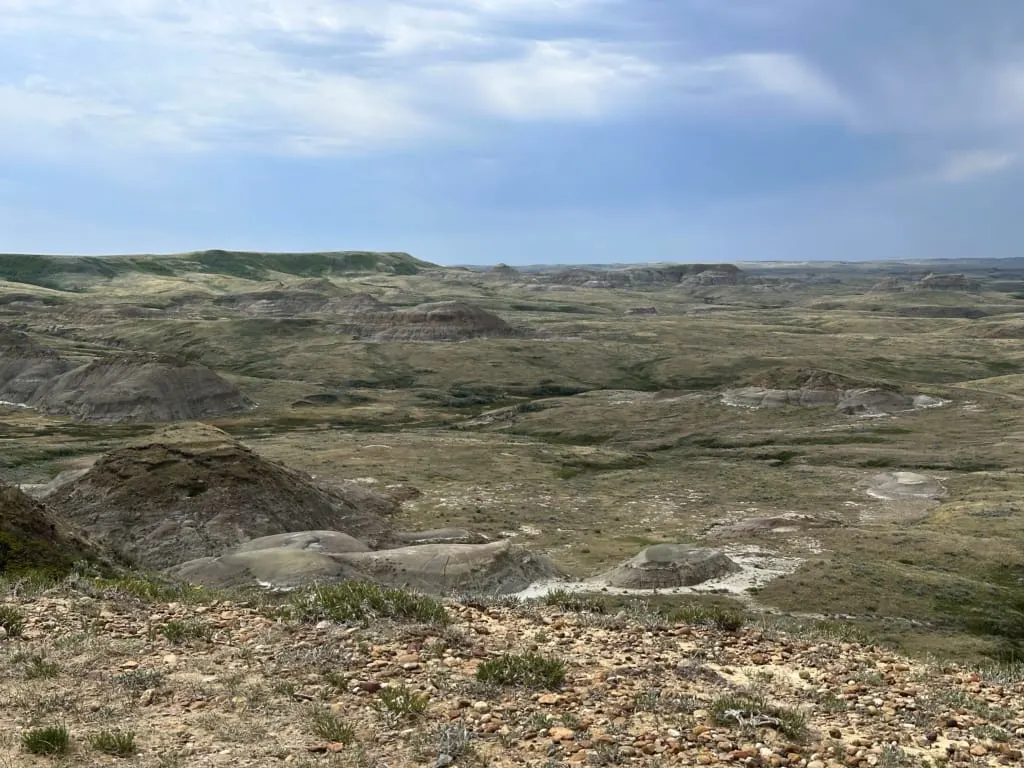
By far my favourite part of my trip to Saskatchewan was the three days I spent in Grasslands National Park. Honesty, I wish I had budgeted more time! Grasslands is so gorgeous! The park protects the original prairie grasslands ecosystem, along with some unique badlands that are home to tons of dinosaur fossils.
The park is split into two blocks: The larger West Block is rolling grasslands with free-roaming bison. Badlands dominate the smaller East Block. Both blocks have scenic drives with designated stops for viewpoints, wildlife viewing, and info plaques. Both blocks also have great hiking.
Even though I’m from BC and used to dramatic landscapes, the scenery here blew me away. It’s a subtle beauty with grassy hills, rugged buttes, and big skies with spectacular sunsets. It’s also so quiet! The park is remote, and doesn’t see that many visitors so you are likely to have trails and viewpoints to yourself.
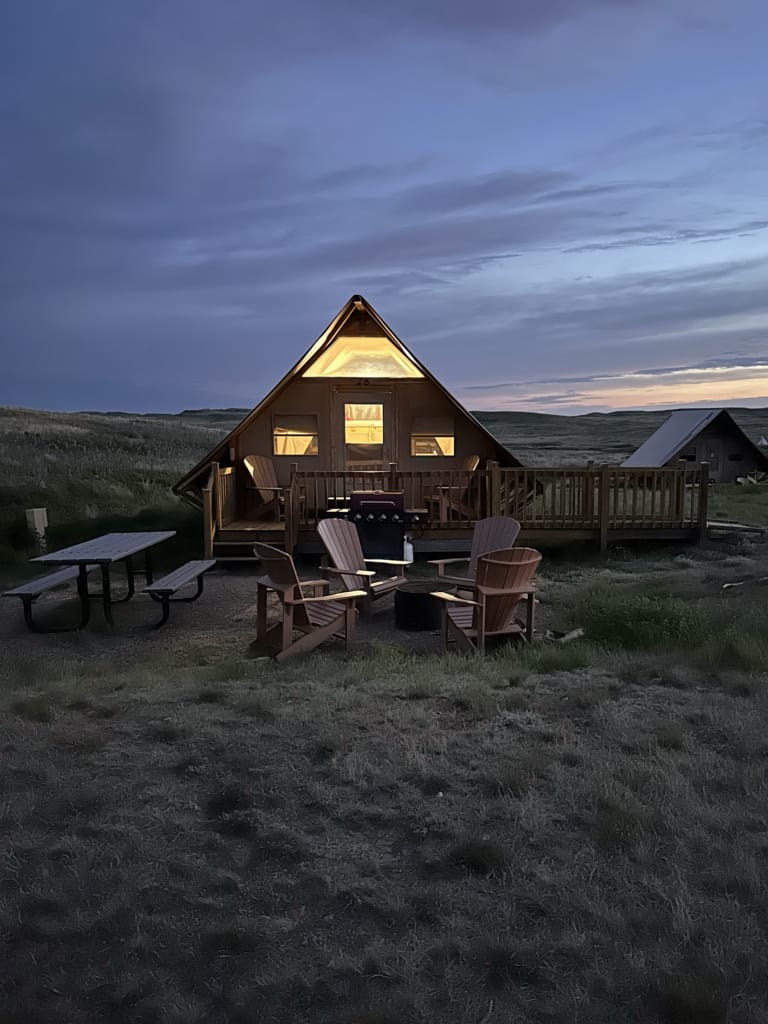
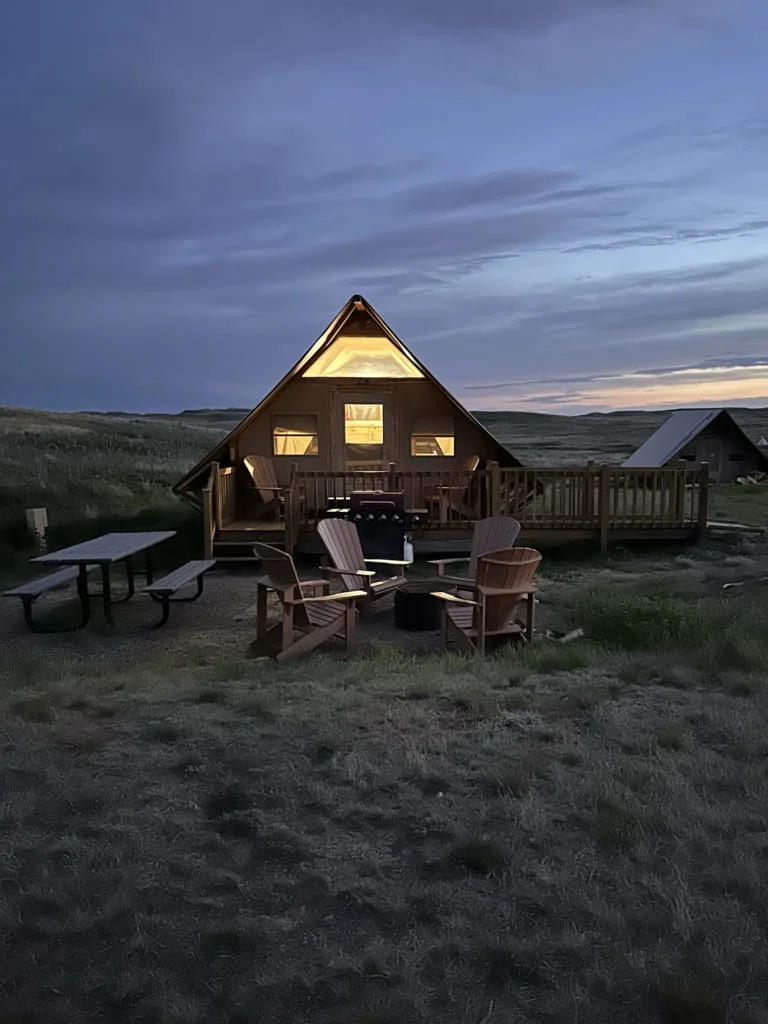
If you can, I highly recommend camping in the park to enjoy even more solitude, plus amazing stargazing. You can book bring your tent or RV or book an oTENTik, a soft-sided cabin that comes with bunk beds.
Read my Grasslands National Park Guide
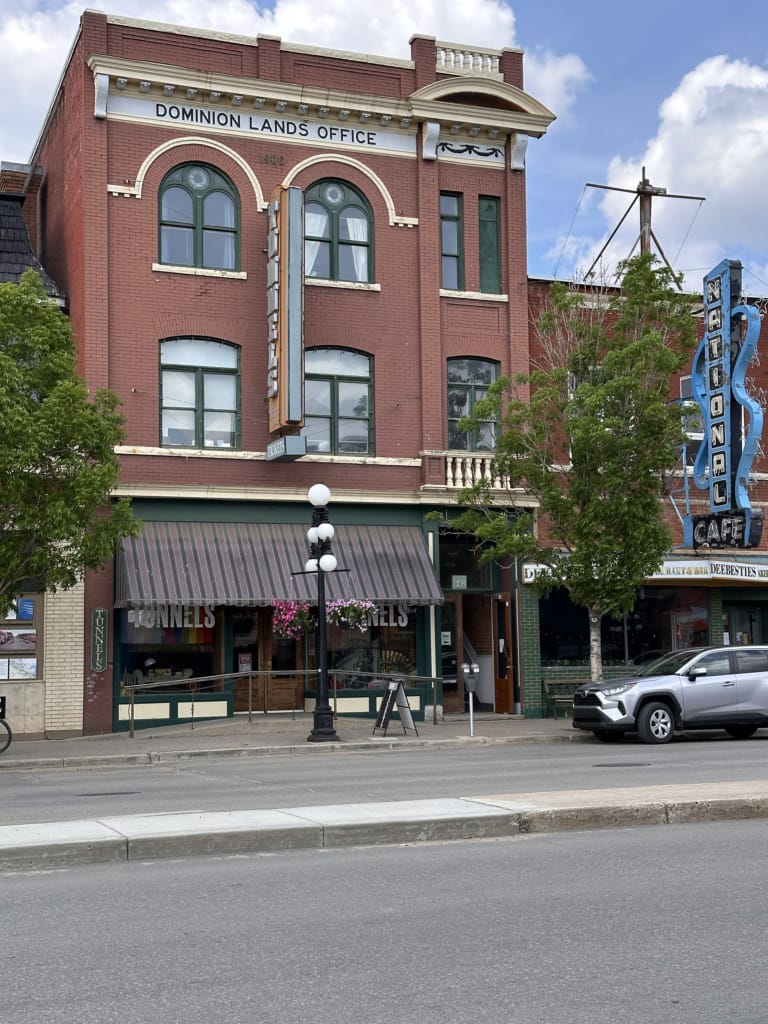
Tunnels of Moose Jaw
I’ve actually been to the Tunnels of Moose Jaw twice! Back when I was a university student on a cross-Canada road trip, I stopped in Moose Jaw to do the tunnels tour. I remembered it being super fun, so I knew I wanted to see the tunnels again.
Moose Jaw’s downtown core has a secret: there are tunnels under the streets and buildings. While the tunnels were originally built for steam heating or for transporting coal, bootleggers used them in the 1920s during the prohibition era to aid in smuggling alcohol into the nearby United States. Notorious gangster Al Capone, a.k.a. Scarface, is even rumoured to have spent time in Moose Jaw.
Today, you can take themed tours that use actors and special effects to bring the history of the tunnels to life. The Chicago Connection tour about the prohibition era is the most popular, and that’s the one I’ve done. (Twice!) But they also have tours about the experience of Chinese immigrants and the Cold War.
The tours are cheesy in a fun way. And I’m sure if you look too closely, they aren’t 100% historically accurate. But they are definitely worth doing.
Great Sand Hills
Did you know there are giant sand dunes in southwestern Saskatchewan? Until I started to research my trip to the province, I had no idea. Once I saw the photos, I knew I had to go.
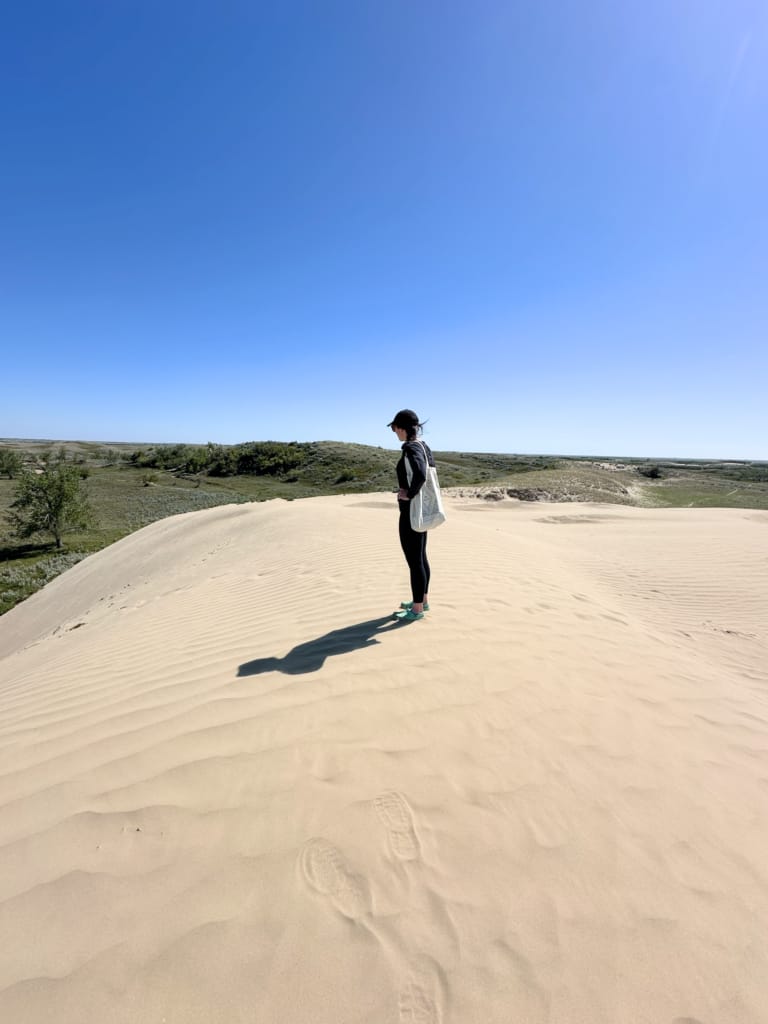
Saskatchewan looks pretty flat, but it’s actually made up of subtly rolling hills. Those hills get a little taller at the Great Sand Hills, and the grass gives way to sand. You can’t really see the dunes until you get close to the parking lot – it feels like they spring up out of nowhere!
But once you climb up onto the top of the dunes, they spread out all around you. The dunes cover 1900 square kilometres!
There is a parking area and some info signs at the entrance. From there, you can follow a vague trail up into the dunes. There are no formal trails, so you can wander in all directions. But it’s easy to get turned around in all the little hills, so make sure you know how to get back. As well, try to avoid stepping on the fragile dune grasses.
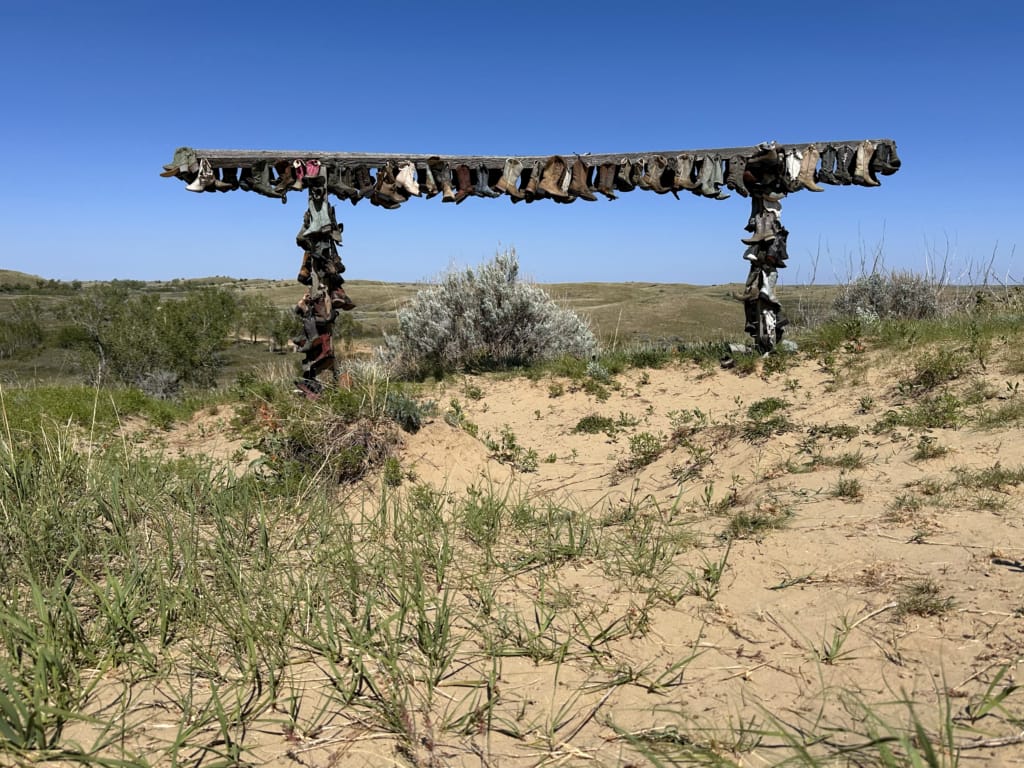
If you want a unique photo op, hike up to the unique cowboy boot arch on top of one of the dunes near the parking area. It was erected in memory of a local rancher.
Getting to the Great Sand Hills involves travel on some small backroads. In general, use these Google Maps directions, but be sure to come in from the north on Great Sand Hills Route via Highway 32 or Highway 21 and then Township Road 210. This respects private property and avoids driving in deep sand in the south.
Saskatoon
I spent nine days in Saskatoon at a conference, on a bird-watching tour, and exploring on my own. This artsy little city really grew on me!
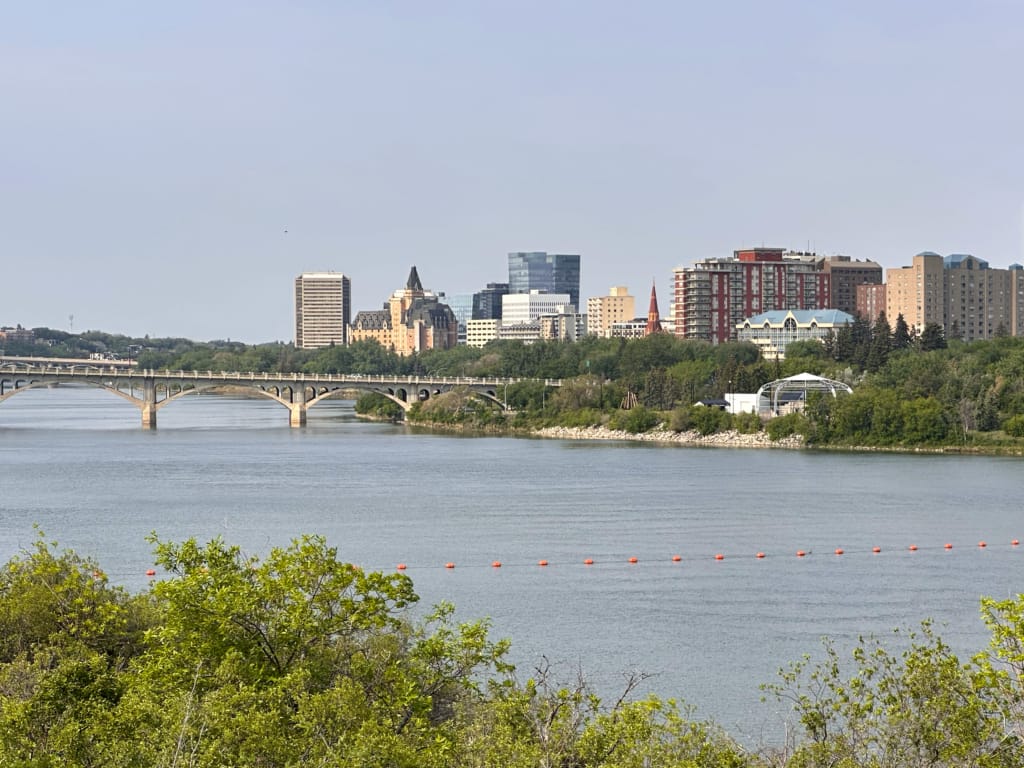
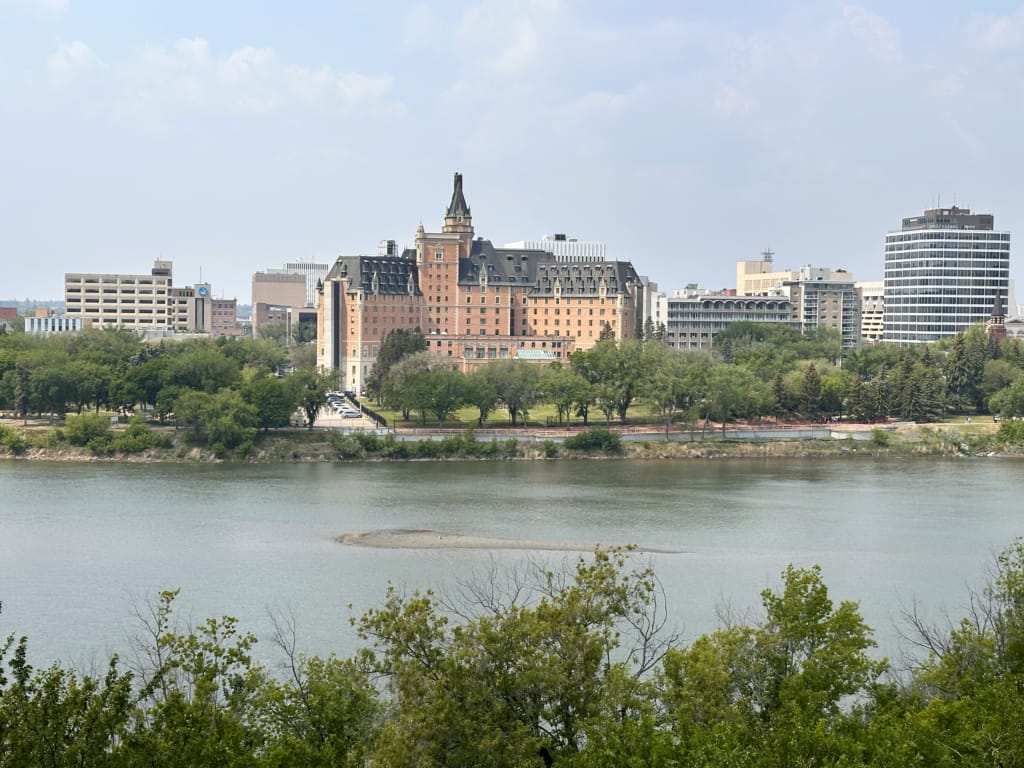
Saskatoon has a compact and walkable core centred on the South Saskatchewan River. The nearby neighbourhoods of Riversdale and Nutana/Broadway are filled with cute boutiques and shops showcasing local products.
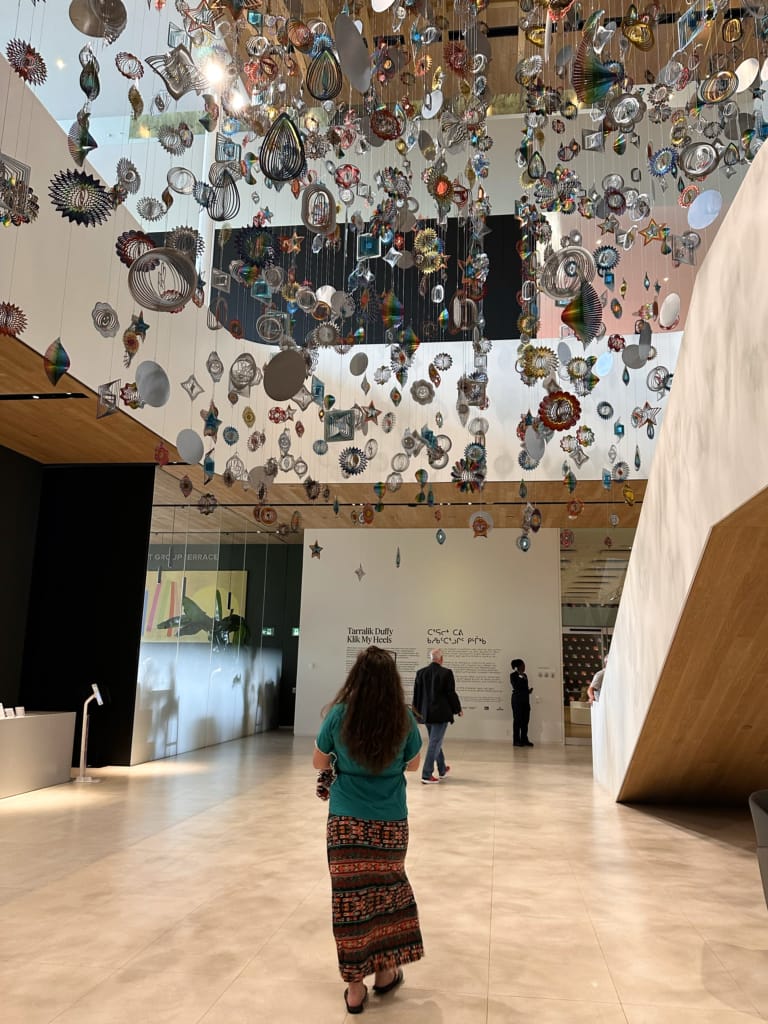
Did you know that you can see original Picassos in Saskatchewan? I had no idea until I visited. The Remai Modern has a huge collection of original Picasso linocuts. They also have lots of modern and contemporary art by Canadian artists. The architecture is gorgeous, too. My favourite part is the Nick Cave’s Spinner Forest installation in the atrium.
Saskatoon is also an incredible city for foodies. I ate at several wonderful restaurants that had an unpretentious atmosphere and stand-out food. Local produce is the star here: whitefish from Saskatchewan’s lakes, prairie grains, and locally raised meats.
If you’re looking for a cool place to stay, I loved the Alt Hotel in Saskatoon. It has a central location and a cool, modern design.

Meewasin Valley Trail
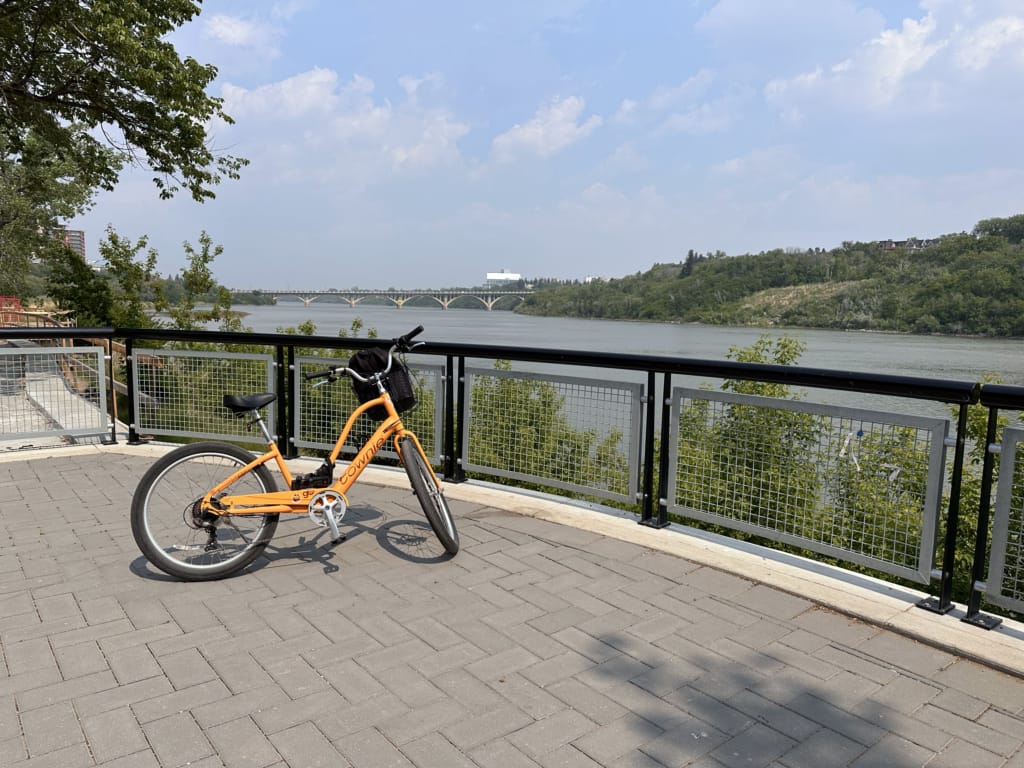
I think one of the reasons I loved Saskatchewan so much is the Meewasin Valley Trail. It’s a dedicated walking and biking path that stretches along both banks of the South Saskatchewan River in Saskatoon. In the heart of the city, the path is paved and reminded me a little bit of the Coal Harbour or False Creek Seawall in Vancouver.
But further from downtown, the path goes through quiet neighbourhoods and farmland, always keeping the river nearby. Since the trail runs on both sides of the river, many of the bridges have dedicated bike lanes. The Gordie Howe Bridge even has its own bike lane that hangs underneath the bridge. You can also cross the river on the historic wooden CPR bridge.
During my time in Saskatoon I ended up walking along the Meewasin Trail through downtown almost daily. It was a great way to get some nature time in between sessions at a conference.
I also spent an afternoon biking it with a friend. We rented ebikes at Life Outside Gear Exchange and cruised along the trail. My favourite sections were the bridges, the views of downtown from the University of Saskatchewan Sculpture Garden, and the new River Landing section near downtown.
Wanuskewin Heritage Park
When I travel, I try to learn more about the history and culture of the place. And in Canada, that usually includes learning about the local Indigenous context. I’ve visited some great Indigenous museums and cultural centres in Squamish, BC and Haida Gwaii, BC. But I didn’t know too much about Indigenous people on the prairies.
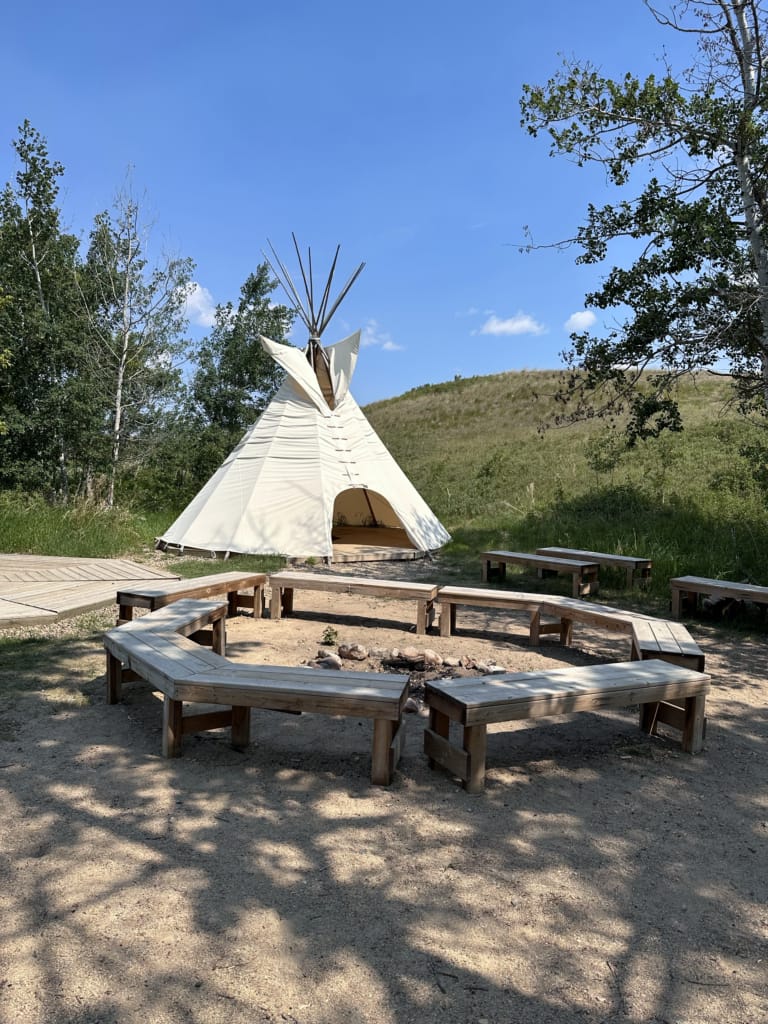
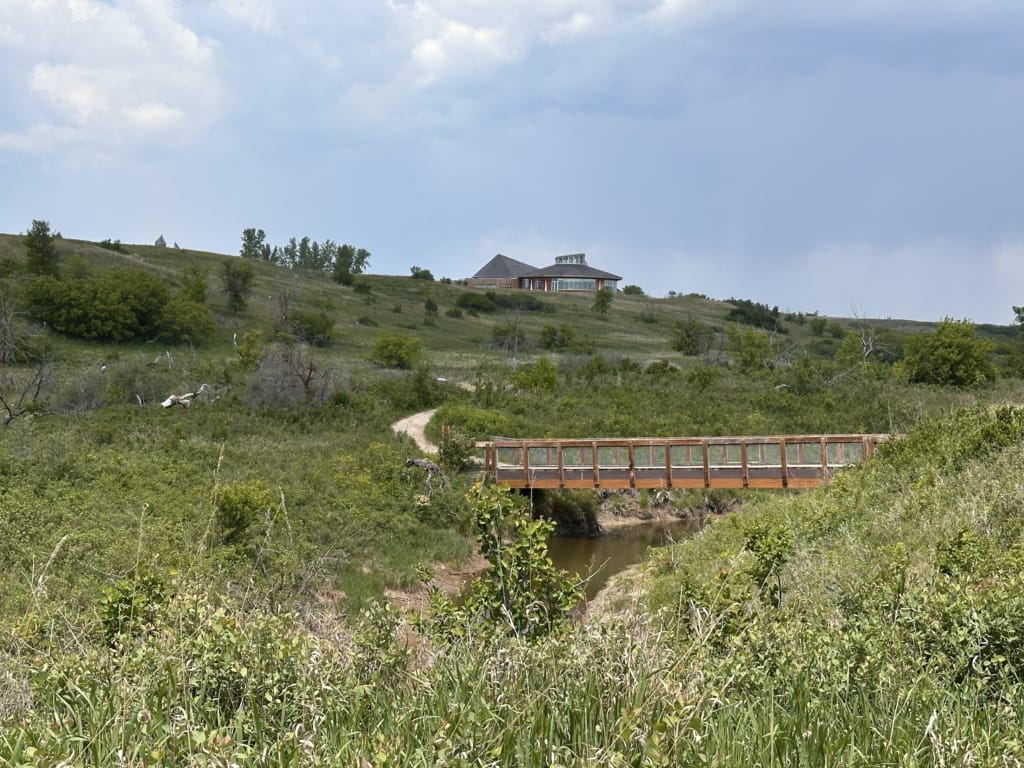
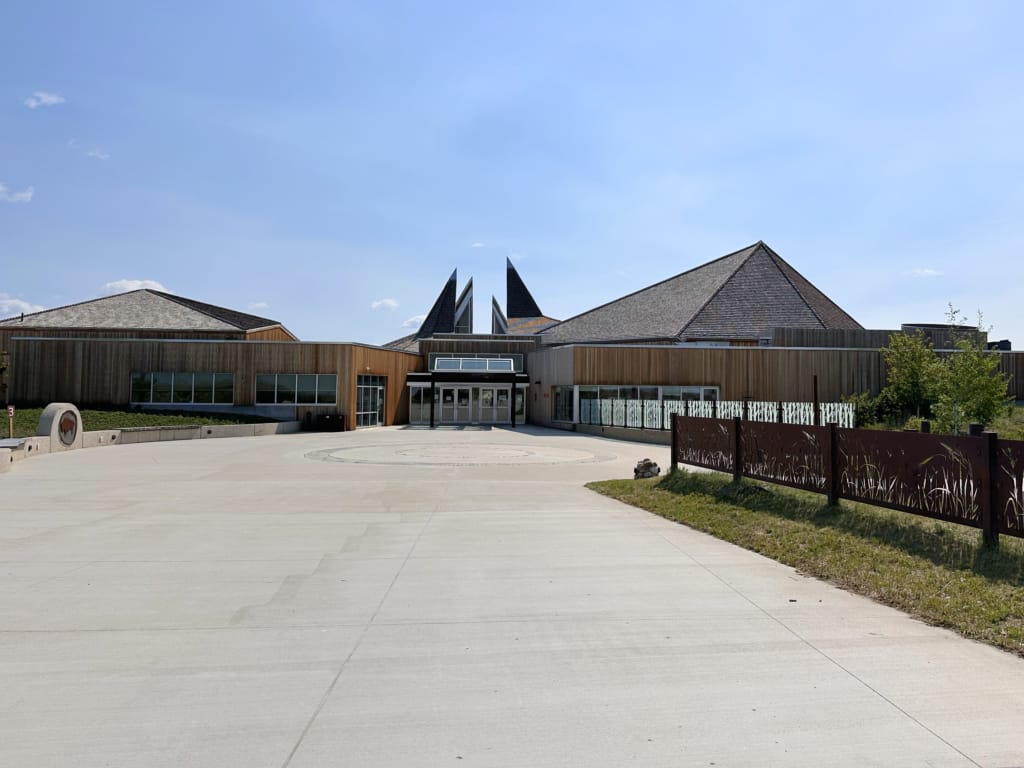
Visiting Wanuskewin Heritage Park just outside Saskatoon was such a good learning experience. It’s an Indigenous cultural centre and museum that includes several important archaeological sites (including a 1500-year-old medicine wheel), walking trails, a bison viewing area, and indoor exhibits.
I especially liked how much of the educational component was outdoors. It was lovely to stroll along the trails, listening to bird song, while stopping to read the interpretive signage about ancient buffalo jumps or tipi sites.
Bird Watching
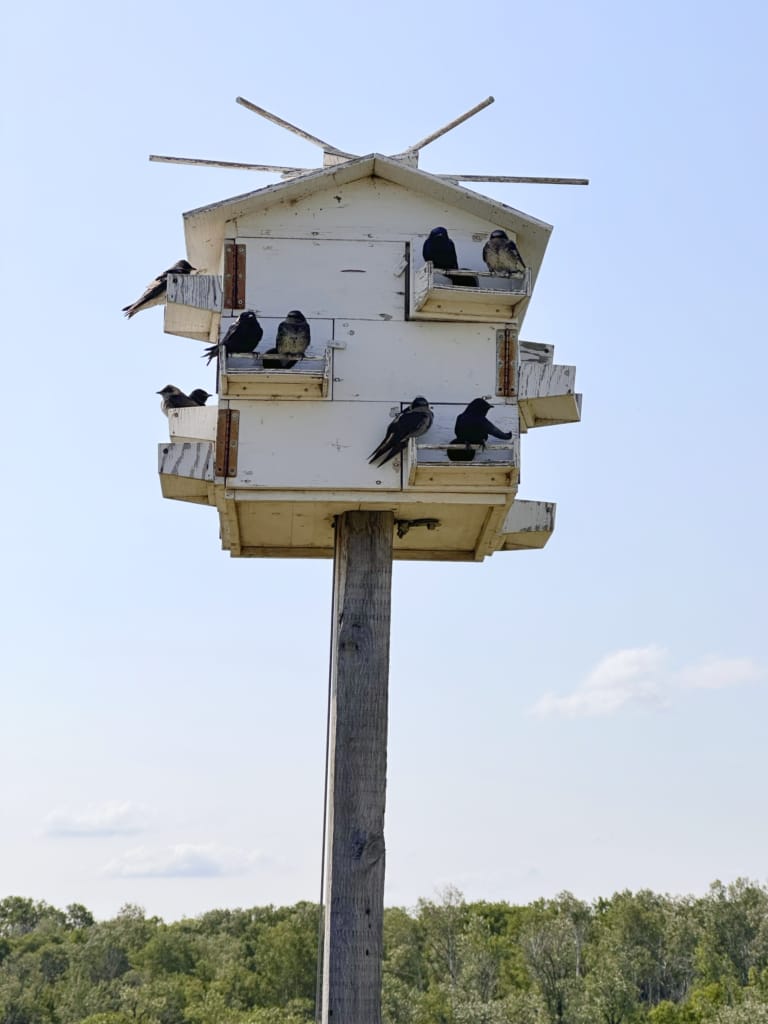
Thanks to its location on several North American migratory flyways, Saskatchewan has excellent bird watching, especially near bodies of water like lakes and marshes. When I was planning my trip, bird watching wasn’t on my radar.
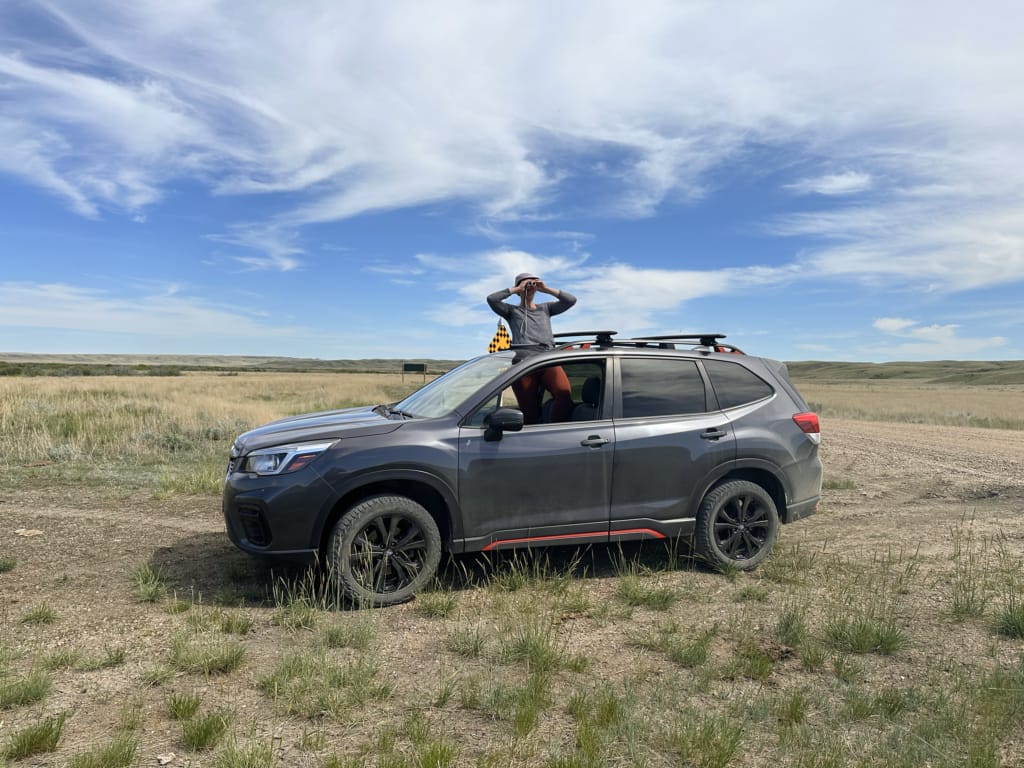
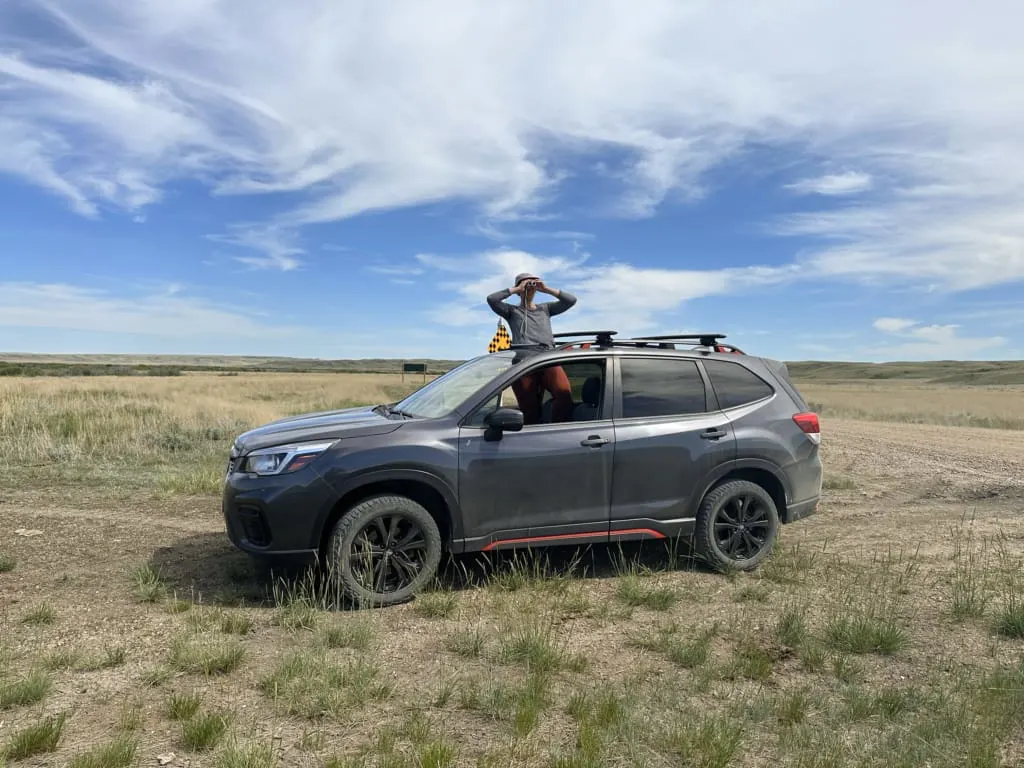
But I started my trip in Grasslands National Park with a friend who is a birder. Before I knew it, we were driving around the park armed with binoculars and the Merlin bird ID app, excitedly pulling over when we spotted birds. Later in the trip, I ended up joining some travel industry friends on a bird-watching tour at the last minute. By the time I left Saskatchewan, I was a birder and I’ve continued my bird-watching ways ever since.
During part of my birding tour, I spent a day with Stan Shadick of Saskatoon Custom Bird Tours. That man is a bird encyclopedia! He can identify so many birds and knows all the best places to find them. Stan took us to a few well-known birding locations, but he also just spotted things from the car and had us pull over to have a look.
If you’re planning to go birding in Saskatchewan, I recommend booking a tour with Stan since he can show you the best spots and help you find key species. However, if you want to go exploring on your own, I recommend birding in Grasslands National Park in the southern part of the province, Last Mountain Lake Migratory Bird Sanctuary between Saskatoon and Regina, Beaver Lake Conservation Area on the outskirts of Saskatoon, and Redberry Lake northwest of Saskatoon.
Cypress Hills Interprovincial Park
If you had to guess the location of the highest point in Canada between Labrador and the Rocky Mountains, would you guess southwestern Saskatchewan? I was surprised to hear that the Cypress Hills, at 1,468 m above sea level, warrant that distinction.
I spent a night camping in Cypress Hills Interprovincial Park at the start of my visit to Saskatchewan. The park stretches across the Alberta-Saskatchewan border and has hills covered in lodgepole pine and a temperate climate that is a little cooler in summer than the surrounding prairies.
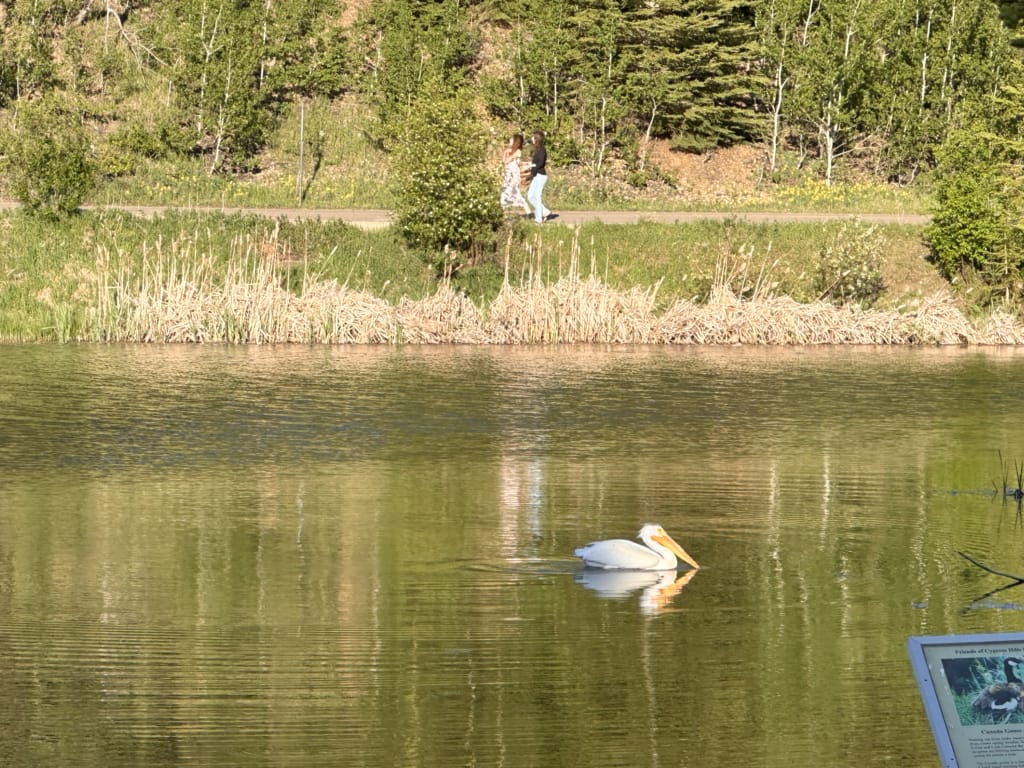
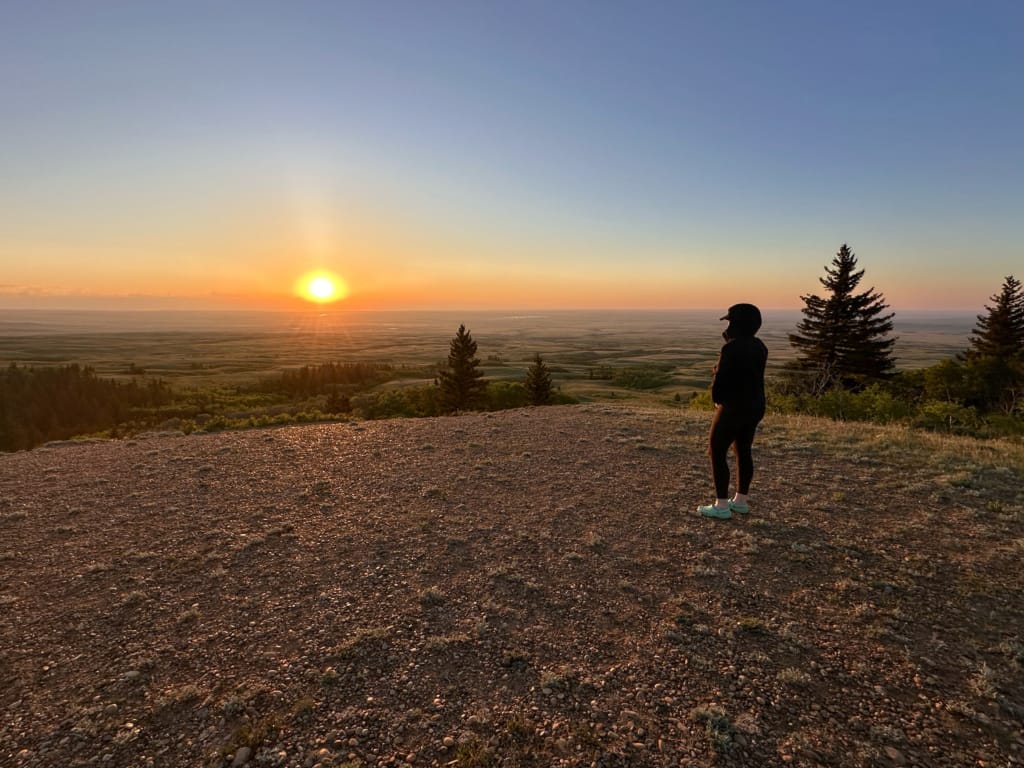
On my short visit to the park’s Centre Block, I enjoyed a spectacular sunset from the Bald Bluffs lookout point and spotted pelicans feeding in Loch Leven.
Unfortunately, I didn’t have time to visit the West Block, which contains the spectacular Conglomerate Cliffs as well as Fort Walsh National Historic Site. Next time!
Little Manitou Lake
Another thing I didn’t expect to find in Saskatchewan is a lake so saline it rivals the Dead Sea. Underground springs feed the waters of Little Manitou Lake, which is high in sodium, magnesium, and potassium salts. It’s so salty that swimmers are extra buoyant.
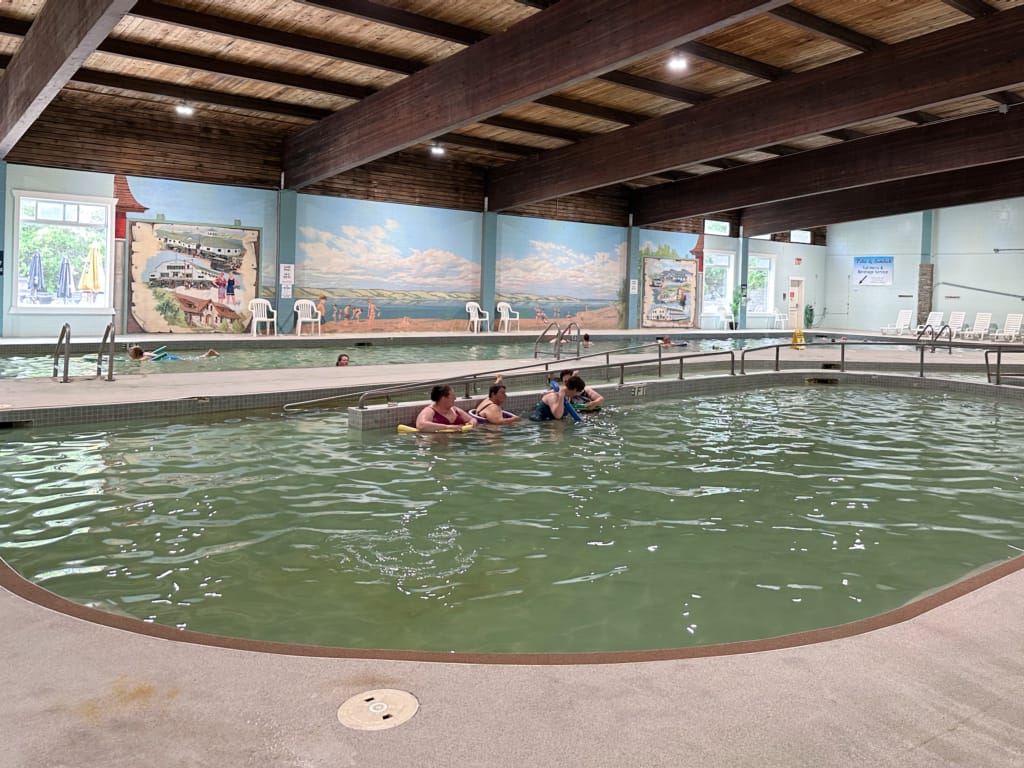
I stopped here on my road trip across the province. It was cold and windy (despite being June), so a dip in the lake wasn’t appealing. Instead, I went for a swim at Manitou Springs Resort. They have a heated indoor pool that uses saline water from the lake. The pool is a bit retro (in a fun but slightly tired way), but I found it very relaxing to float with no effort.
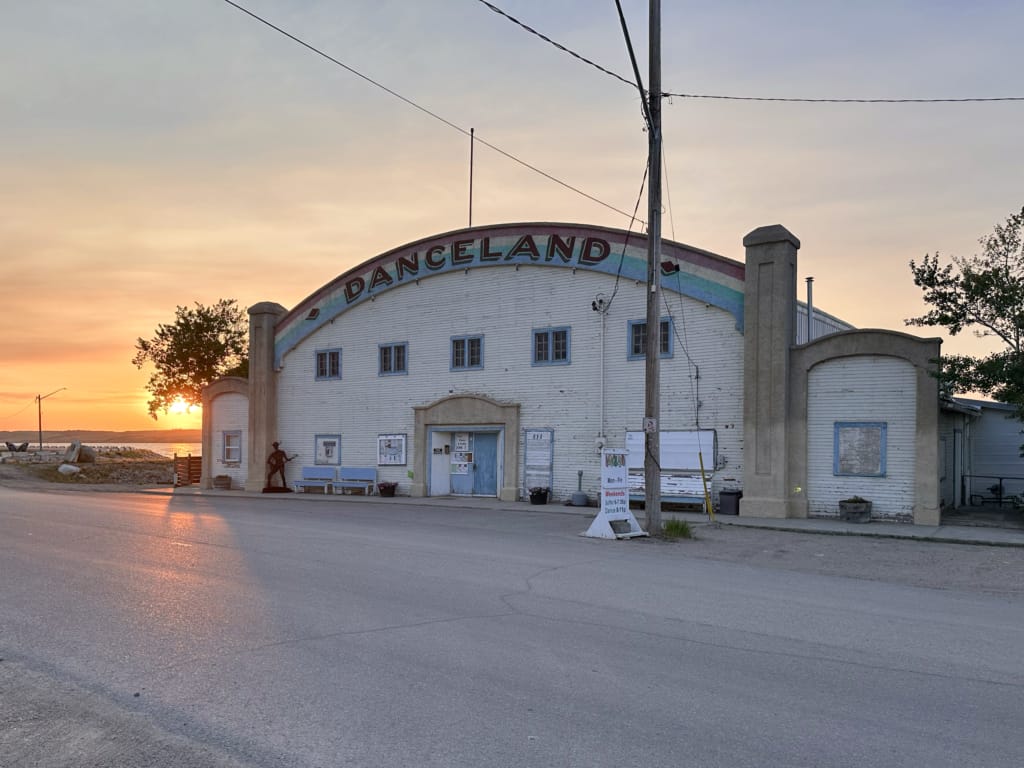
The surrounding town of Manitou Beach was also quite interesting. It was a popular resort destination in the 1920s and 1930s. The town’s historic Danceland dancehall dates back to that time and is open for tours. It has a springy floor thanks to a layer of horsehair insulation.
Prince Albert National Park
Prince Albert National Park, north of Saskatoon, was on my original itinerary for things to do in Saskatchewan. Unfortunately, I had to pivot to bird-watching due to wildfires near the park. However, I’m trying to visit all of Canada’s National Parks (so far I’m at 19 out of 48), so I know I’ll be back.
The parks sits in the transition zone between the prairies and the boreal forest and is known for excellent wildlife viewing. The cute town of Waskesiu is near the park entrance. On my trip, I was planning to do some short hikes on interpretive trails to learn more about the unique ecosystem. I was also hoping to go paddling on some of the lakes. I’ll just have to go back!
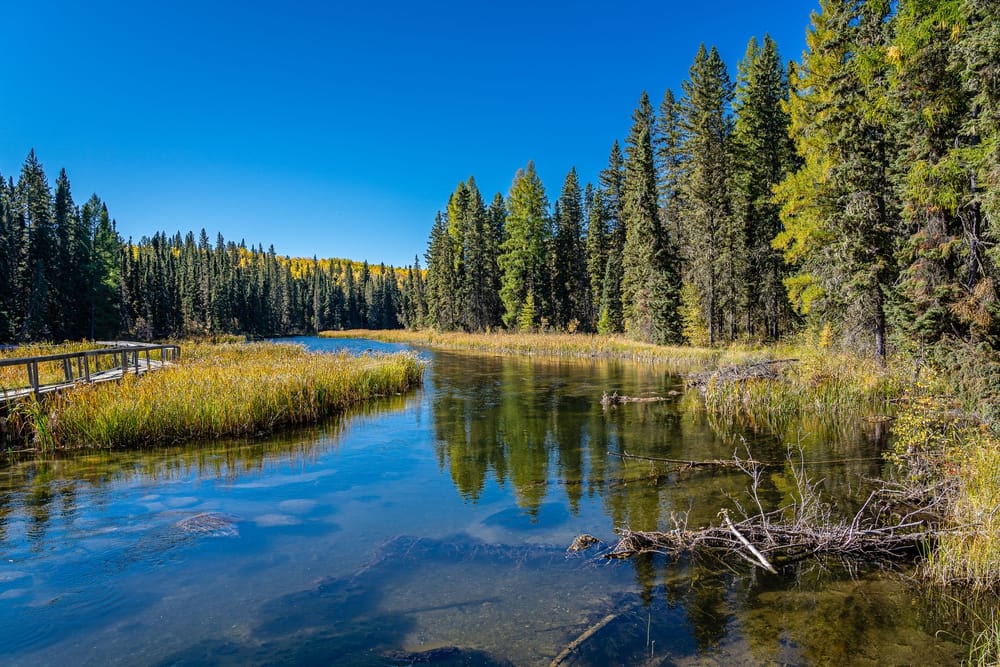
Saskatchewan Travel Tips
How to Get to Saskatchewan
Saskatchewan has international airports in both Saskatoon and Regina. If you’re flying in, it makes the most sense to rent a car at the airport. I use Discover Cars to book cars since it lets me compare prices.
You can also drive to Saskatchewan from Alberta in the west or Manitoba in the east.
While long-distance public transport in Canada is fairly limited, you can get to Saskatchewan by FlixBus or Rider Express from other major prairie cities.
Getting Around Saskatchewan
I won’t sugarcoat it: if you’re going to visit Saskatchewan, you need to drive yourself. While you can see Regina and Saskatoon without a car, you’ll need one to go pretty much anywhere else in the province. There is very little public transport in Saskatchewan, and it doesn’t go to the smaller towns, National Parks, or nature attractions.
Driving in Saskatchewan is straightforward. The main routes through the province are the Trans Canada Highway (Highway 1), which runs east to west passing through Regina, and the Yellowhead Highway (Highway 16), which runs diagonally from the southeast to the northwest, passing through Saskatoon.
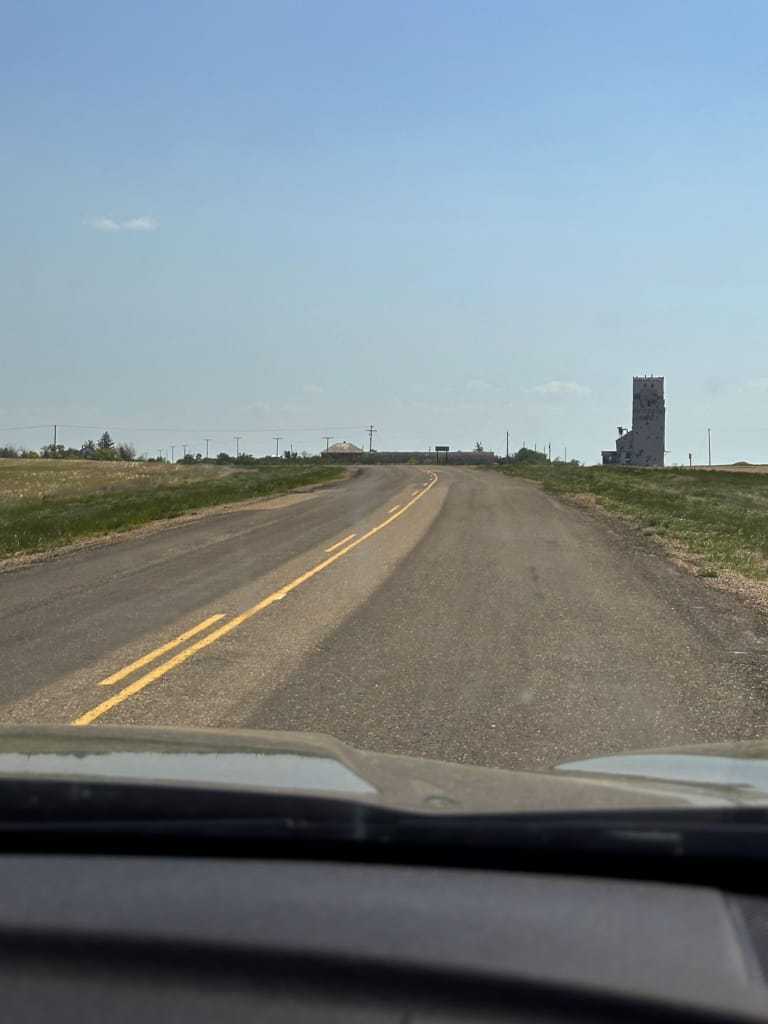
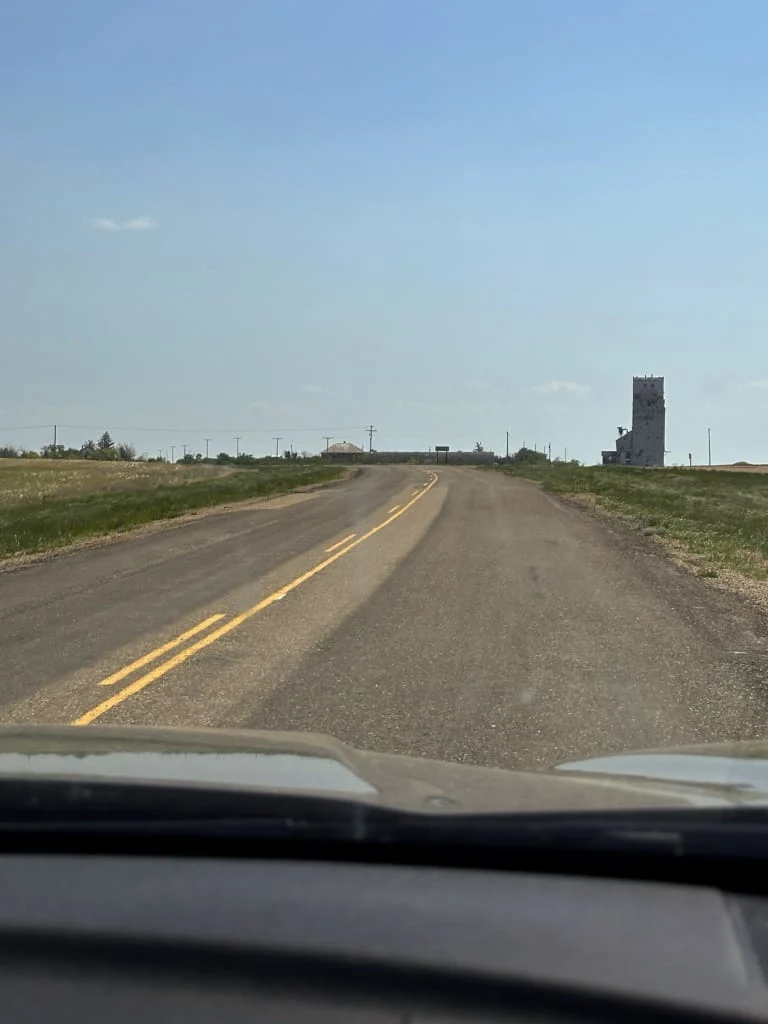
Saskatchewan also has a huge grid of secondary highways and local roads. Once you get off the main highways, the small two-lane highways can be bumpy and narrow, but they are fine if you drive the speed limit.
It’s also fairly easy to find your way around. Most highways are signed at major junctions. Be cautious when relying on Google Maps directions: it may try to take you on shortcuts that use rural gravel side roads through farmlands that are slower than staying on the paved highway. These rural roads also often don’t have signs.
How Long to Spend in Saskatchewan
I spent two weeks in Saskatchewan. I spent big chunks of that time in Grasslands National Park, at a conference in Saskatoon, and on a bird-watching tour. But I also had time to hit up a few of the other highlights in the province.
In general, I recommend spending at least a week in Saskatchewan. That’s enough time to visit one of the big parks and see a few other fun places.
If you want to do a big road trip that includes everything I mention in this post, I recommend spending at least two or three weeks in Saskatchewan.
When to Go to Saskatchewan
The best time to go to Saskatchewan is between May and September. That’s when you’ll get the best weather to explore the parks. It also means you’ll avoid snow and icy road conditions.
I visited in late May and early June. In general, the weather was warm, but I did have a few days with temperatures close to 30°C.
Saskatchewan Weather
Summer in Saskatchewan is generally warm to hot. You can expect temperatures in the mid-20s °C to low-30s °C. While June, July, and August are the rainiest months of the year, it doesn’t rain that much. If it’s not sunny and clear (most common), it’s likely going to be cloudy with a bit of drizzle. Afternoon thunderstorms are also possible. It’s also quite windy a lot of the time.
What to Pack for Saskatchewan in Summer
Saskatchewan is very laid back, so you don’t need to bring anything fancy. A t-shirt and shorts are fine almost everywhere, but if you do visit some of the nicer restaurants in Saskatoon, you’ll want to be a tiny bit less casual.
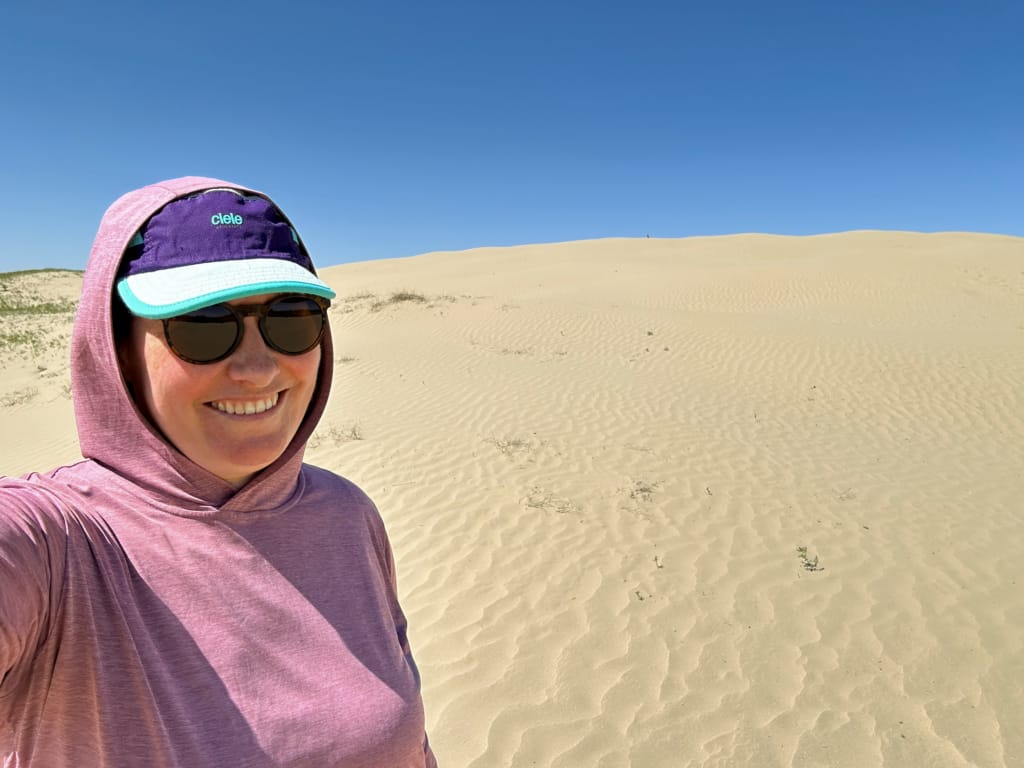
Bring hiking boots or trail runners for exploring the parks. You’ll also want quick-drying athletic clothing, sunglasses, sunscreen, and a hat. I prefer to wear a long-sleeved sun hoodie that wicks sweat while protecting from the sun. Add in long pants and insect repellent, since grassy areas can have ticks.
There are lots of opportunities for bird watching and wildlife watching in Saskatchewan, so I recommend bringing binoculars. I have this pair of tiny Pentax binos that are small enough to hike with.
If you are road tripping, I also recommend packing a cooler. I brought camping gear and camped in Grasslands National Park and Cypress Hills Interprovincial Park.
Indigenous Context in Saskatchewan
Saskatchewan is the traditional territory of many Indigenous peoples. It is home to over 70 First Nations, most of which belong to the Cree, Dene (Denesuline), Saulteaux, Nakota (Assiniboine), and Dakota/Lakota (Sioux) language groups. It is also home to the Metis people.
Historically, Indigenous people lived across the province, both in the boreal forest and in the plains. The arrival of Europeans in the late 17th century disrupted Indigenous peoples’ traditional way of life. However, it did lead to the formation of the Metis Nation in the 18th and 19th centuries through the unions of European fur traders and First Nations women.
In the following centuries, the Canadian government stripped Indigenous peoples of their rights, land, and culture through restrictive treaties and the residential school system. Today, about 16% of Saskatchewan’s population is Indigenous. Many live on reserves scattered across the province, but there are also large urban Indigenous populations in the cities.
Saskatchewan is undergoing a period of reconciliation with Indigenous peoples. You can find Indigenous culture and context woven into many aspects of everyday life. If you want to connect more deeply with Indigenous culture, I recommend visiting Wanuskewin Heritage Park just outside Saskatoon.
Final Thoughts
A lot of Canadians think of Saskatchewan as a drive-through province. And yes, if you just see it if from the Trans Canada Highway, it does look flat and boring. But now that I’ve spent time on its backroads, in its parks, and exploring the artsy city of Saskatoon, I can assure you it’s not.
The province is full of quirky attractions like the Great Sand Hills or the Tunnels of Moose Jaw. Grasslands National Park is spectacularly beautiful with wide open skies. And Saskatchewanians (yes, that’s what they are called) are some of the friendliest and most down-to-earth people around. They are also fiercely proud of their province. You’ll find local food, art, and products showcased all over Saskatchewan.
If you’re looking for an off-the-beaten-path destination in Canada, I encourage you to consider Saskatchewan.
READ NEXT:
- Things to Do in Twillingate, Newfoundland: Icebergs, Hiking, and More - August 24, 2026
- 20+ Best Things to do in Squamish, BC (From a Local) - August 22, 2026
- Tenquille Lake Trail Hiking and Backpacking Guide - August 10, 2026