
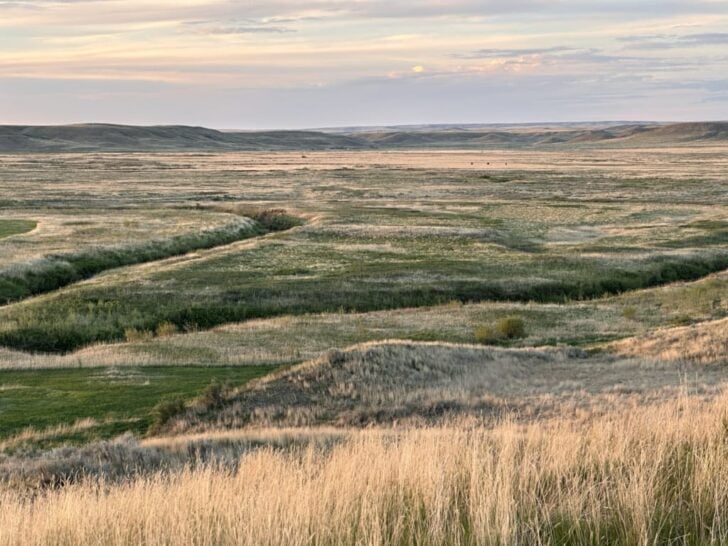
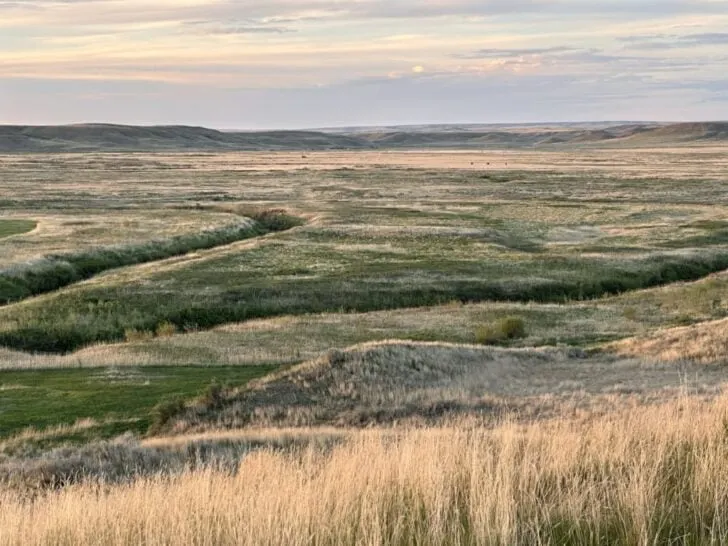
When I told people I was planning a trip to Saskatchewan, some people asked me why. My answer was simple: to visit Grasslands National Park. I’m on a mission to visit all of Canada’s National Parks and Reserves (so far, I’m at 19 of 48), but I also wanted to visit because I had heard Grasslands is gorgeous.
It did not disappoint! Grasslands National Park a quiet park in a remote part of southern Saskatchewan, which is why I loved it so much! With so few visitors, it was easy to get swallowed up in the wide open spaces.
The park is home to rolling grasslands (mostly in the West Block) and rugged badlands (mostly in the East Block). I found both gorgeous, especially in the soft light of sunset. Other highlights included hiking (of course), wildlife watching, looking for fossils, and learning about the unique native grassland ecosystem that has almost disappeared from the prairies.
If you’re planning a visit, I’ve put together a big Grasslands National Park travel guide for you. It includes:
- An interactive map of Grasslands National Park that includes all of the places I mention
- Best things to do in Grasslands National Park: Hikes, viewpoints, driving tours, wildlife watching, and more
- Camping in Grasslands National Park: where to camp and what to expect
- Hotels near Grasslands National Park: My picks for where to stay near the park
- Grasslands Travel Tips: How to get there? How long to spend? Where to buy groceries and gas? And lots more
This is a sensitive wilderness area. Learn how to Leave No Trace to keep the wilderness wild. Make sure you are prepared by bringing the 10 Essentials. Get ready for adventure with this checklist of things to do before every hike.
Hey there: Thanks so much to Parks Canada for hosting me in Grasslands National Park. All opinions in this post are my own. Some of the links in this post are affiliate links, which means I earn a small commission at no cost to you. Thanks for your support. -Taryn
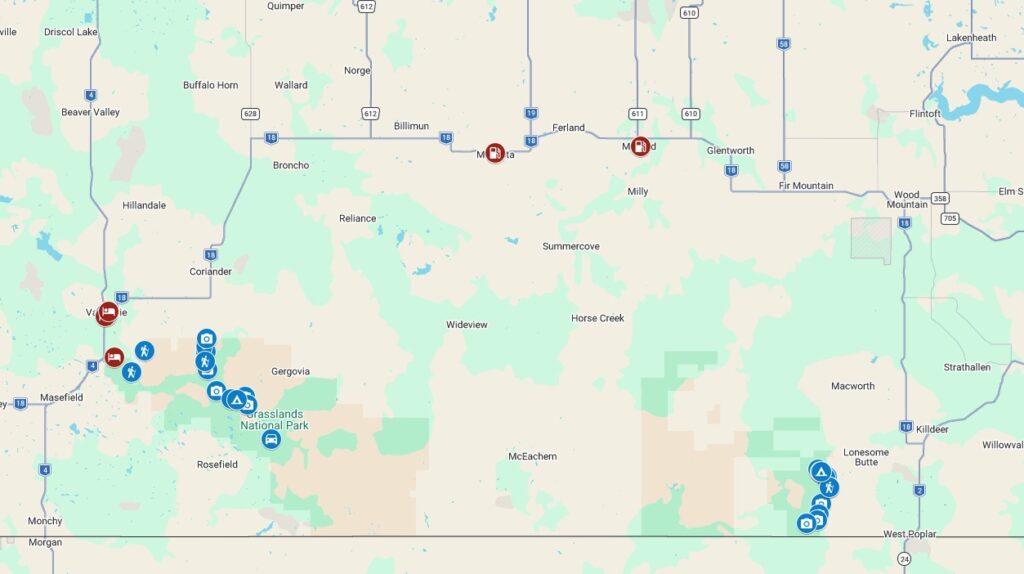
Map of Grasslands National Park
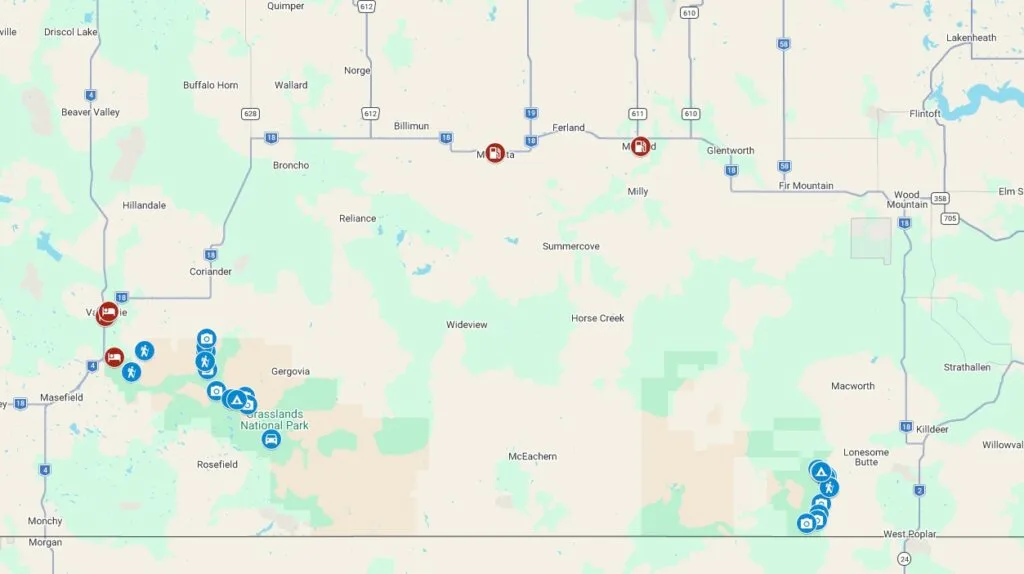
To help you find your way around, I made this custom Google Map of Grasslands National Park for you. It includes every single place I mention in this post.
Best Things to Do in Grasslands National Park
Grasslands National Park is separated into two parts: the West Block and the East Block. It takes about 2 hours to drive between the two blocks.
I’ve organized my list of the best things to do in Grasslands National Park into West Block and East Block sections below to make it easier for you to plan your trip. I’ve also got suggestions for things to do anywhere in the park at the bottom!
Things to do in the West Block
Town of Val Marie
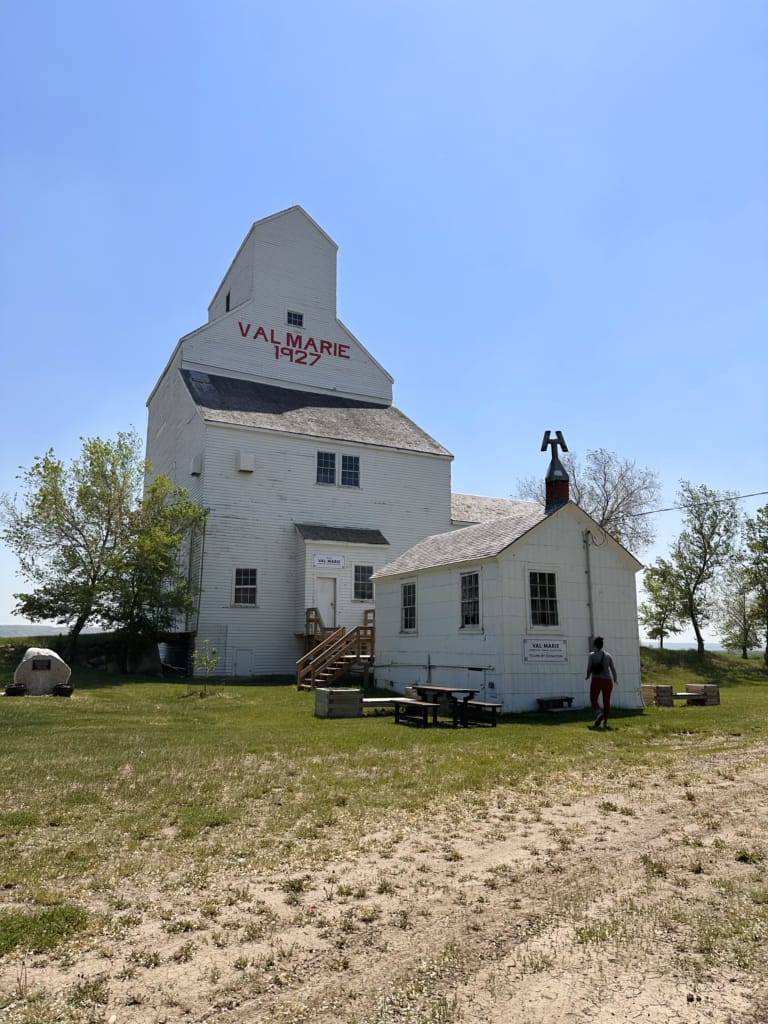
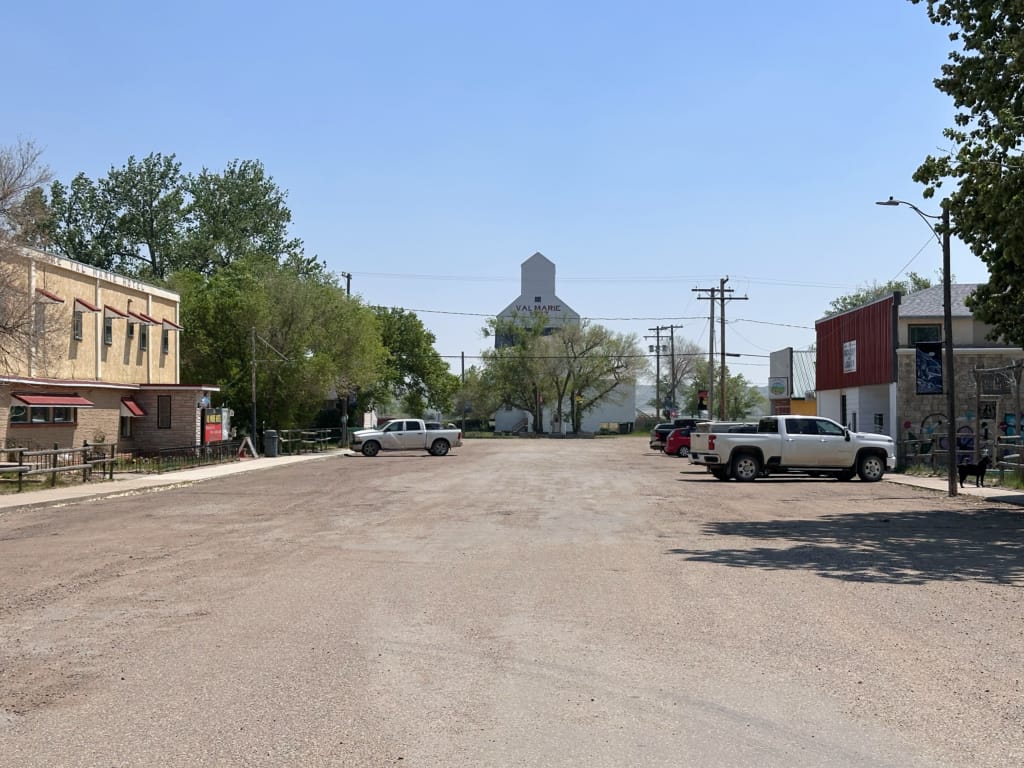
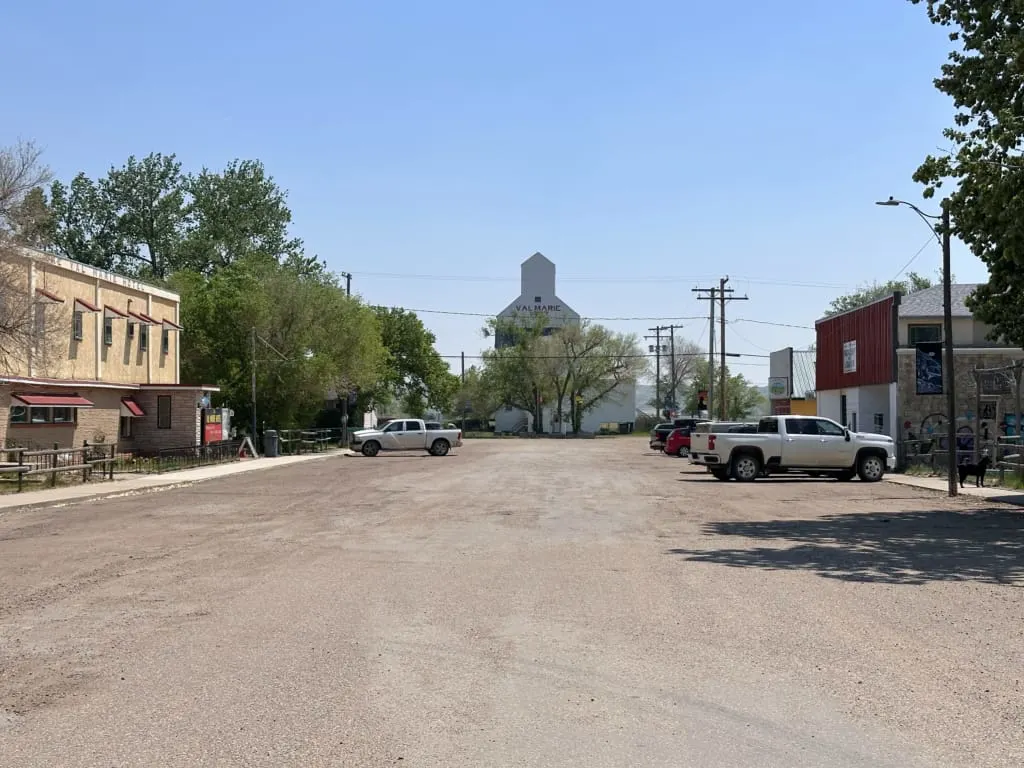
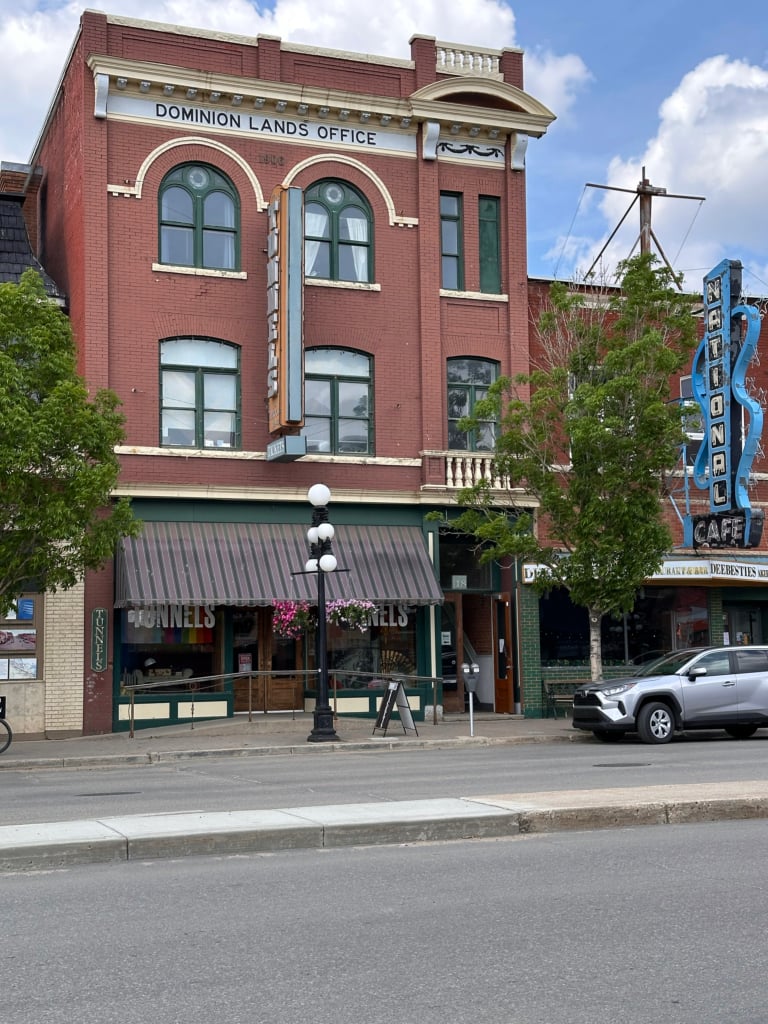
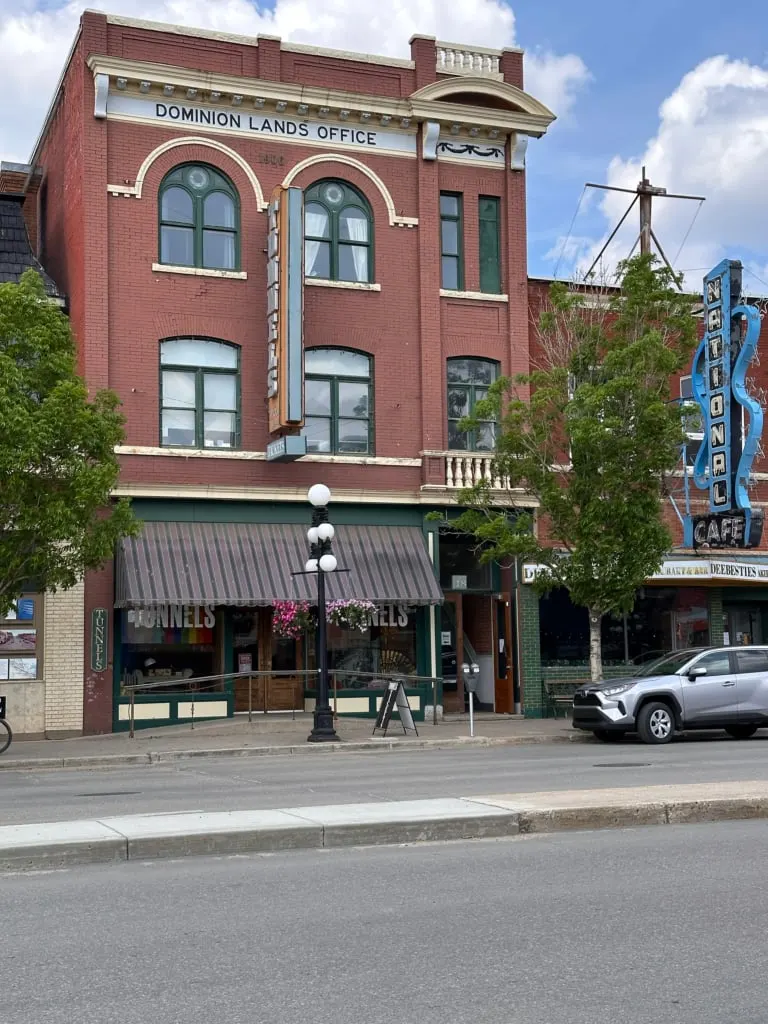
The tiny town of Val Marie, Saskatchewan, is located at the entrance to the West Block of Grasslands National Park. It has a population of just 120 residents today, but it used to be home to over 450 people, so it feels a bit bigger.
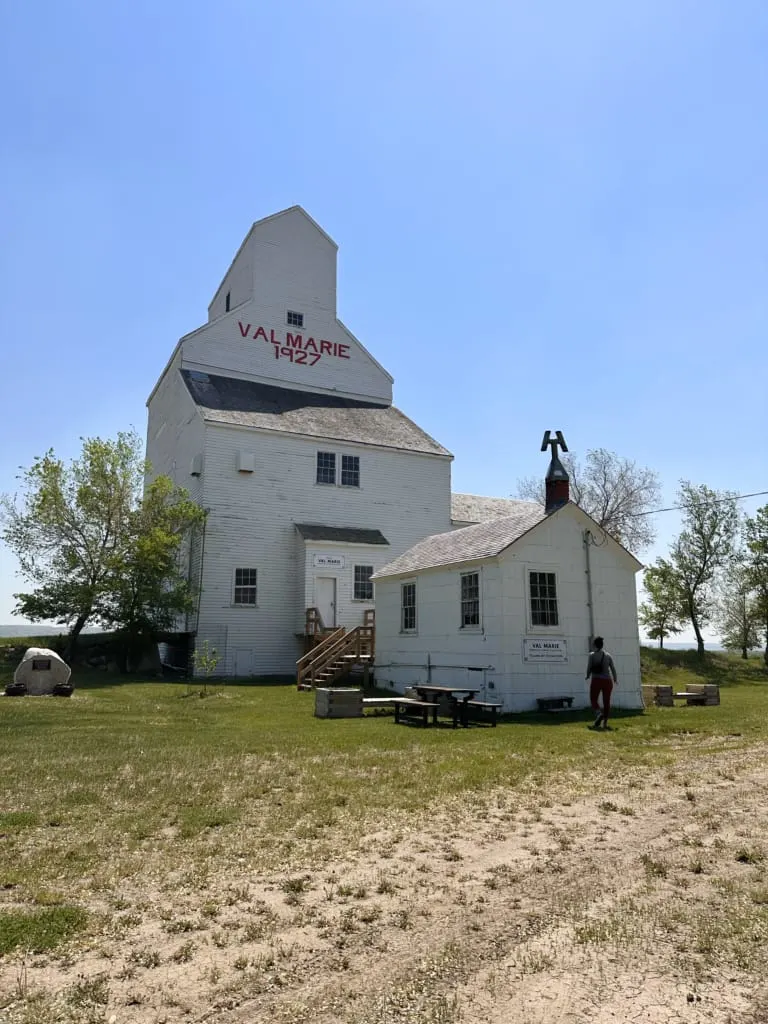
It’s worth wandering through its wide streets and checking out the historic grain elevator, built in 1927. You should also visit Prairie Wind and Silver Sage. It’s a cute gift shop and art gallery run by Friends of Grasslands National Park.
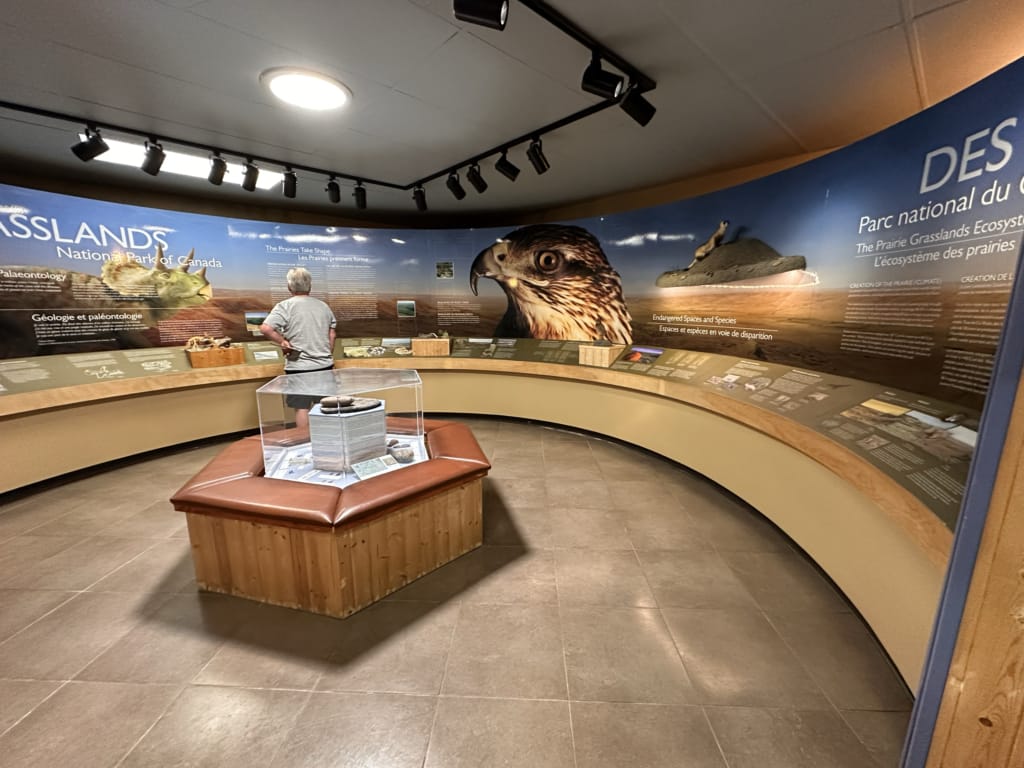
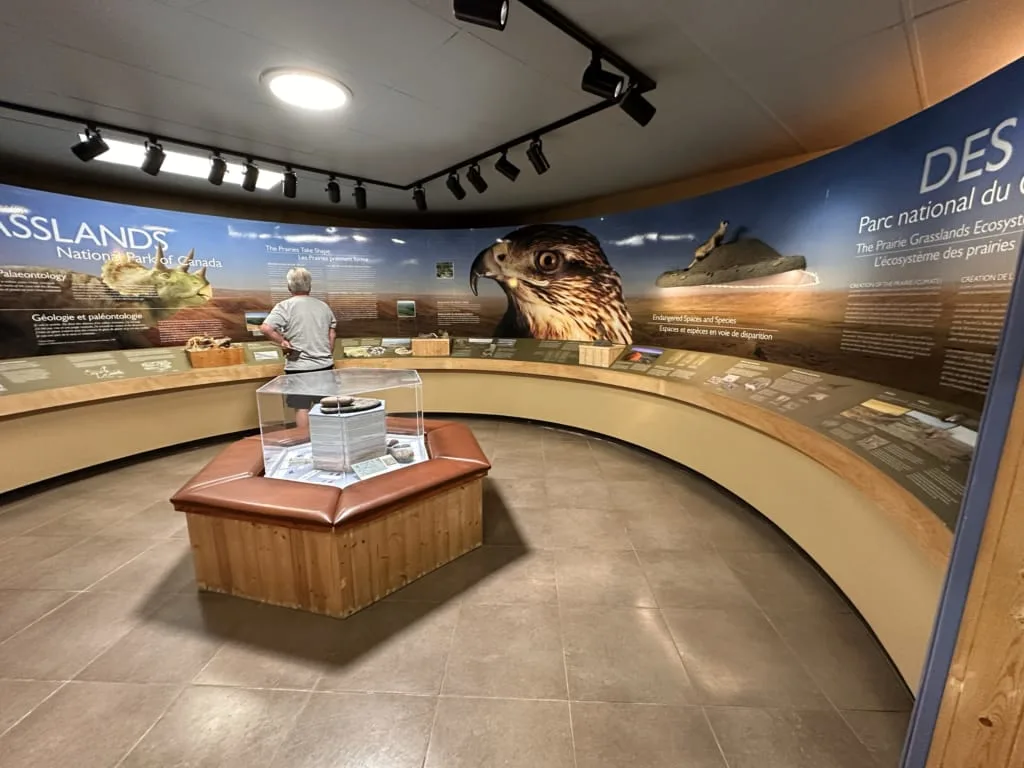
The Grasslands National Park Visitor Centre is also in Val Marie. It’s the best place to start your journey into the park. They have a few small exhibits about the park. But the main reason I recommend stopping is ask about current conditions and to pick up maps. They also have some great pamphlets that will help you ID flowers and other plants.
Ecotour Scenic Drive
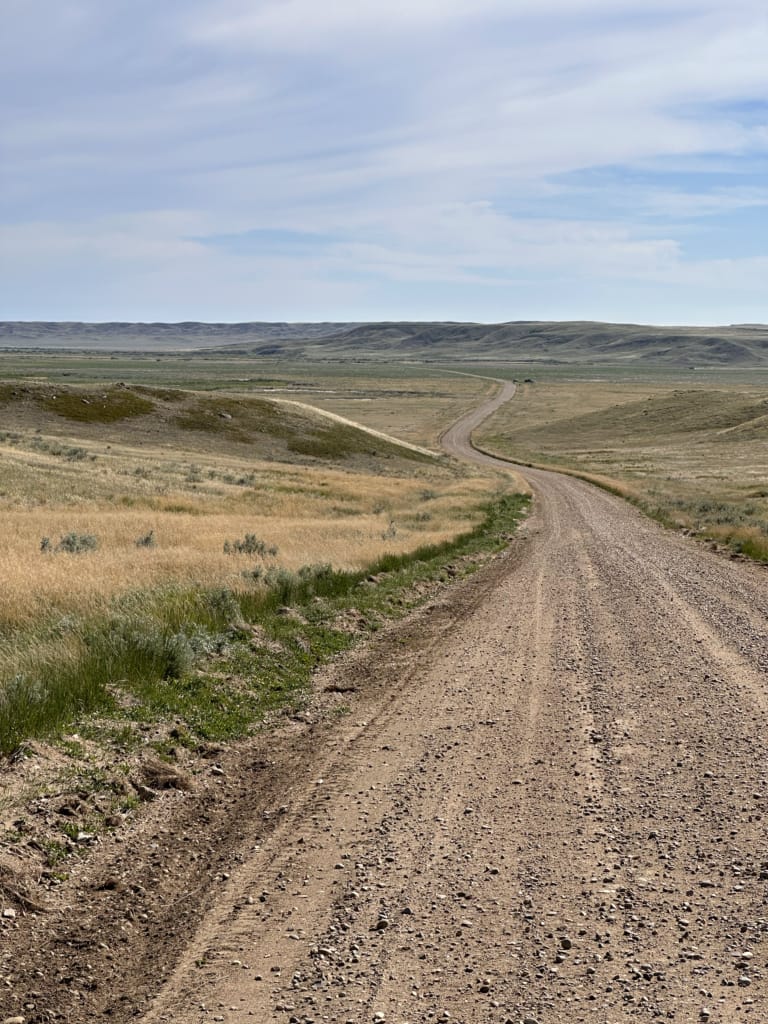
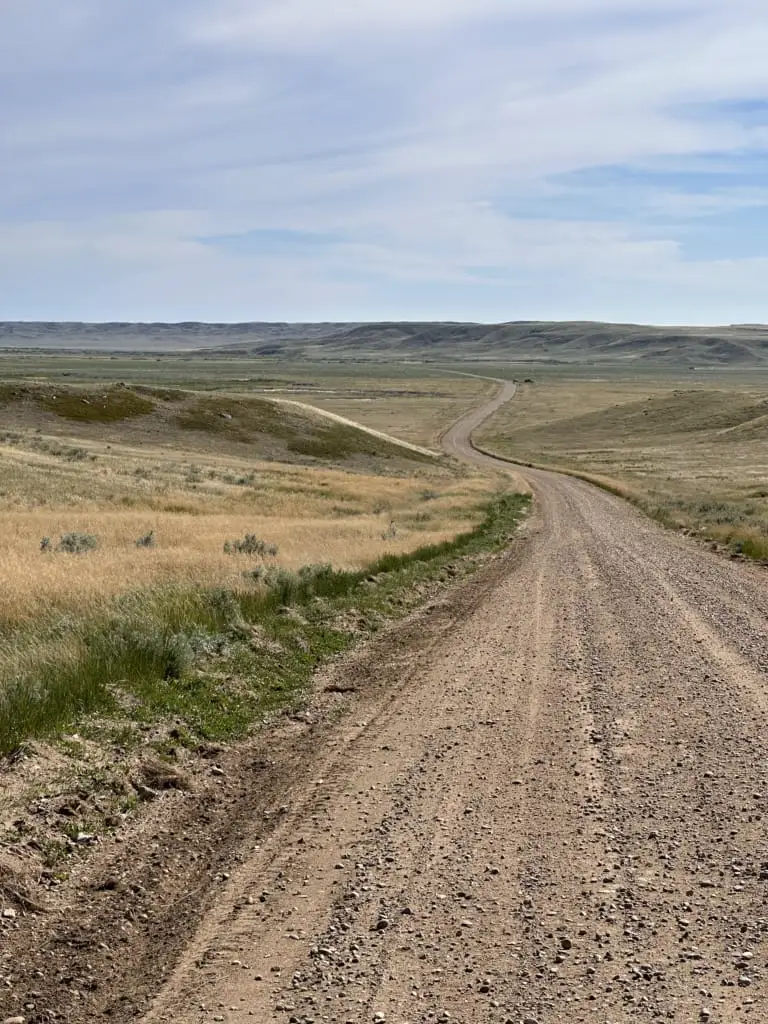
Driving the Ecotour Scenic Drive is the number one must-do thing to do in Grasslands National Park. It’s a 20 km drive (about 80 km round trip from Val Marie) and includes 7 stops. Allow at least two hours… but probably a lot longer if you want to walk around and take photos at each stop.
Here’s a brief rundown on each stop:
Ecotour Gateway
- A pull-off with a signboard welcoming you to Grasslands National Park and the official entrance to the park.
Top Dogtown
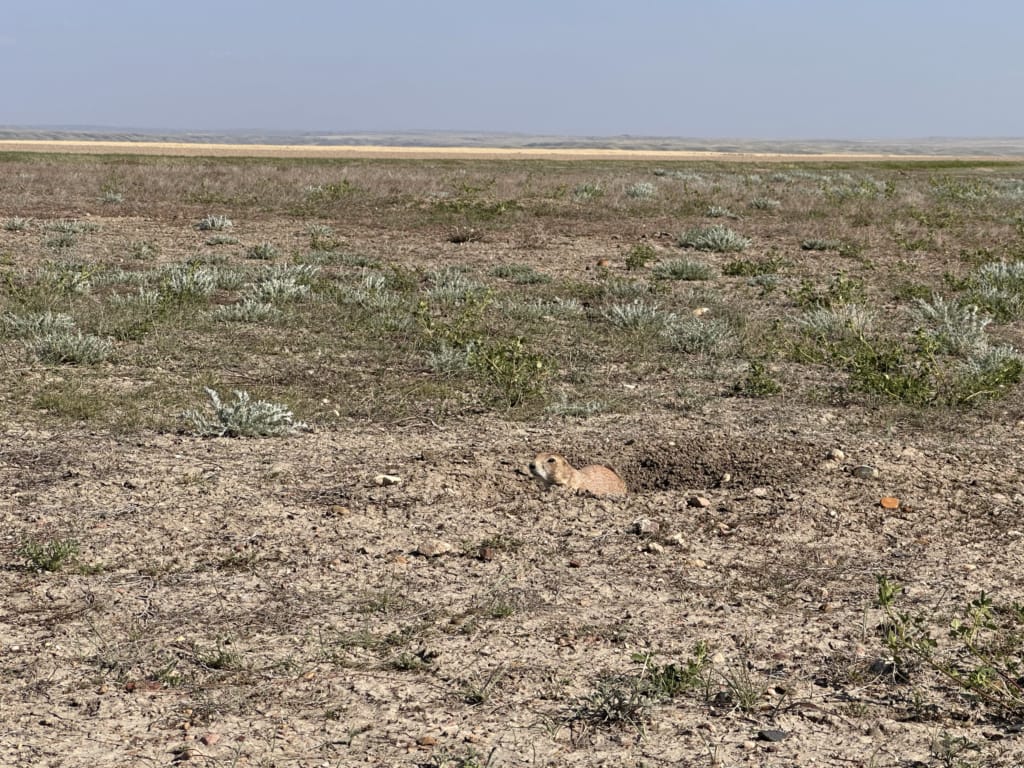
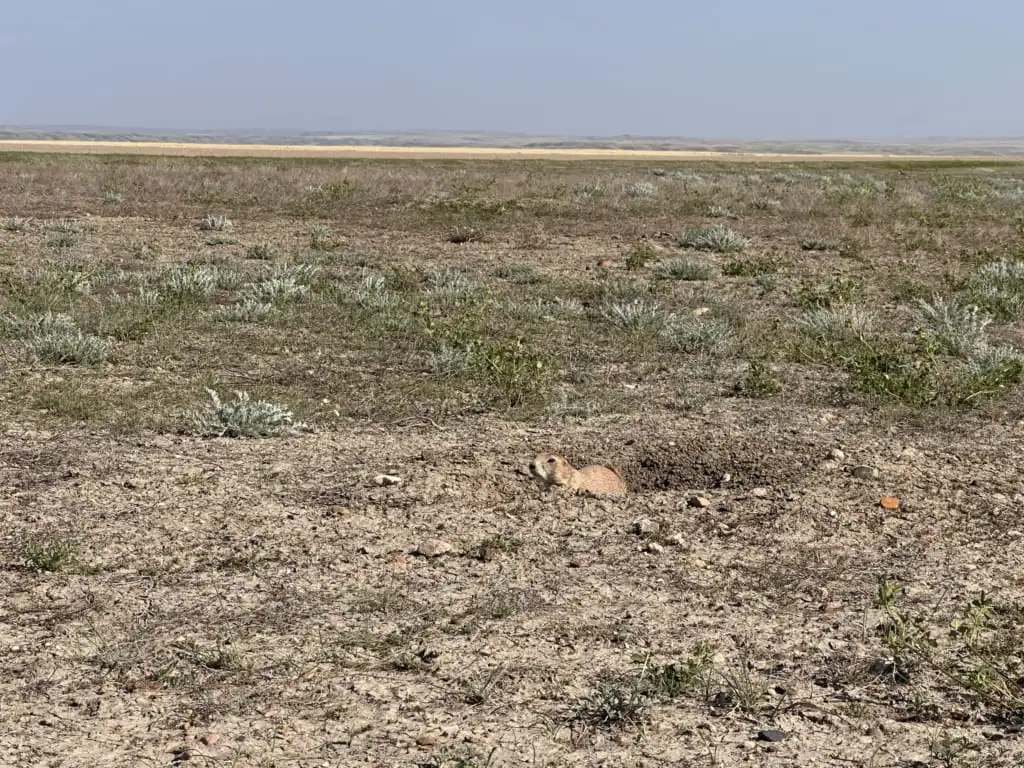
- Take an easy and flat 750 m loop trail through a prairie dog colony.
- Bring binoculars or a camera with a zoom lens for a closer look – the prairie dogs hide in their burrows if you get too close. They are adorable!
- If you are going to spend an extended amount of time at just one stop, make it this one.
The Tabletop
- A short walk through the grass to some info boards where you can learn about native prairie grasses and the preservation of endangered grasslands ecoystems.
The Rubbing Stone
- Another short walk through the grass to two Indigenous cultural sites:
- The first is a bison rubbing stone, left over from the time when bison roamed the area by the millions. They used rocks like this to scratch themselves.
- There is also a tipi ring here, which is a ring of stones on the ground that marks the former location of a First Nations tipi.
- This is my pick for the best views on the Ecotour since it’s on a bluff overlooking the Frenchman Valley.
Frenchman River Valley
- View crumbling ranch corrals, left over from the days before this was a park.
- Take a short walk along grassy trails to visit info boards about how the ecosystem in the valley bottom is different than the plateau above.
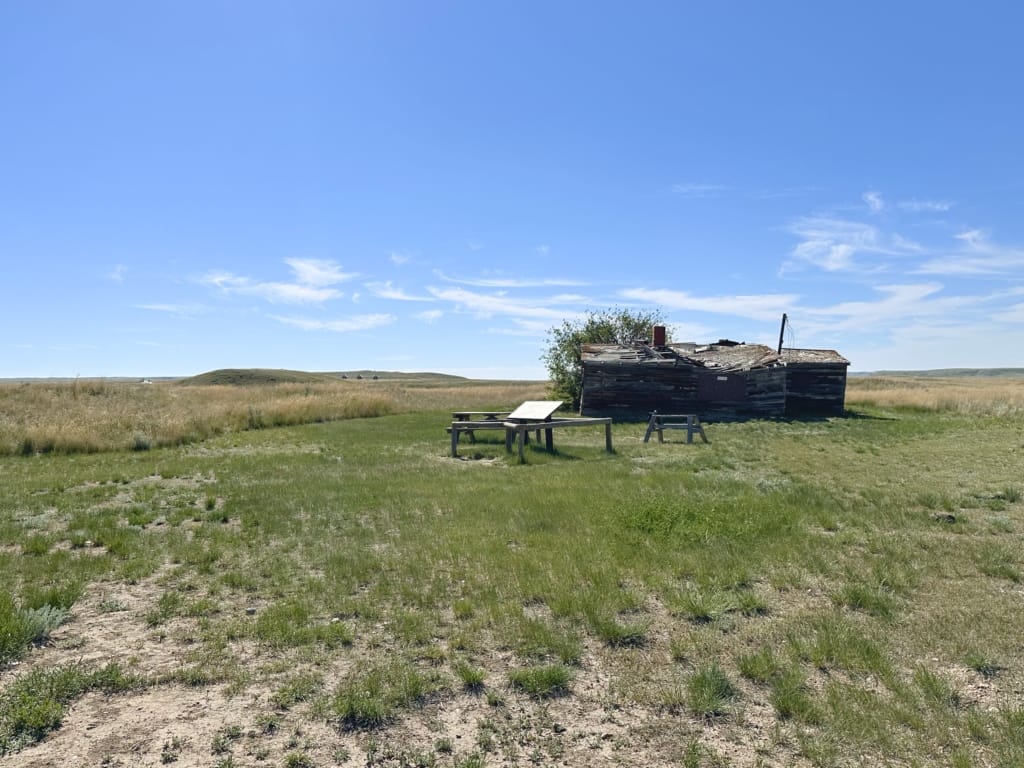
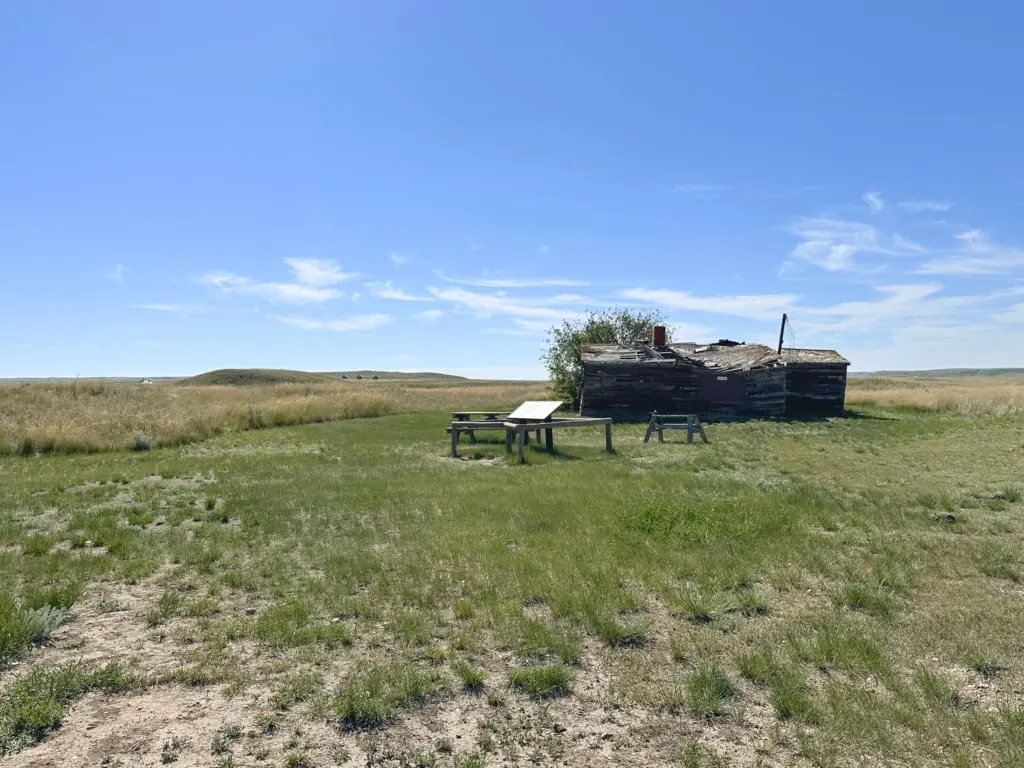
The Ranch
- This stop has a few historic ranch buildings from the pre-National Park era.
- It’s also the starting point for the Larson Trail, an easy 1.5 km loop hike that has views of the Frenchman River.
Dogtown
- Another prairie dog colony. This one is even bigger – it stretches out on both sides of the road.
- I recommend pulling over and looking out your windows with binoculars.
Eagle Butte and 70 Mile Butte Trail
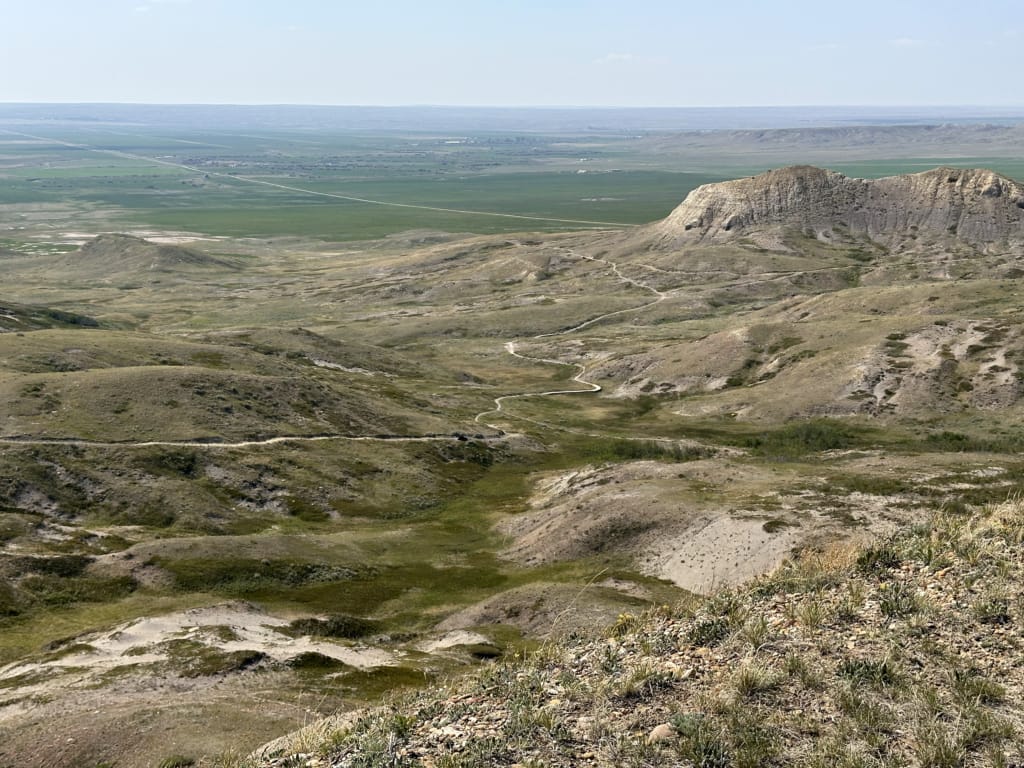
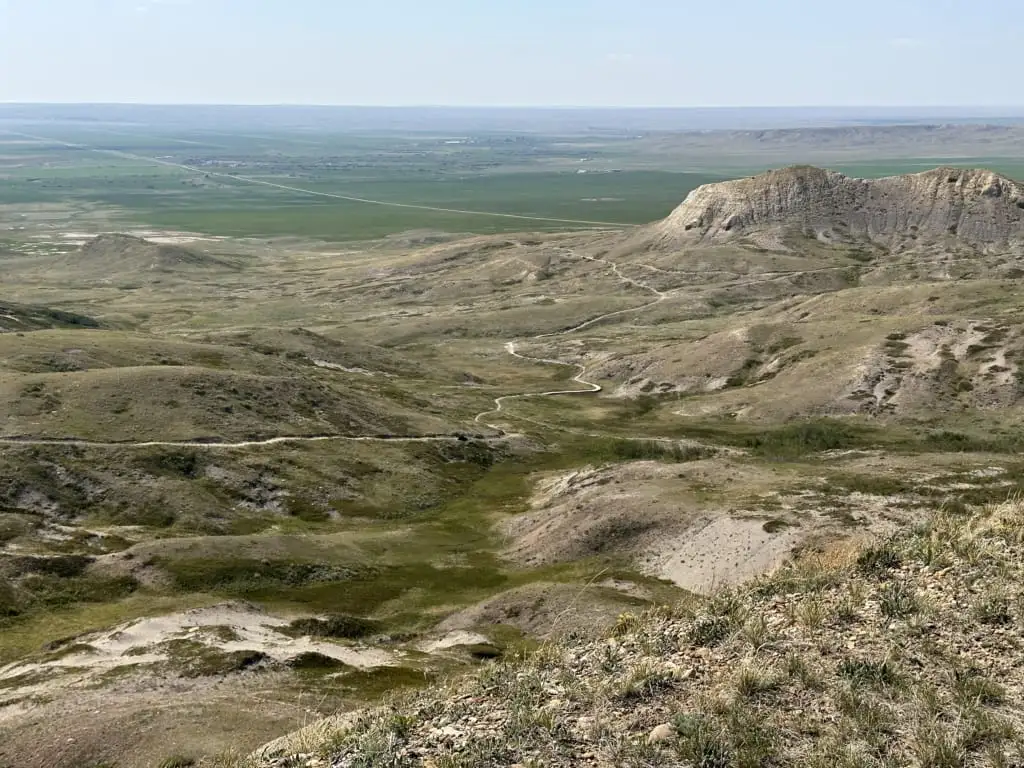
This was the first hike I did in Grasslands, and it was a fantastic introduction to the park. It’s two interconnected loops that go up and around Eagle Butte and 70 Mile Butte. If you don’t have much time, you could just do Eagle Butte, but I thought the views were way better from 70 Mile Butte.
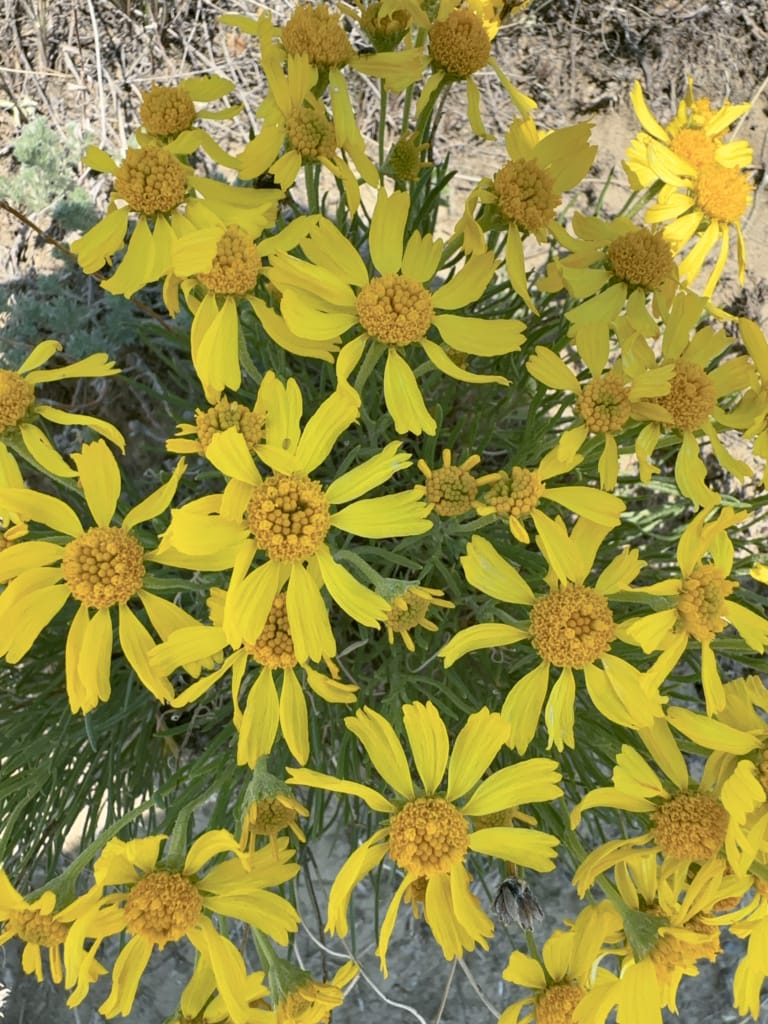
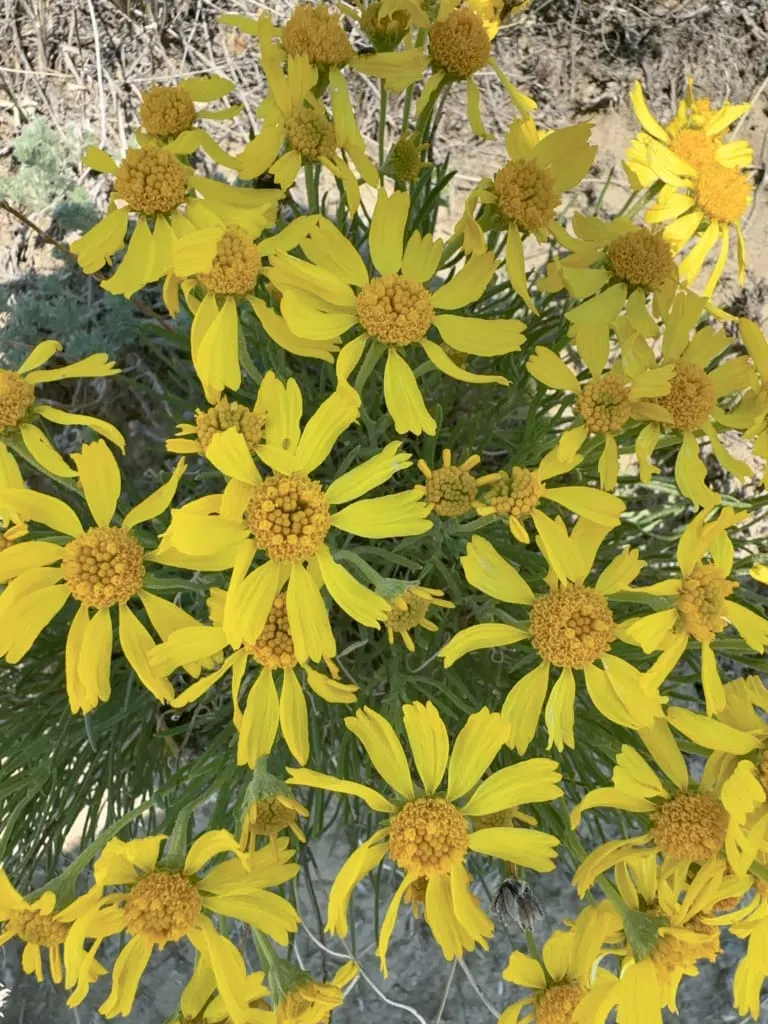
We spotted lots of wildflowers along the trail, especially in the valley bottoms. From the top of the butte, there were great views of the nearby hills as well as the flatter Grasslands of the West Block.
This trail starts from a park entrance that is a few miles south of Val Marie along Highway 4. If you do both buttes, it’s a 5 km loop with 260 m of elevation gain and takes 1.5 to 2 hours. It is rated moderate to challenging. It can be really windy on top of the buttes, so hang on to your hats!
Broken Hills Trail
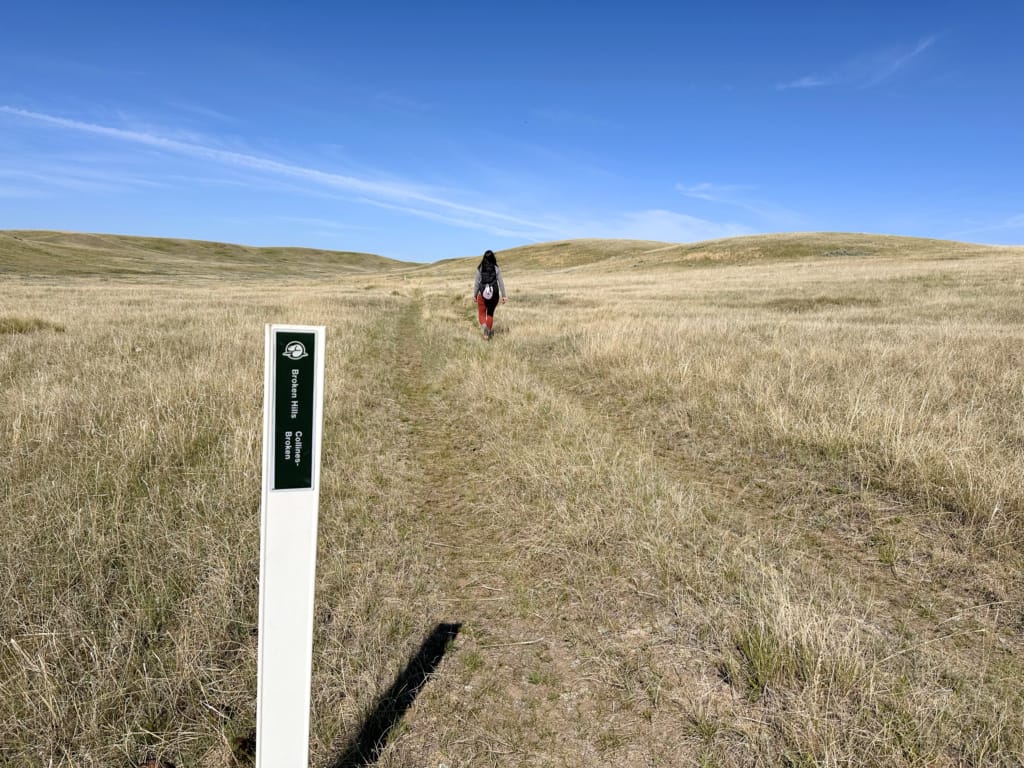
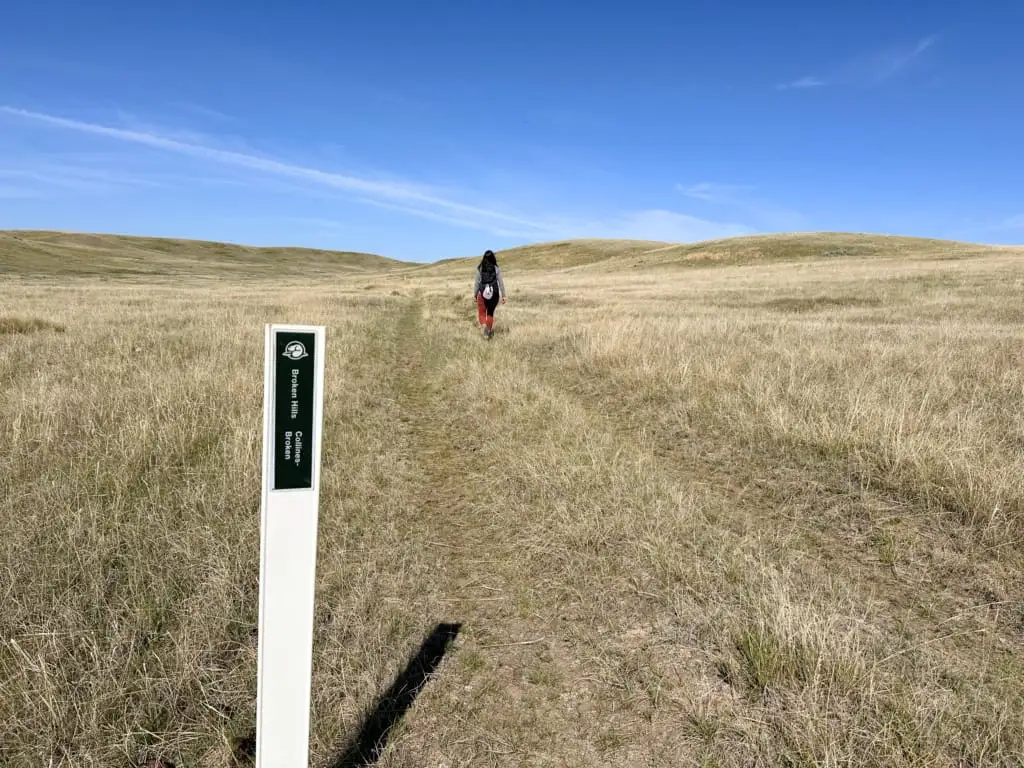
The Broken Hills Trail was the longest hike I did in Grasslands National Park. It’s a lollipop loop through grassy hills in the middle of the West Block. It starts near Frenchman Valley campground at the Belza Day Use Area. The first part follows an old vehicle track, but then it veers off on a narrow hiking trail that is rockier and climbs a few small hills.
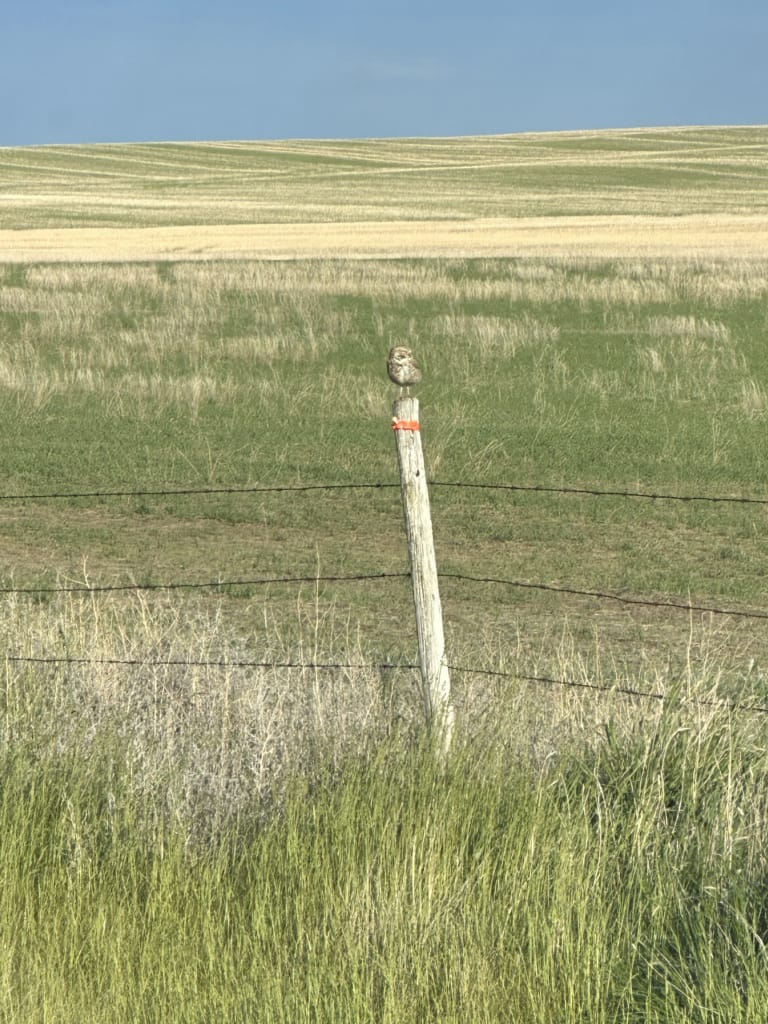
This is a great hike if you want to experience prairie grasslands away from park roads. We didn’t see a single person on the entire hike. However, we did see lots of prairie dogs, a deer, lots of birds, and a burrowing owl!
The Broken Hills Trail is an 11 km loop with about 300 m of elevation gain. Plan to spend 3.5 to 4.5 hours on the hike. It is rated challenging. The entire hike has no shade, so bring lots of water and sun protection. On the day I hiked it, the temperature soared into the low 30s, which was unexpected for late May, and I definitely felt the sun exposure despite covering up and packing lots of water.
Wildlife Watching
If you want to see wildlife, the West Block is the best place to do it. We spotted deer darting through the underbrush near the Frenchman River and pronghorn hopping through fields just outside the park. You can also spot rattlesnakes, badgers, and coyotes, but we didn’t see any.
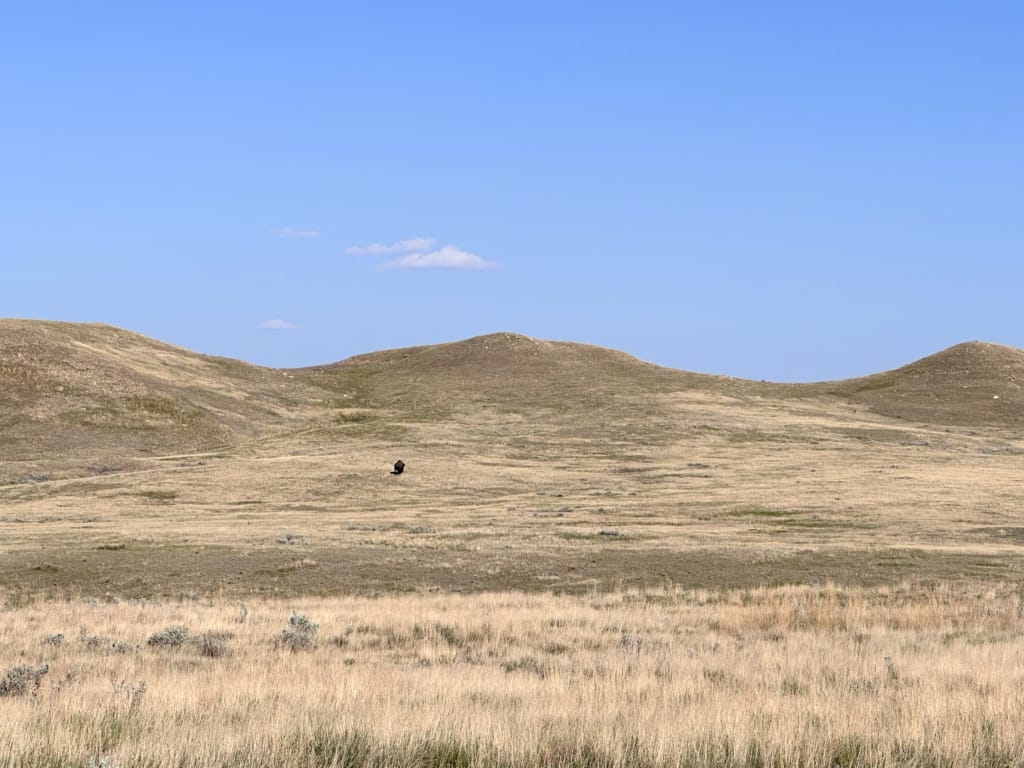
And thanks to our binoculars, we spotted about a dozen bison grazing on the hills around the Frenchman Valley. Parks Canada reintroduced bison to the park in 2005. They are an important keystone species for grasslands ecosystems since their heavy hooves till the soil as they walk, allowing grasses, wildflowers, and other plants to thrive.
Today, there are 400 to 500 bison in the park, kept contained inside a huge bison fence that encircles most of the West Block of Grasslands National Park.
They mostly hang out in the remote northeast corner of their enclosure, so apparently the best way to see lots of bison is to hike the Timbergulch Trail, a challenging 15 km loop that takes 5 to 6 hours. I didn’t have time to hike it, but it’s on my list for my next trip.
You can also see thousands of prairie dogs in the West Block. There are huge prairie dog colonies along the Ecotour Scenic Drive and on some of the hiking trails. I could spend hours watching these adorable little guys.
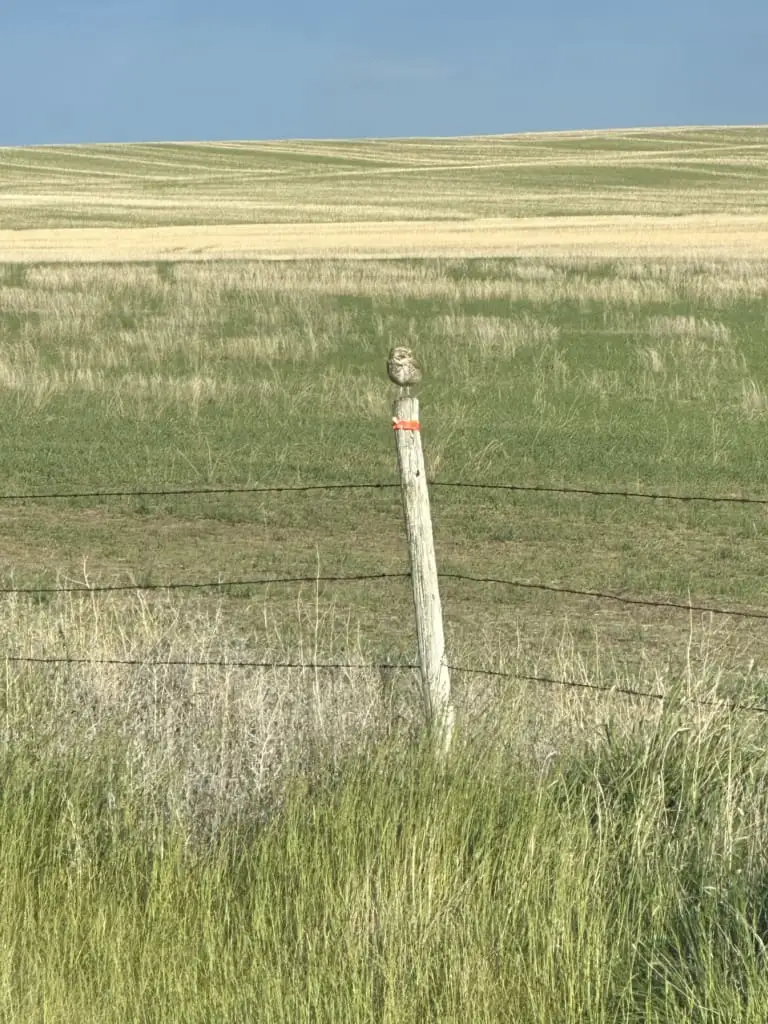
One of the other reasons I spent so much time watching the prairie dogs was to try to spot a burrowing owl. Burrowing owls are tiny and fat with long legs, giving them a somewhat comical appearance. They live in prairie dog and gopher burrow so prairie dog colonies are a great place to spot them. I was lucky to spot one at a small prairie dog colony on the Broken Hills Trail.
Other Things to do in the West Block
Even though I spent two days in the West Block, I didn’t have time to do everything. Here are a few more things I’d like to do on a return trip:
- Two Trees Trail and Riverwalk Trail: Two short and easy loop trails on the park’s western edge that explore the Frenchman River Valley.
- Timbergulch Trail: A rugged and challenging 15 km loop trail that meanders through coulee bottoms and has the best chance of spotting bison.
- Backcountry Loop Road: A rough dirt road through the Eastern part of the West Block that leads to some remote scenery.
Things to do in the East Block
Badlands Parkway
Just like the Ecotour Scenic Drive is the best thing to do in the West Block, Badlands Scenic Parkway is the best thing to do in the East Block of Grasslands National Park.
The 11-km-long road has six stops. Plan to spend 1.5 to 2 hours exploring the Parkway. Unlike most of the park, the Badlands Parkways is paved. However, it is a single-lane road, so you’ll need to watch for oncoming traffic and use the pull-outs. It also has a low speed limit, which is fine since you’ll want to admire the scenery.
Here’s a brief overview of each of the stops:
Gateway to the Grasslands
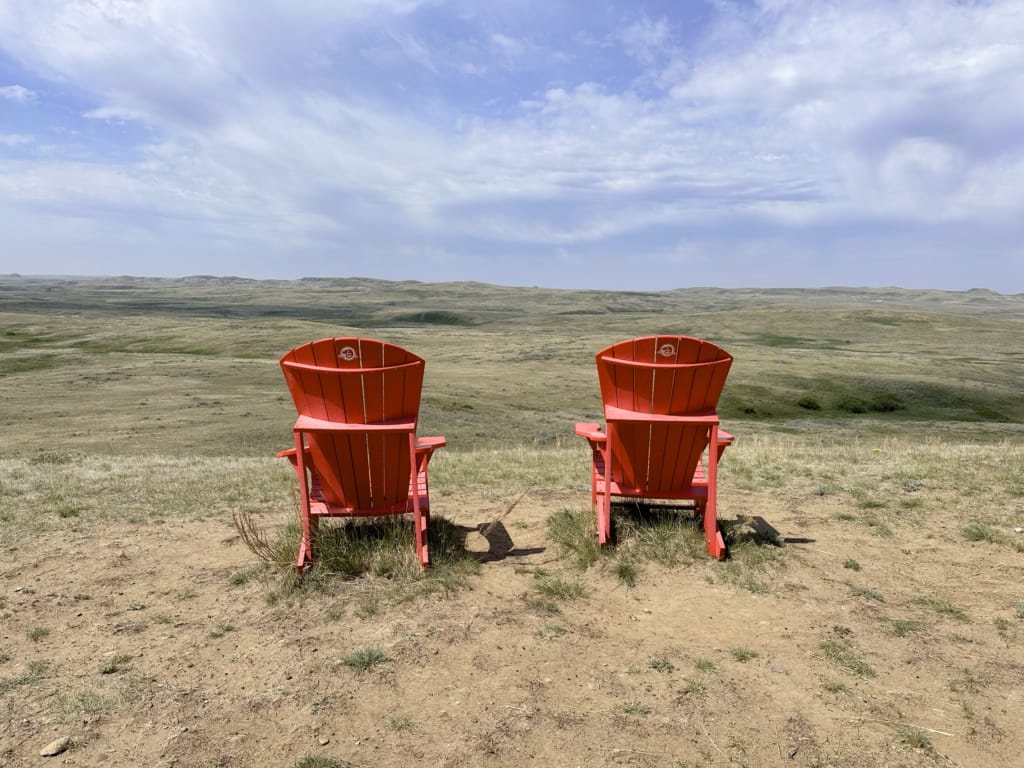
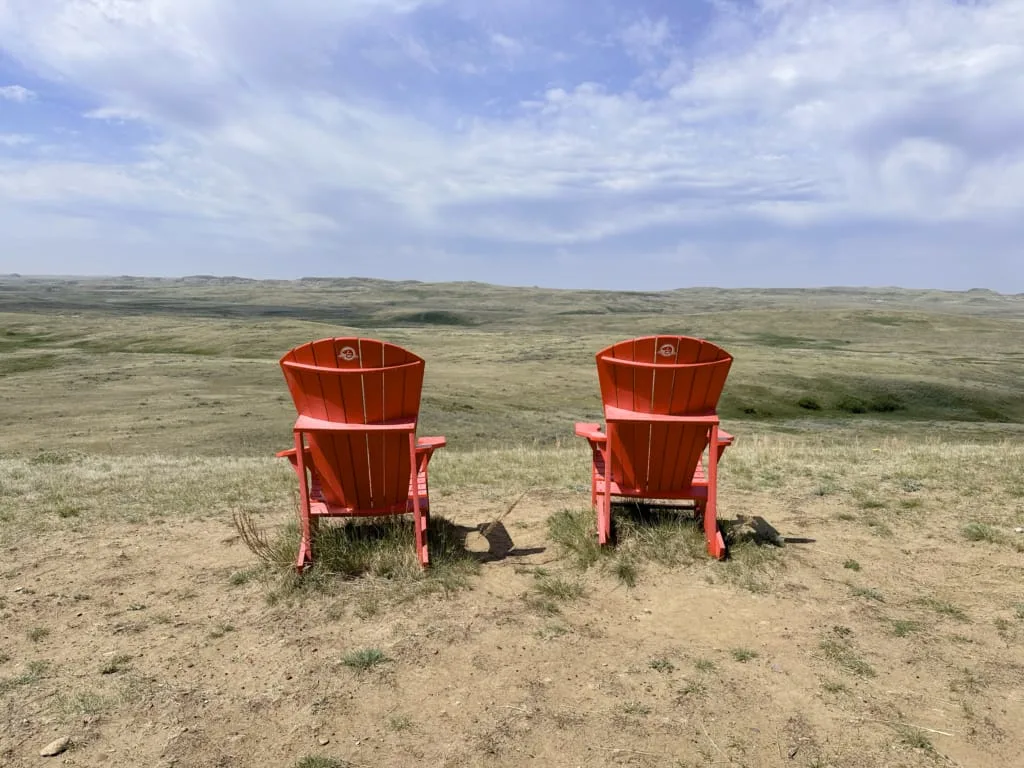
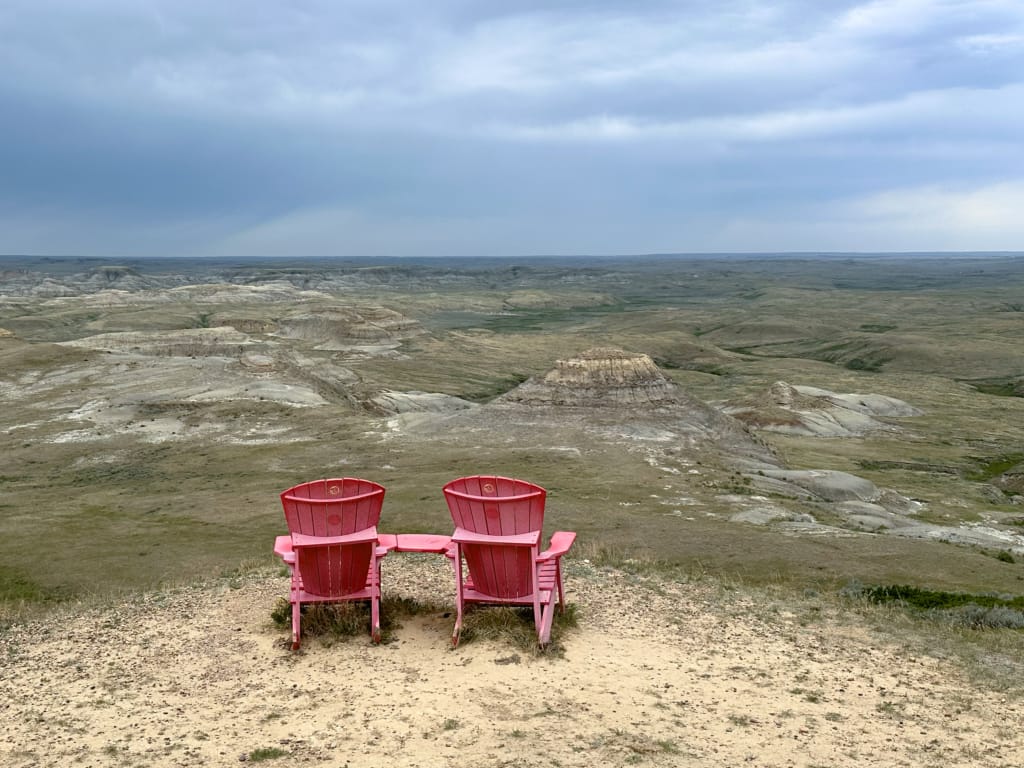
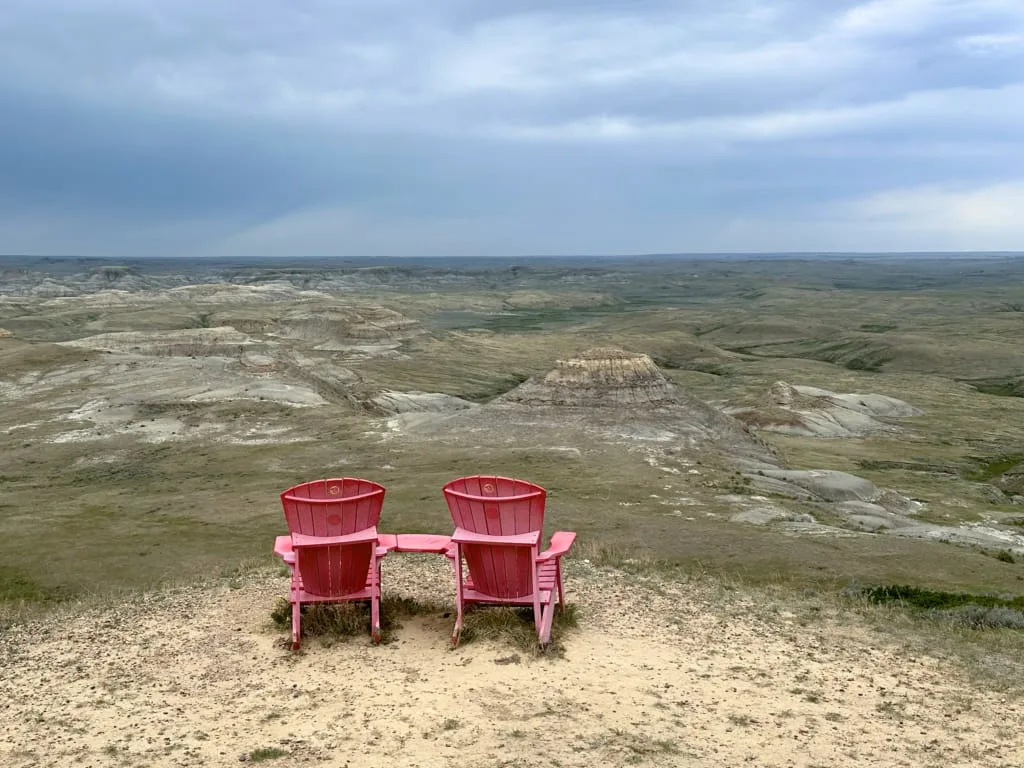
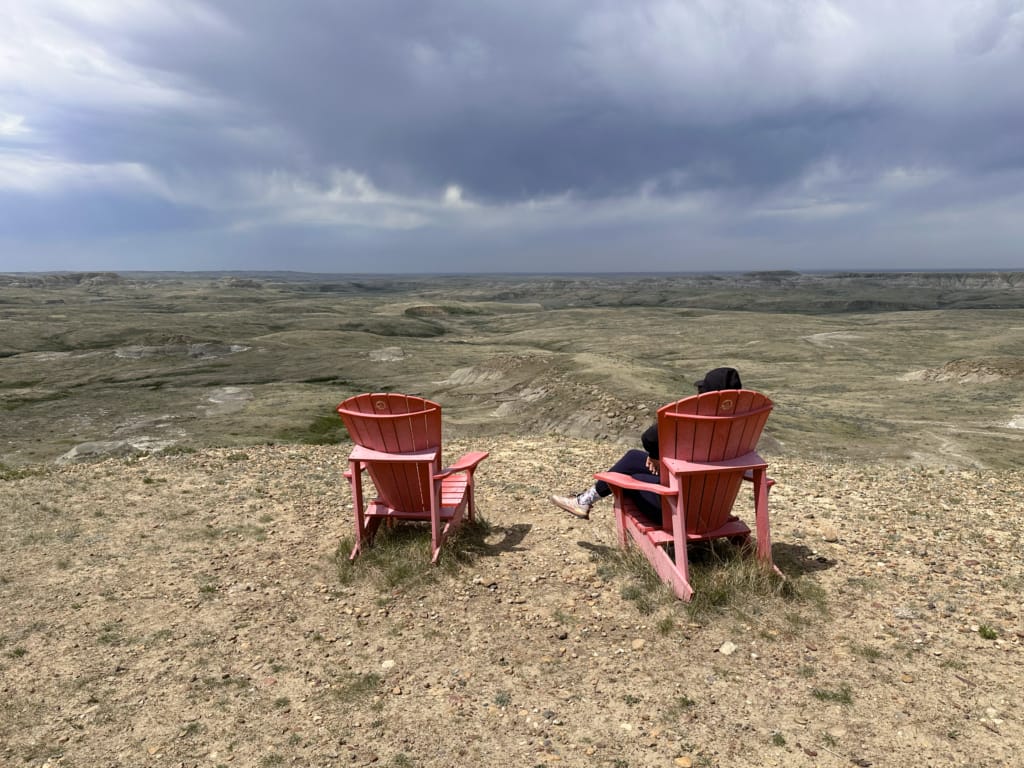
- A great viewpoint over the Rock Creek Valley and campground. It has a pair of Parks Canada red chairs.
Crackerjack
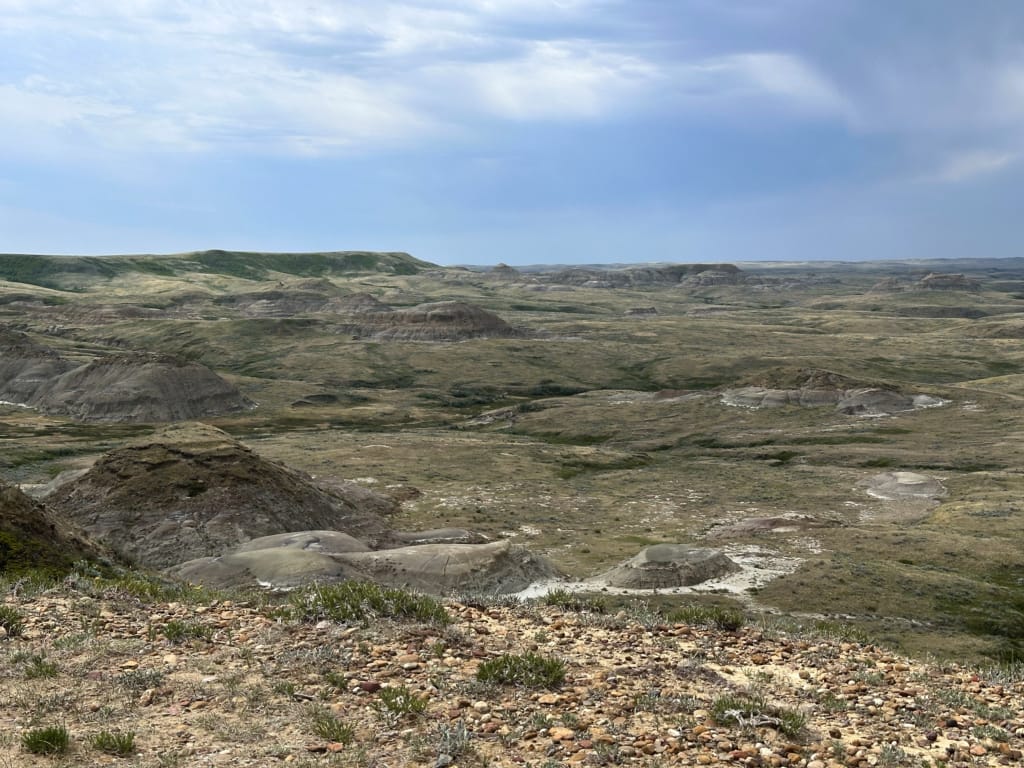
- One of the first views of the badlands.
- The info board here explains the history of dinosaur fossil hunting in this area.
Zahursky Point
- A viewpoint over the badlands with an info board about the Zahursky family, who homesteaded here over 100 years ago.
- There are a pair of Parks Canada red chairs here too.
Kapesiwin
- Kapesiwin means campsite in the Cree language. The info board here teaches you about the history of Indigenous people in this area.
Mauvais Terres
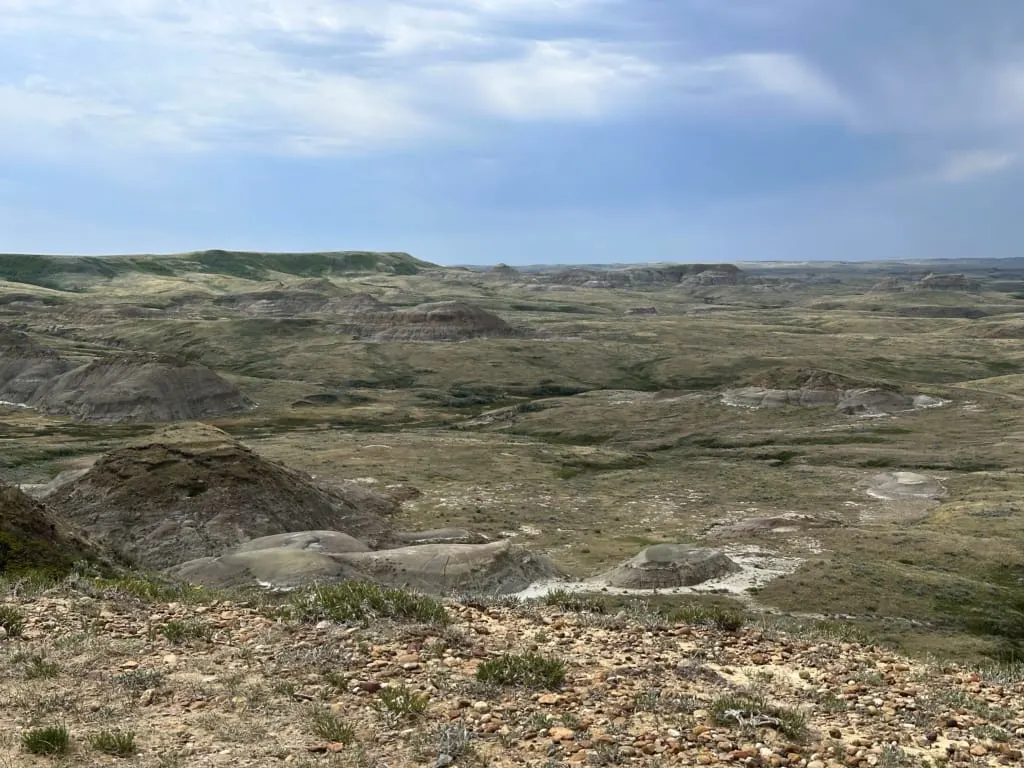
- A short trail leads to the top of a bluff with a great view of the badlands.
Ta Sunka Watogla
- The best viewpoint of the badlands. It has a pair of Parks Canada red chairs and is especially gorgeous at sunset.
- The info board here tells the story of the Lakota who sought sanctuary in this area after the Battle of Little Bighorn.
- You can follow a faint trail down the hill into the badlands. Walking off-trail is allowed in Grasslands National Park – for decades, bison hooves tilled the land here, so human footsteps are encouraged.
Rock Creek Trail
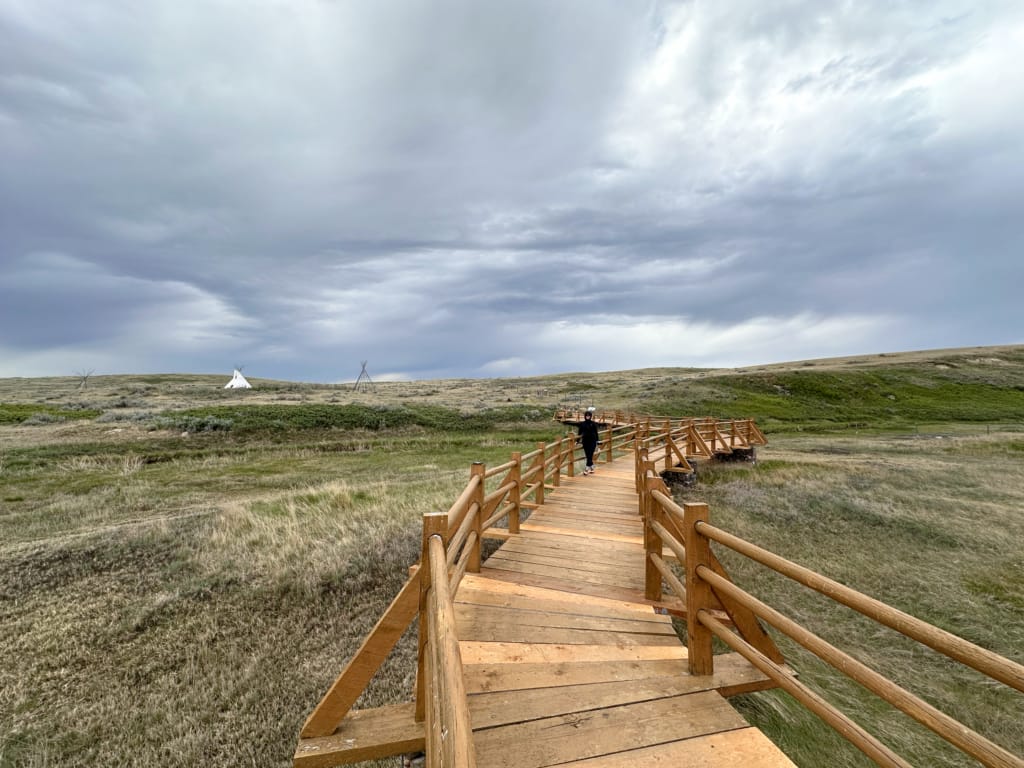
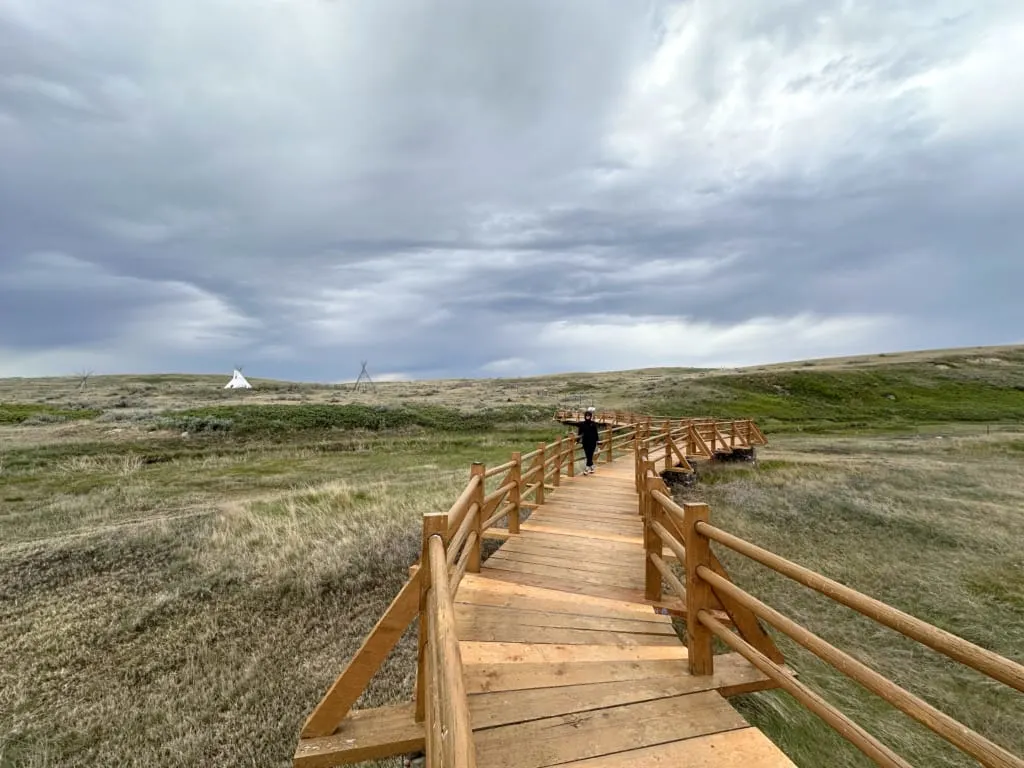
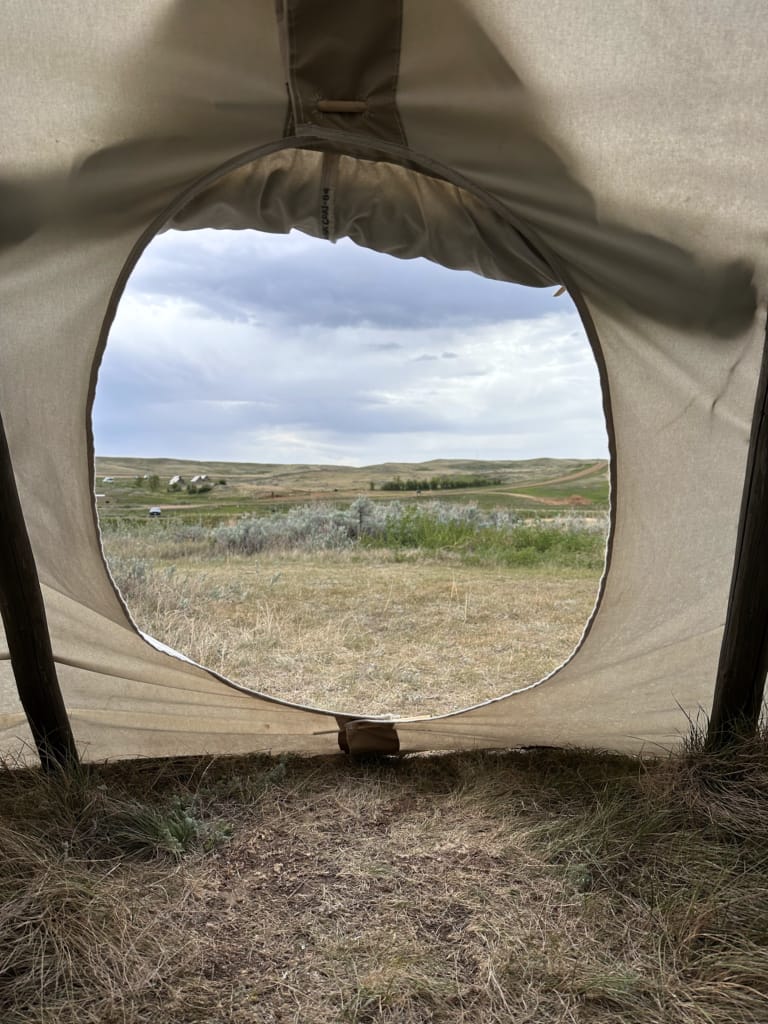
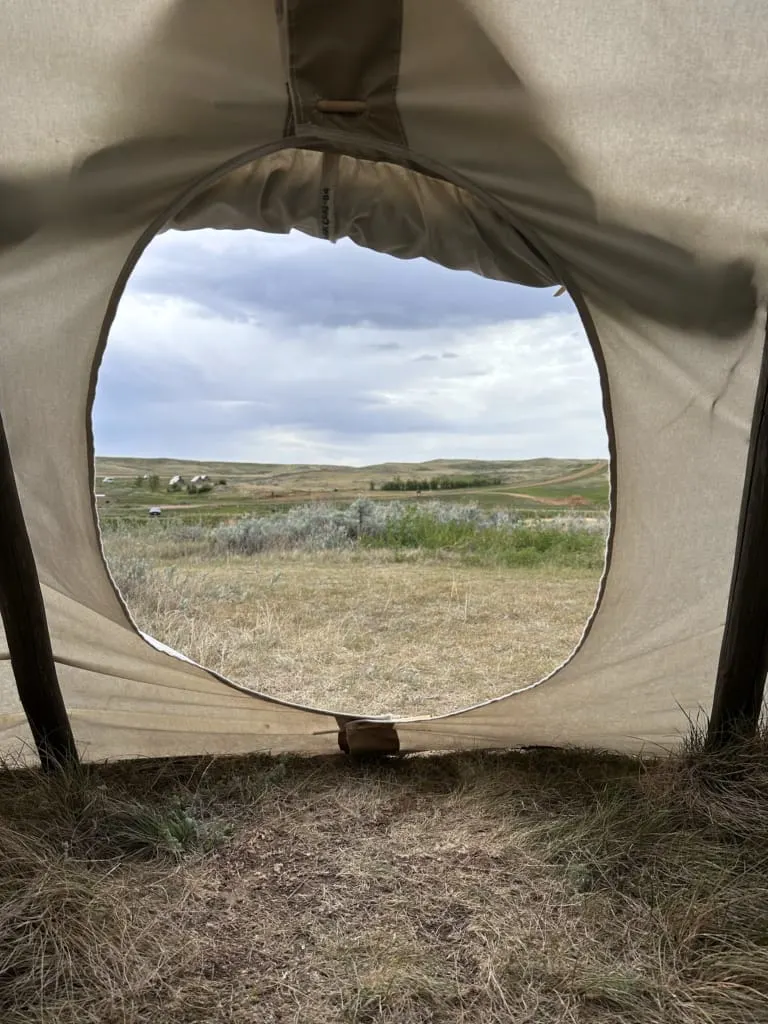
This easy 1 km loop trail goes up and over a small hill near the campground. It has good views of the Rock Creek Valley. There is also a tipi near the trailhead, which is great for photo ops.
Valley of 1000 Devils
This 10 km round-trip hike is the centerpiece hike in the East Block and takes three to four hours. It goes through grassy prairie before winding through the badlands.
I was really looking forward to this hike, but unfortunately, there was a thunderstorm that afternoon, so we had to skip it. I’d love to go back and hike it, since it looks amazing.
Guided Fossil Hike: 70 Million Years in 60 Minutes
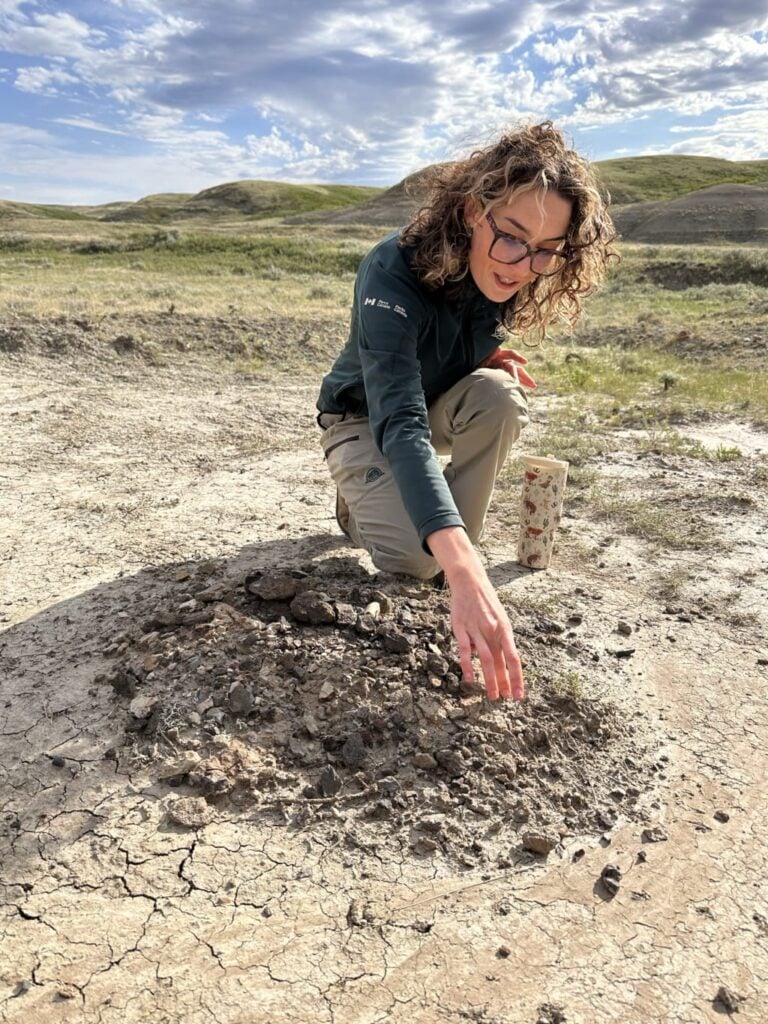
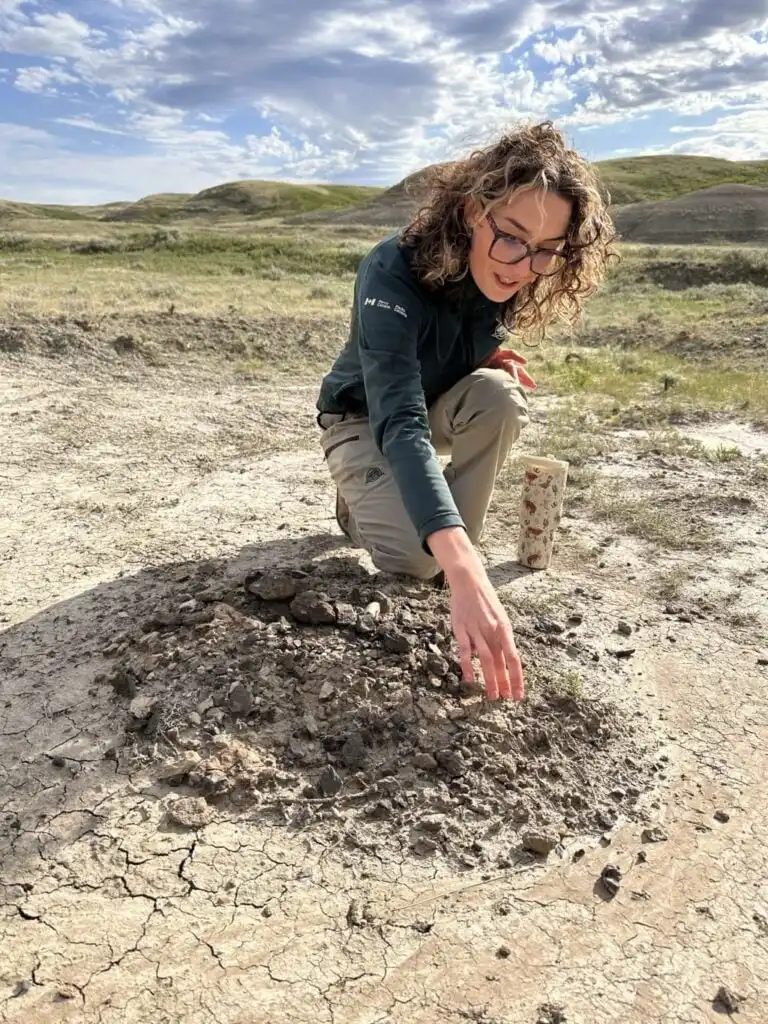
One of the best things I did in the East Block was a guided fossil hike with a Park Ranger called 70 Million Years in 60 Minutes. The hike runs on Tuesday and Thursday mornings and costs $16.50 per person. You can register at the East Block visitor centre.
On the hour-long guided hike, we followed a Park Ranger on an off-trail route down into the badlands. She taught us about the KPg boundary, which is a thin geologic layer that marks the dinosaur extinction.
We also got to see lots of dinosaur fossils and learn about the sometimes tawdry history of fossil hunting in this region – many of the dinosaur skeletons in museums around the world came from Grasslands National Park!
Things to Do Anywhere in Grasslands National Park
Enjoy the Sunset
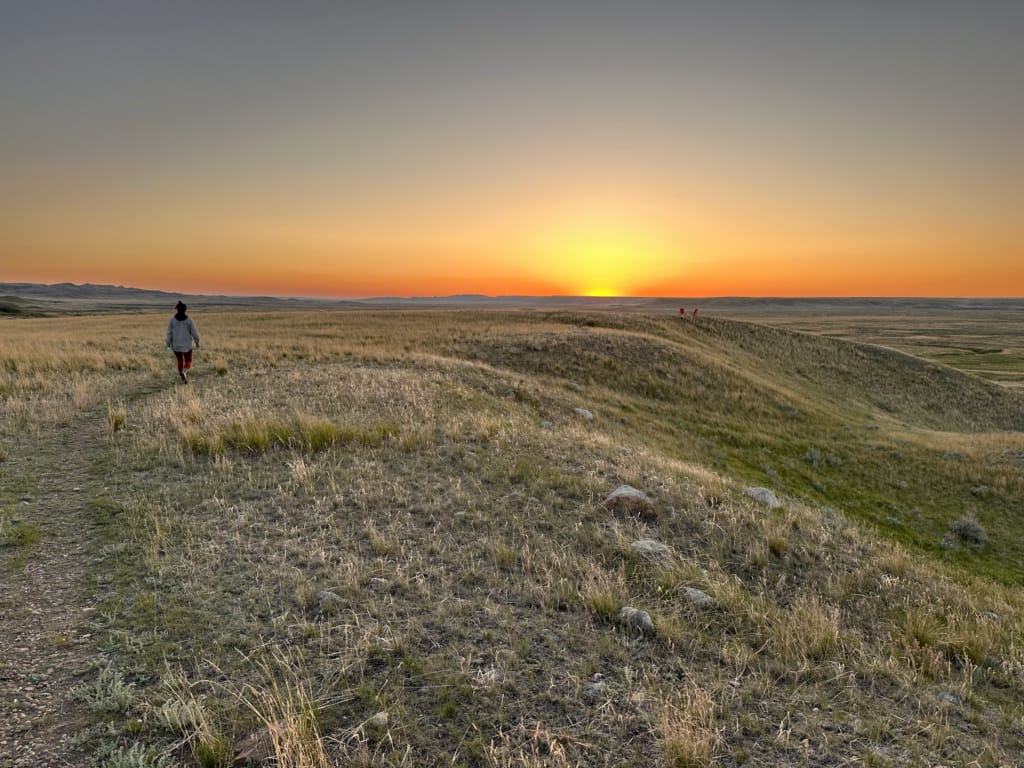
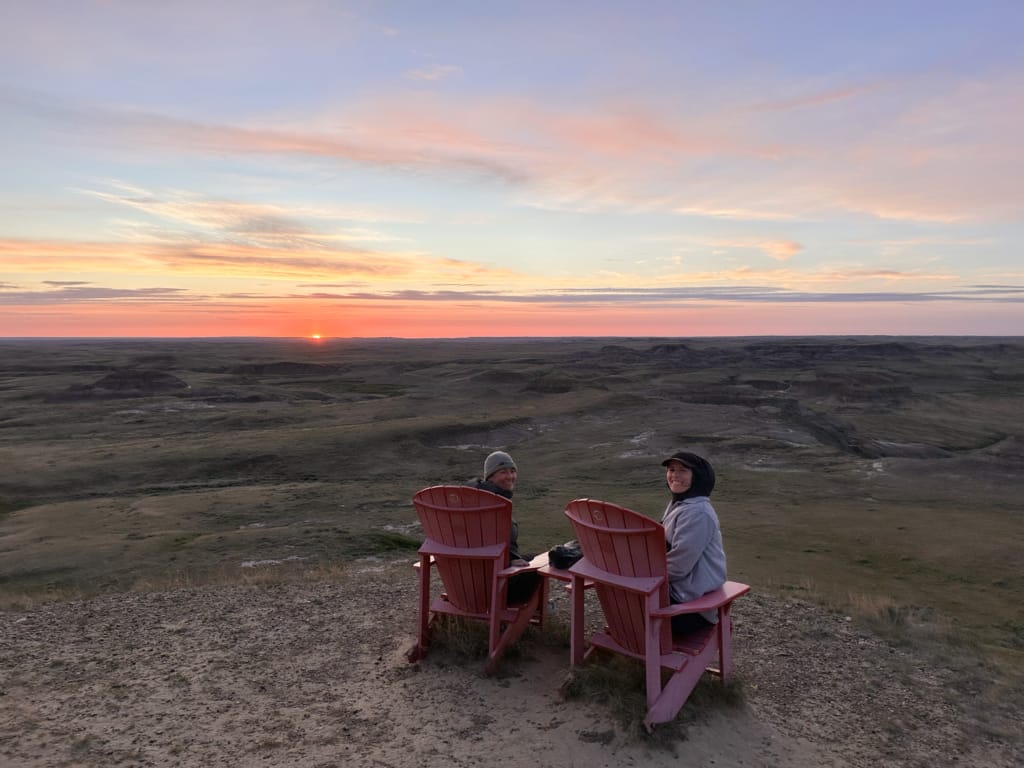
Saskatchewan sunsets are spectacular, and they are even more special amongst the native prairie landscapes of Grasslands National Park. You can see the sunset anywhere that faces west in the park, but here are two spots I recommend:
Frenchman Valley Campground/Belza Day Use Area (West Block)
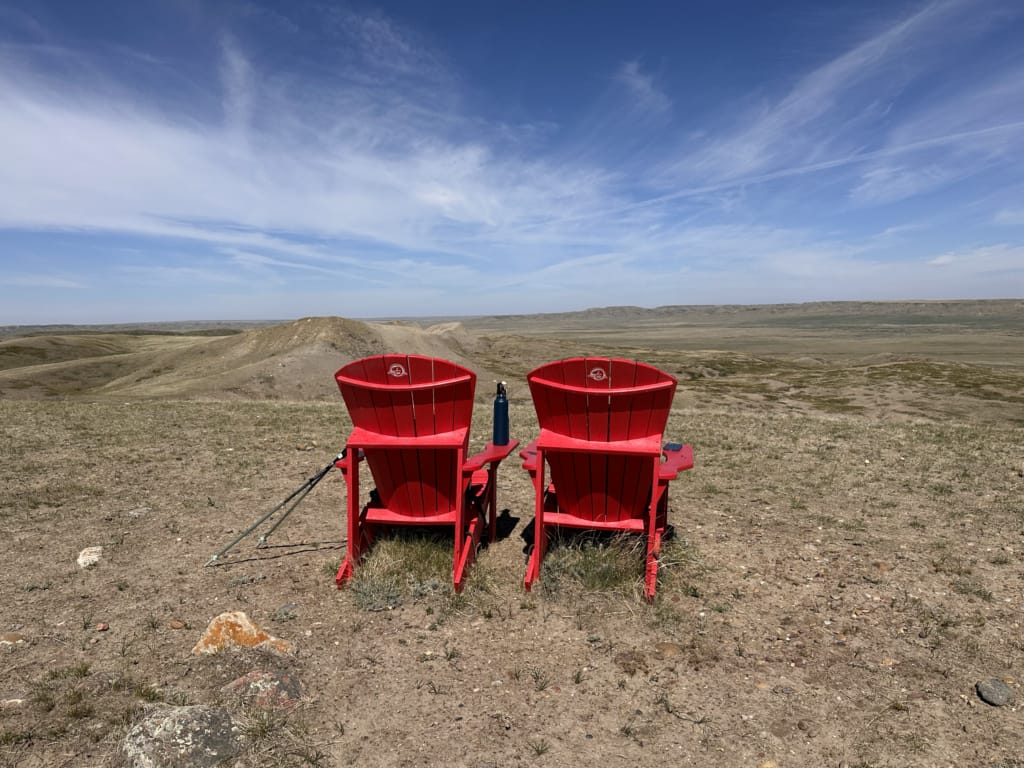
A trail runs between the Frenchman Valley Campground and the Belza Day Use Area. If you take a spur trail from the main trail, you’ll go up onto a small ridge that has a spectacular view of the Frenchman River Valley. There is a pair of Parks Canada red chairs here too, so it’s a great photo op.
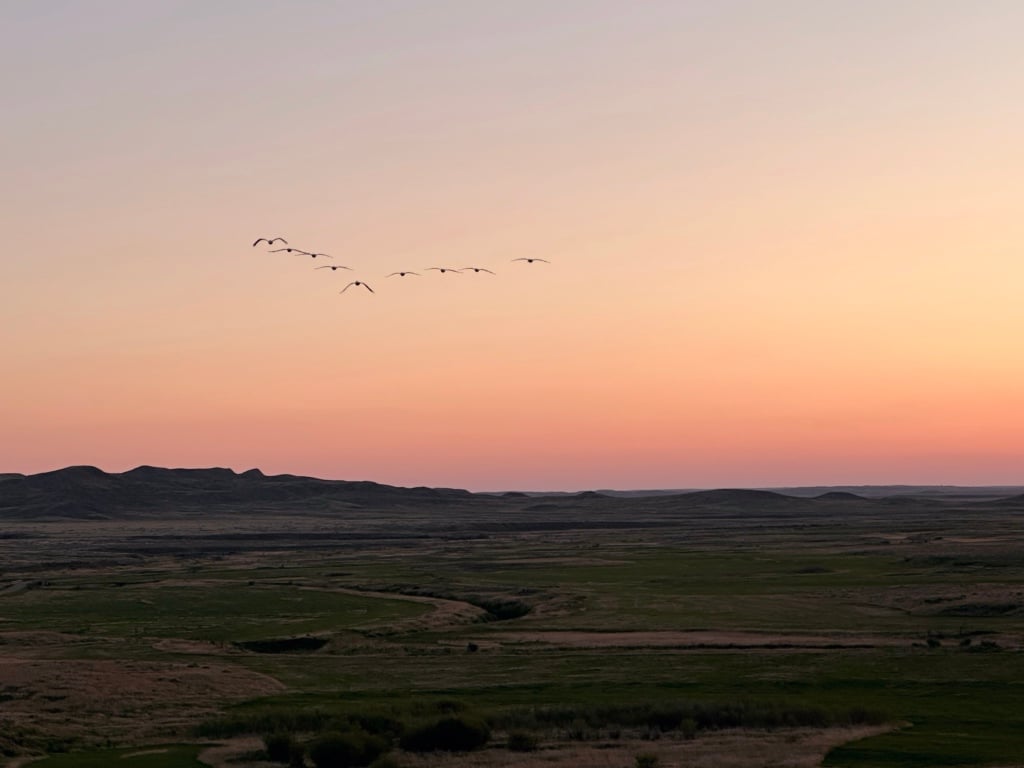
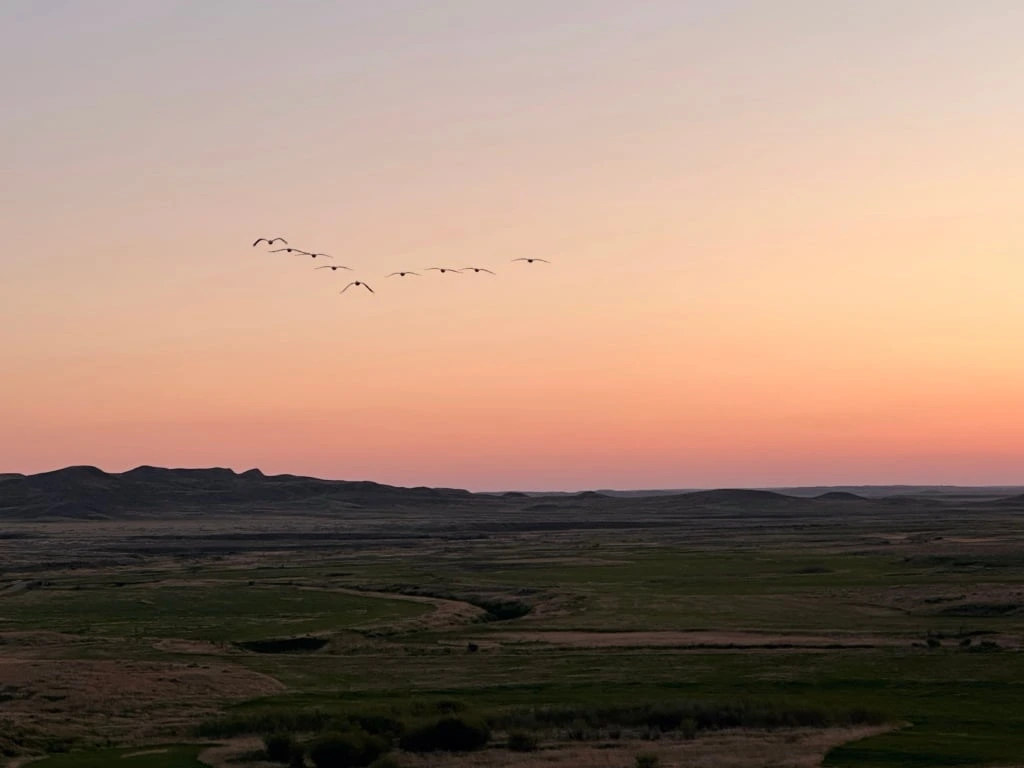
We headed up here for sunset on both of the nights we spent in the West Block. The pinks and purples of the sunset were gorgeous. But we also spotted a flock of pelicans migrating overhead and deer bounding through thickets near the river.
Badlands Parkway (East Block)
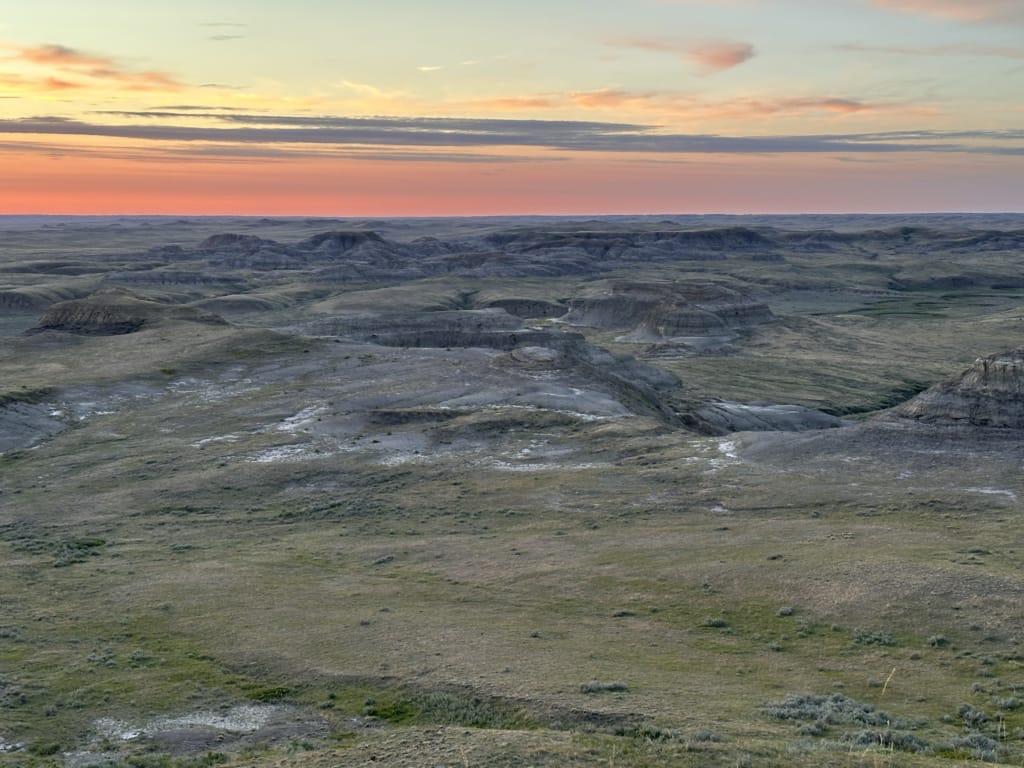
All of the stops along the Badlands Parkway are great sunset spots since they face west. If you’re short on time, the Gateway to Grasslands Viewpoint is the closest. (It’s also an easy 1.5 km hike from the campground.) It has a pair of Parks Canada red chairs.
However, I think it’s worth driving to the end of the Parkway to get the best view from Ta Sunka Watogla viewpoint. It looks out over the badlands. The buttes are spectacular in the soft light of sunset. There are Parks Canada red chairs here too!
Stargazing
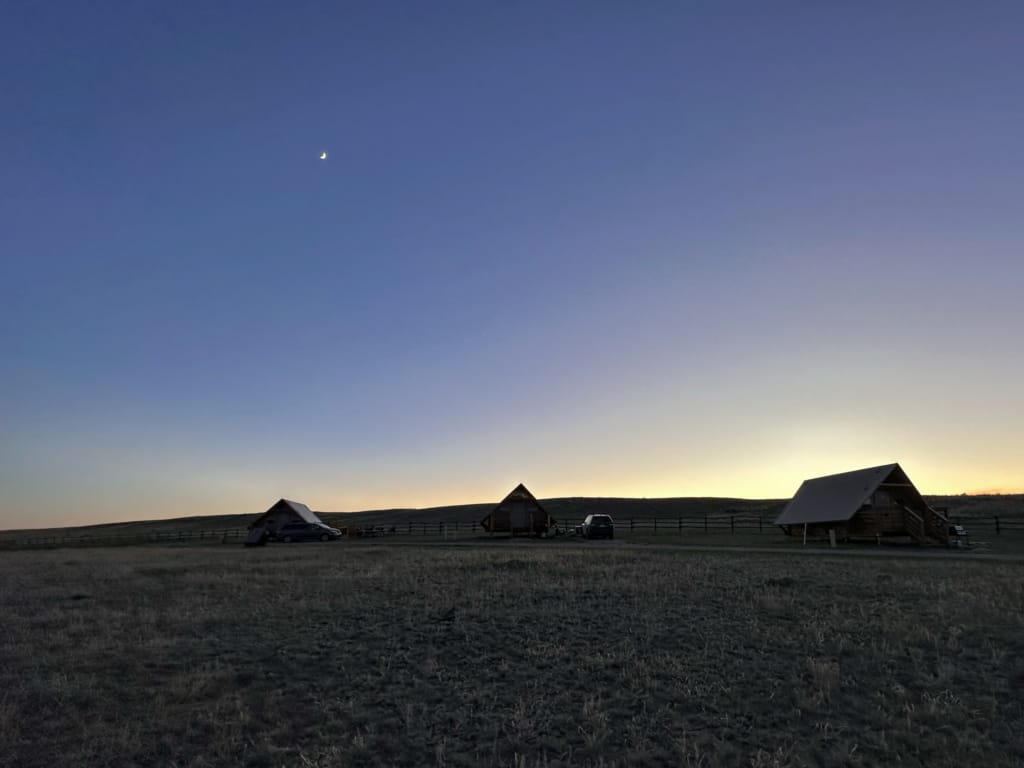
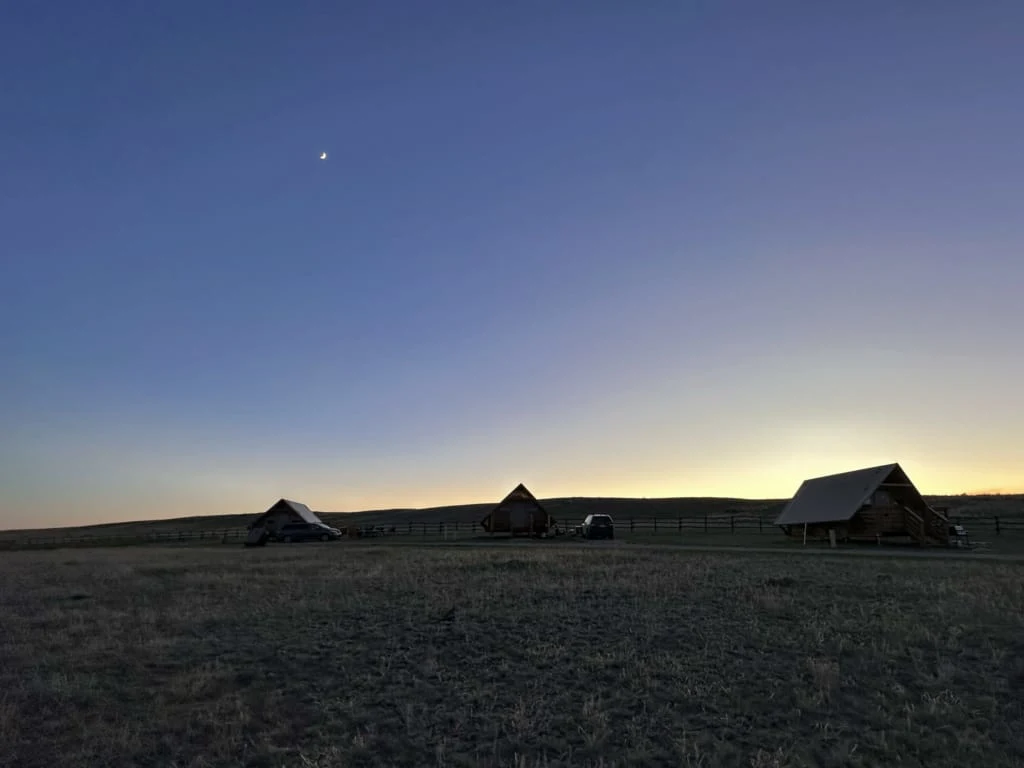
Grasslands National Park has been a recognized National Dark Sky Preserve since 2009, and often has clear weather during summer evenings, so it is a great place to go stargazing.
You can stargaze anywhere in the park. The easiest way to stargaze is to camp. I spent three nights camping in Grasslands and spent some time stargazing each evening after it got dark. I also got to do some unplanned stargazing on a few middle-of-the-night trips to the outhouse!
If you plan to stargaze, minimize your use of lights and let your eyes adjust to the darkness. Park your car at a pullout or day use area, set up a lawn chair, then settle in to watch the stars. Binoculars or a telescope are also a great idea.
I’m not a good astro photographer (and I didn’t have a tripod with me), so unfortunately I don’t have any good night photos to share.
Bird Watching
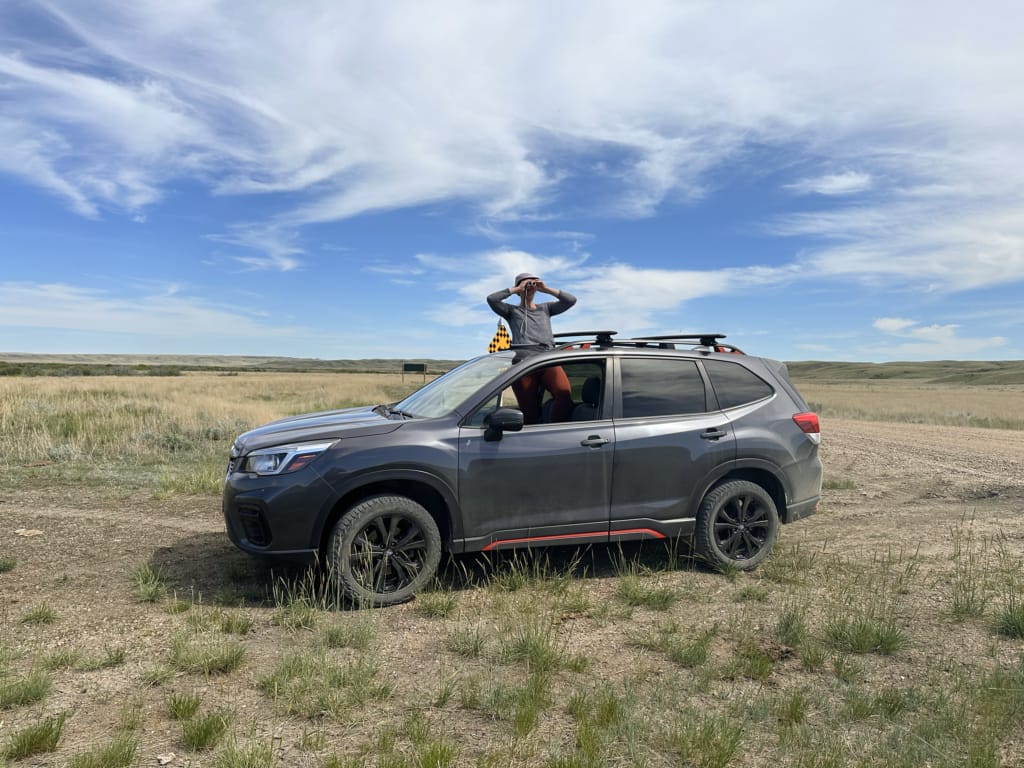
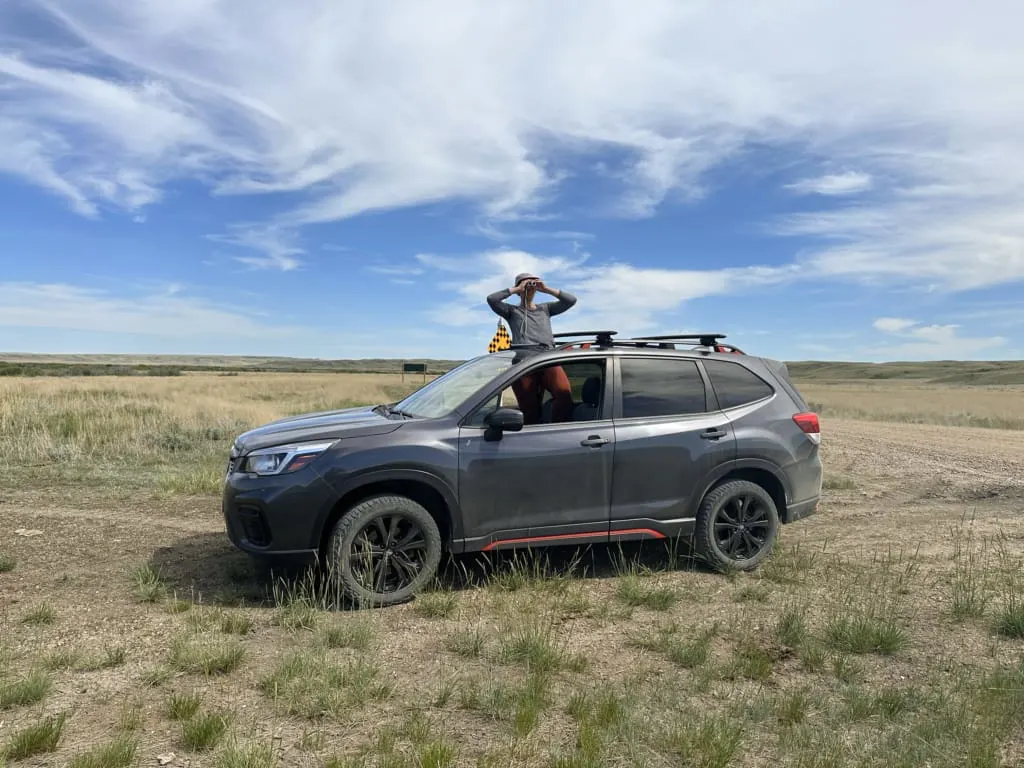
I got into bird watching a little bit during the pandemic. But then I went to Grasslands National Park with a friend who is even more into bird watching. We ended up taking turns driving so the other person could spot birds and then yell about finding a place to pull over so we could look at the birds through our binoculars!
Grasslands has great birdwatching opportunities. My favourite bird by far was the burrowing owl. It’s a squat little owl with a slightly derpy face that lives in prairie dog colonies. We heard about an owl nest in the East Block and drove over from the campground to watch it on several occasions.
We also spent lots of time watching songbirds and water birds near Frenchman River and Rock Creek. Another favourite were the grouse, partridge, and pheasant in the grasses beside the road. We hoped to spot the endangered Greater Sage grouse, but didn’t have any luck. (There are only about 50 of them left in the park so that wasn’t surprising.)
Be sure to look up too! We saw hawks soaring on thermals and even a flock of pelicans cruising past.
I’m not a great bird photographer, so unfortunately I don’t have any awesome close-up photos of birds to share.
Park Ranger Fireside Chats
If you want to learn more about the plants, animals, and geology in the park, head to a Park Ranger-led Fireside Chat. They are held on Friday evenings in both the Frenchman River and Rock Creek campgrounds.
At the one we attended, the ranger had free marshmallows to roast and shared all kinds of fun facts about prairie plants, buffalo, snakes, and so much more. I learned at ton!
Camping in Grasslands National Park
There are two campgrounds in Grasslands National Park, one in each block. If you can swing it, I highly recommend camping in the park. You’ll get to enjoy sunsets, sunrises, stargazing, and way more wildlife viewing. You also won’t have to commute into the park, which can take up to an hour!
The campsites all accommodate tents or RVs. If you have a big trailer, there are also a few pull-through spots at each campground. You can also book a spot in one of their glamping-style oTENTik tents.
Keep in mind that both campgrounds are 100% reserveable. Reservations open in late January or early February each year. Book in advance to avoid disappointment.
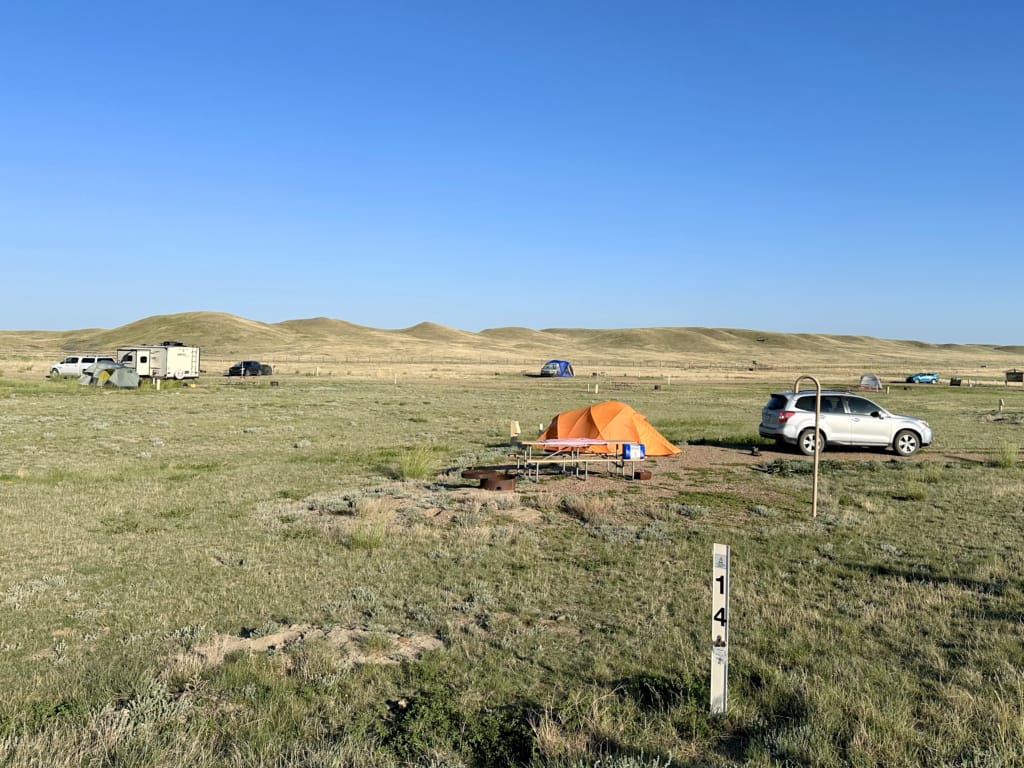
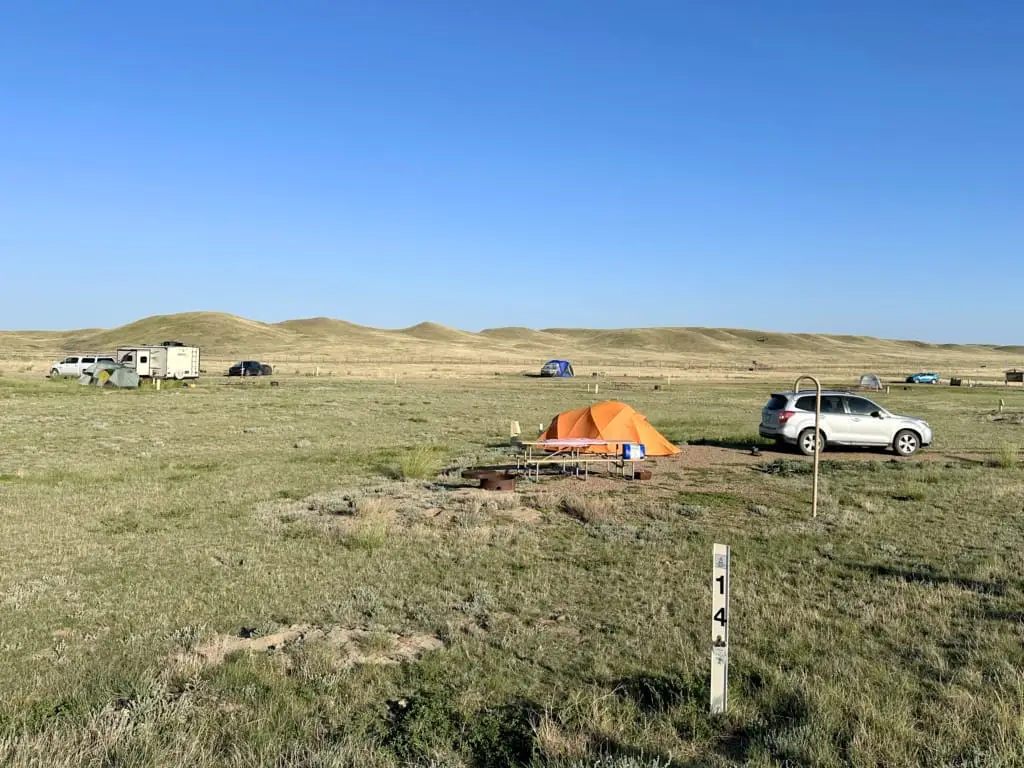
Both campgrounds can be very windy. Bring lots of rope and pegs to secure tents and awnings. There is also no shade and the sun can be relentless. We cooked in the day use/kitchen shelters a few times to avoid the wind and sun.
Frenchman Valley Campground (West Block)
I spent two nights at the Frenchman Valley Campground. It’s located in the middle of the West Block near the end of the Ecotour Scenic Drive.
Since this part of the park has free-roaming bison, the campground has a fence around it to keep the bison out. On the day we arrived, a bison hung out on the hill across from the campground for a few hours!
Just behind the campground is a small ridge that has great views of the Frenchman River Valley. We spent lots of time up there watching birds, bison, and deer and admiring the incredible sunset!
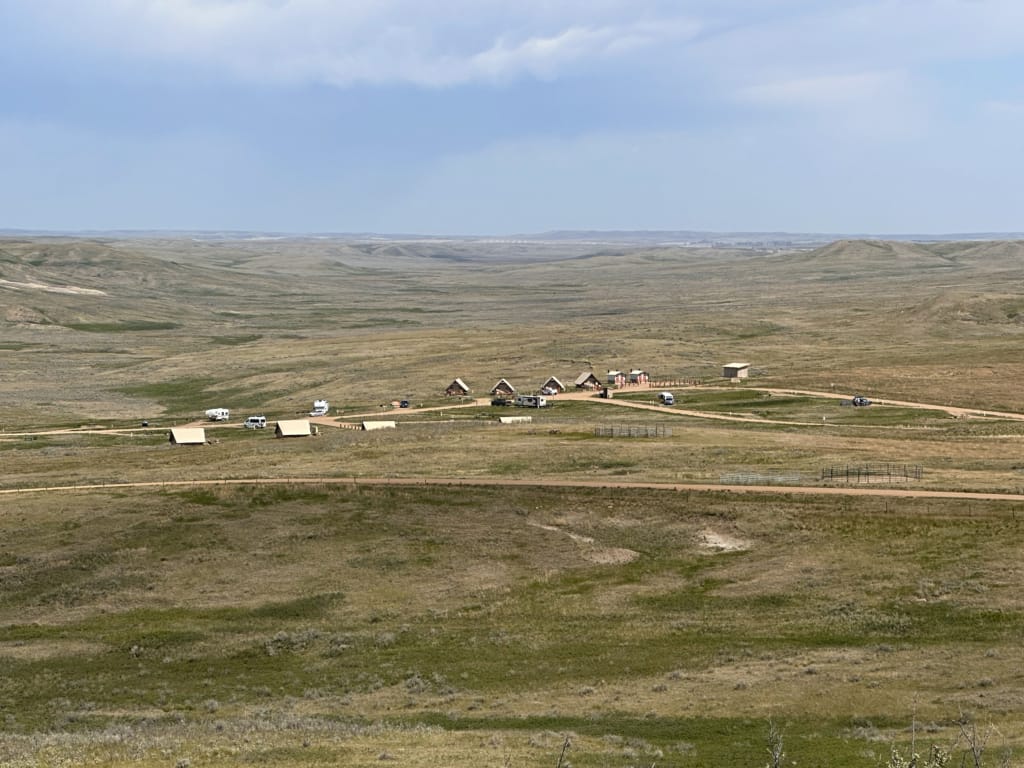
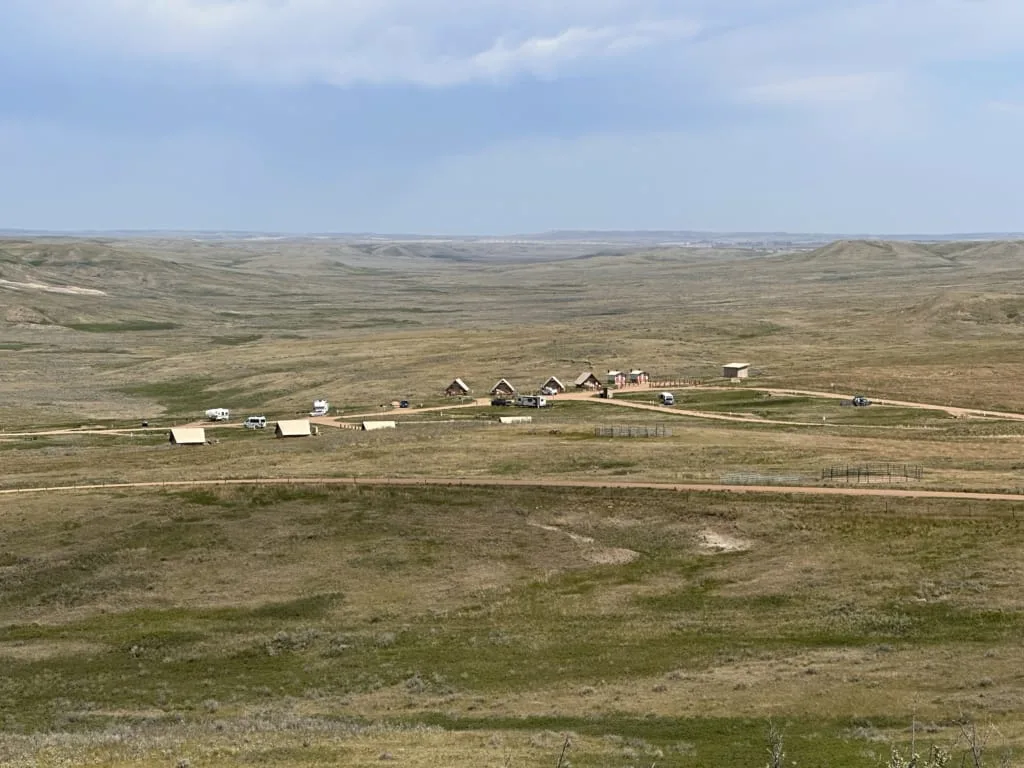
The campground has all the basics: drinking water taps, garbage cans, firepits, and pit toilets. There are 20 campsites and 4 oTENTik glamping tents you can rent. (More on those below.) All of the campsites and oTENTiks have power but no water.
Notably, the campground doesn’t have showers. The closest showers are at the Val Marie Campground – it’s $5 for non-registered guests. We toughed it out with wet wipes and then showered after we left the area, so I don’t have a review of the showers.
The Frenchman Valley Campground does have a great day-use shelter called the Coulee Centre. It’s a great place to get out of the sun and wind. There are picnic tables both inside and outside the building. It also has wifi, although it’s not very strong.
Rock Creek Campground (East Block)
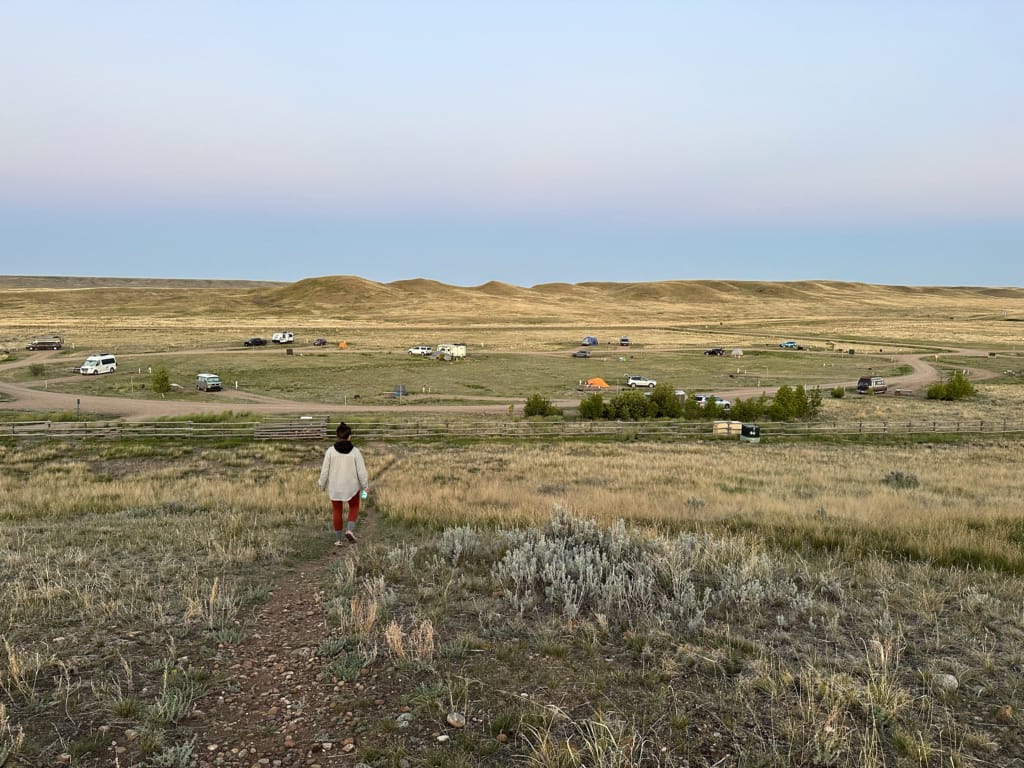
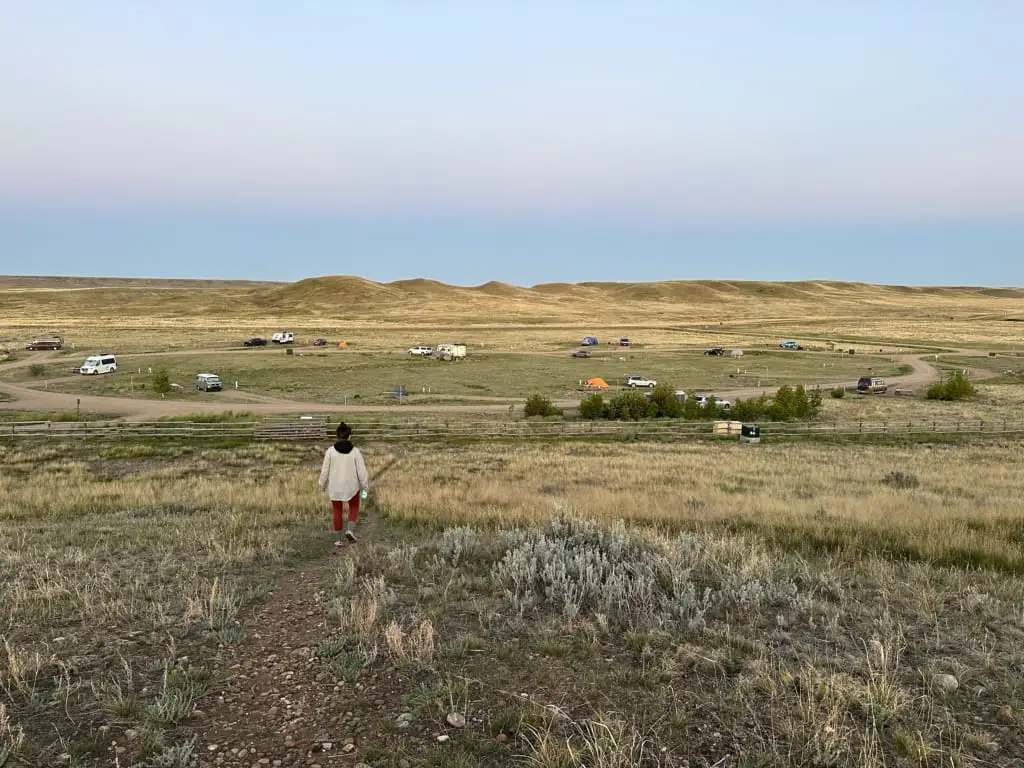
The Rock Creek Campground is located near the entrance to the East Block of Grasslands National Park and the start of Badlands Parkway. It’s set into a small hill above Rock Creek.
There are 24 campsites and 8 oTENTiks, and they all have power but not water. Like the Frenchman Valley Campground, Rock Creek also has drinking water taps, garbage cans, firepits, and pit toilets. Rock Creek also does not have showers, and I don’t have any recommendations on the closest place to shower – sorry!
The kitchen shelter at Rock Creek is small and basic, with just a few tables and not much natural light. The outdoor tables do have a good view of Rock Creek, though.
Camping in oTENTiks in Grasslands National Park
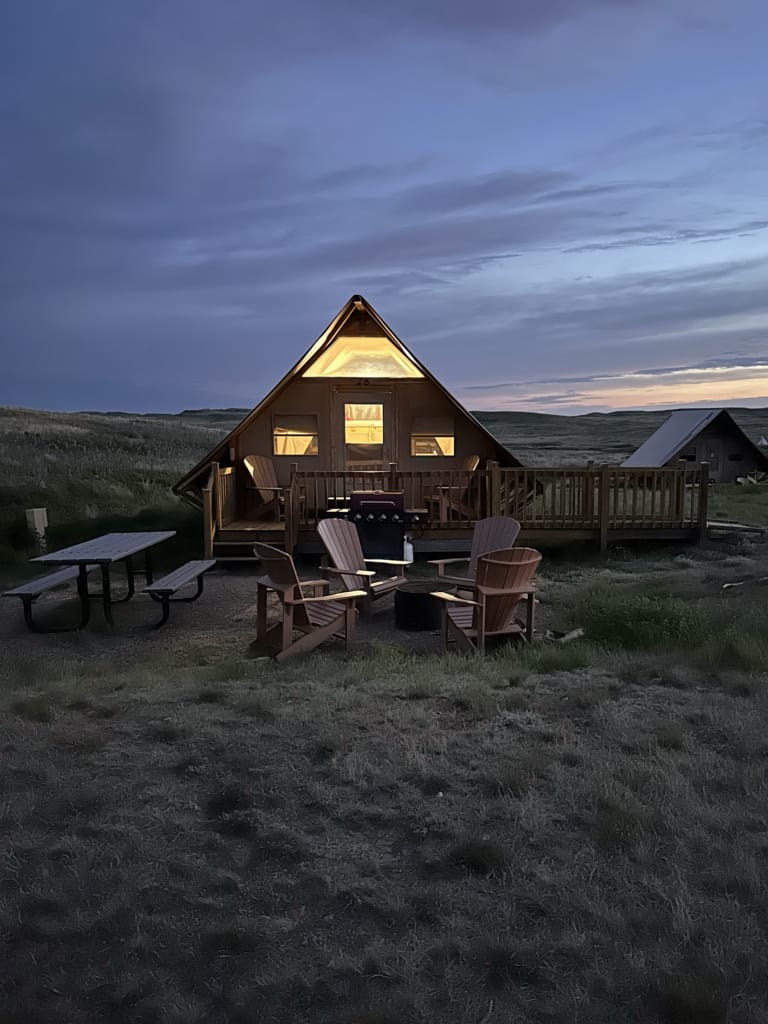
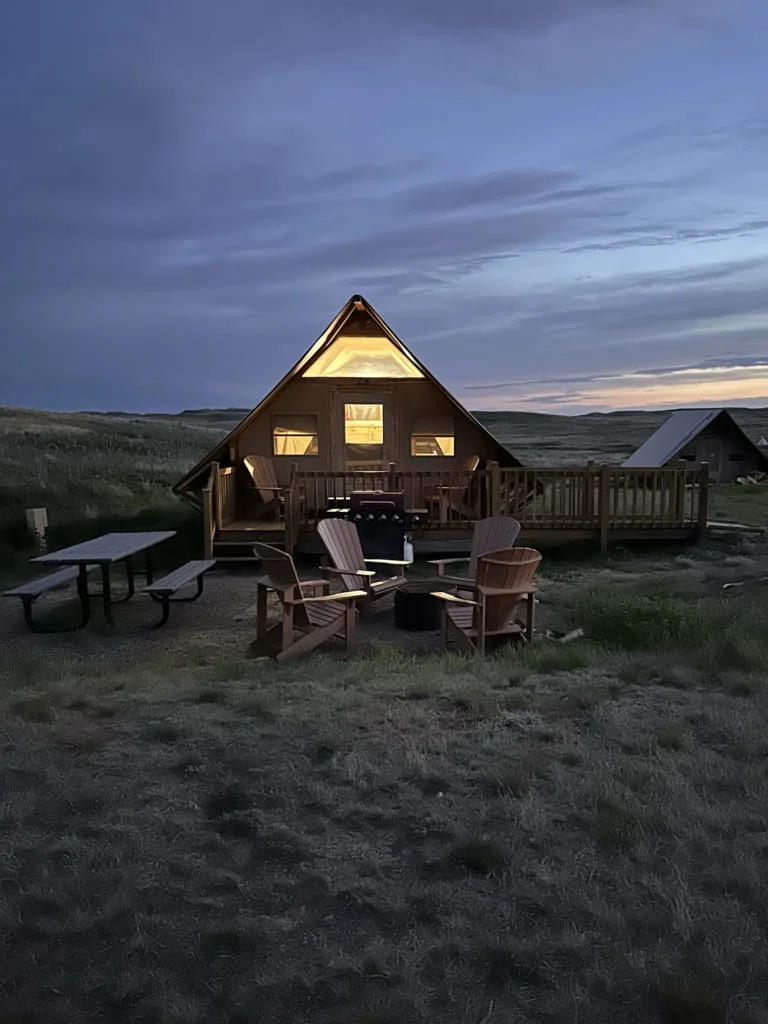
Both campgrounds have oTENTik glamping-style tents you can rent. They are also 100% reservable and reservations open at the same as camping reservations, usually in late January or early February.
I stayed in an oTENTik at both Frenchman Valley and Rock Creek campgrounds. It was nice not to have to worry about setting up a tent and to have an indoor place to hang out, especially when it was windy.
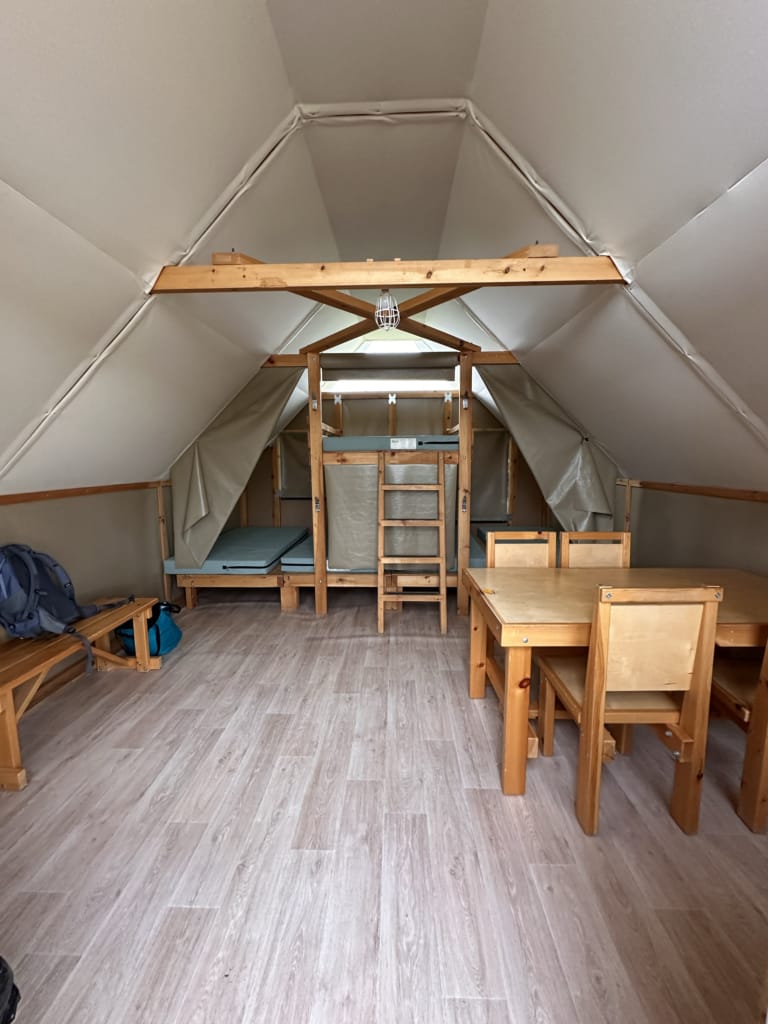
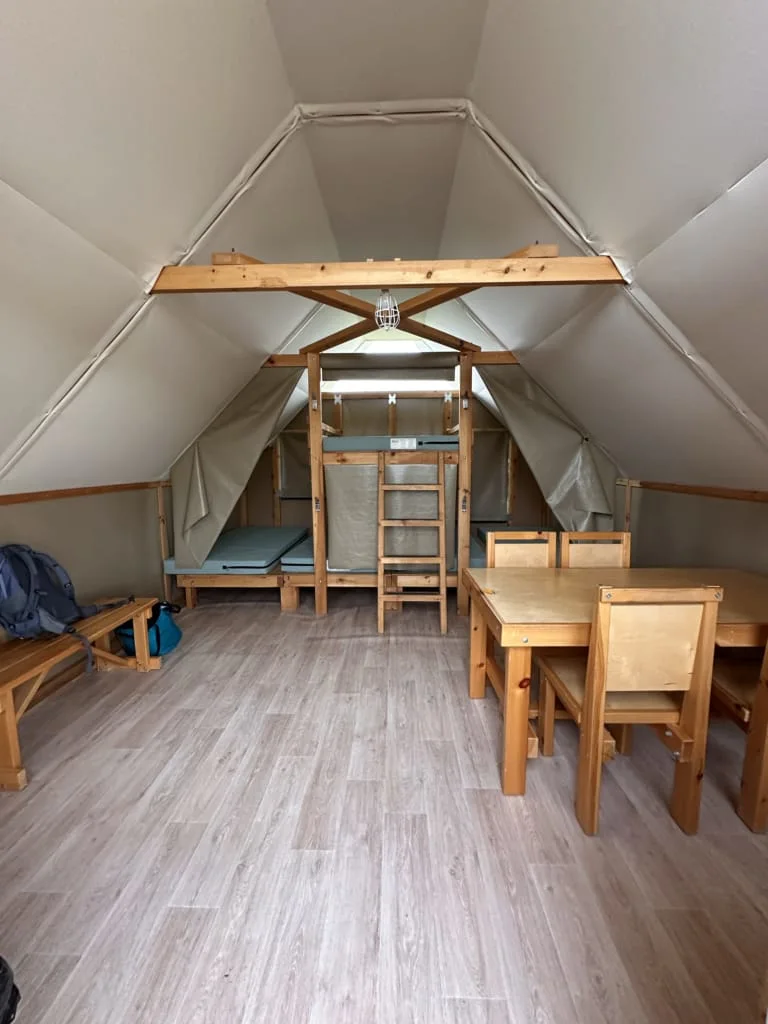
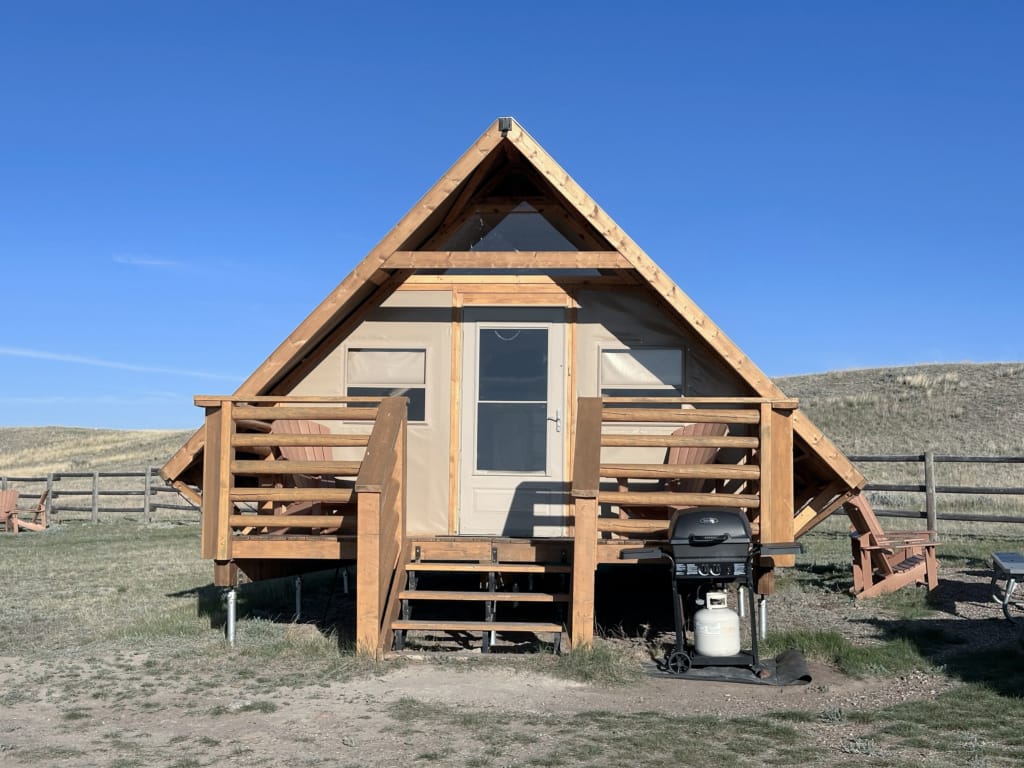
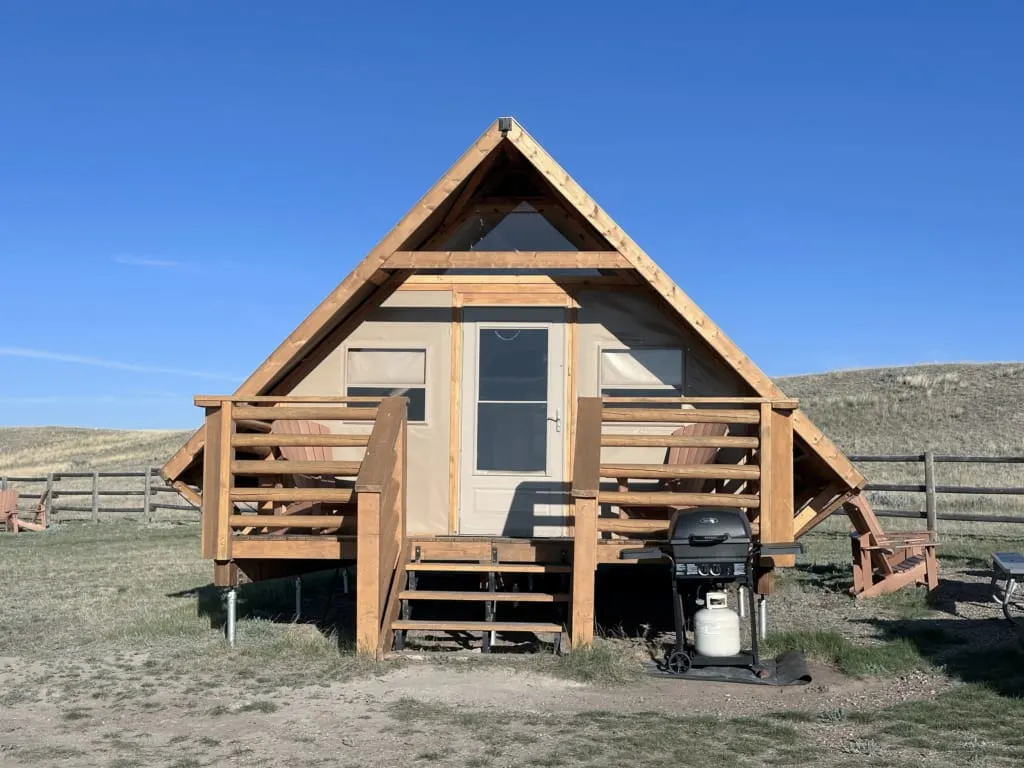
The oTENTiks include mattresses for up to 6 people, but you have to supply your own sleeping bags/bedding. You aren’t allowed to cook inside, but there is a picnic table, BBQ, and fire pit outside. We also brought a camping stove and used it on the picnic table.
The oTENTiks do have power, which was nice for charging our phones. They have a simple overhead light and come with a small heater, although we didn’t need it.
There is no plumbing – you’ll have to collect water from the campground taps and use the pit toilets.
Hotels Near Grasslands National Park
As I said above, I really recommend camping in Grasslands National Park. And since you can stay in glamping-style oTENTik, it’s more accessible than most types of camping. However, I know camping isn’t for everyone, so I’ve got a list of hotels near the park.
When booking a hotel, keep in mind that the West and East Blocks of the Park are about 2 hours apart. Note that there is no accommodation inside the park – you’ll have to stay outside the park boundary. As well, there really aren’t that many hotels in this area. I’ve listed all the nearby ones below.
The Convent Inn: A basic B&B in the town of Val Marie near the entrance to the West Block, housed in an old brick convent.
The Sanctuary Inn: Vacation rental suites in the town of Val Marie near the entrance to the West Block inside an old church.
The Crossing at Grasslands: Remote vacation suites on a rural property a few minutes south of Val Marie near the entrance to the West Block.
Rockglen Motel: Basic motel in the town of Rockglen, 45 minutes east of the East Block. This is the closest hotel to the East Block.
Grasslands National Park Travel Tips
How to Get There
Grasslands National Park is located in southern Saskatchewan, not far from the American border. It’s in a remote and sparsely populated part of the province. The closest cities and large towns are Swift Current (1.25 hours away), Moose Jaw (2.5 hours), and Regina (3.25 hours).
There is no public transportation to Grasslands National Park, so you will need to drive yourself. If you’re flying to Saskatchewan, the nearest airport and car rentals are in Regina. I like to book with Discovercars since it lets me compare prices across different rental companies.
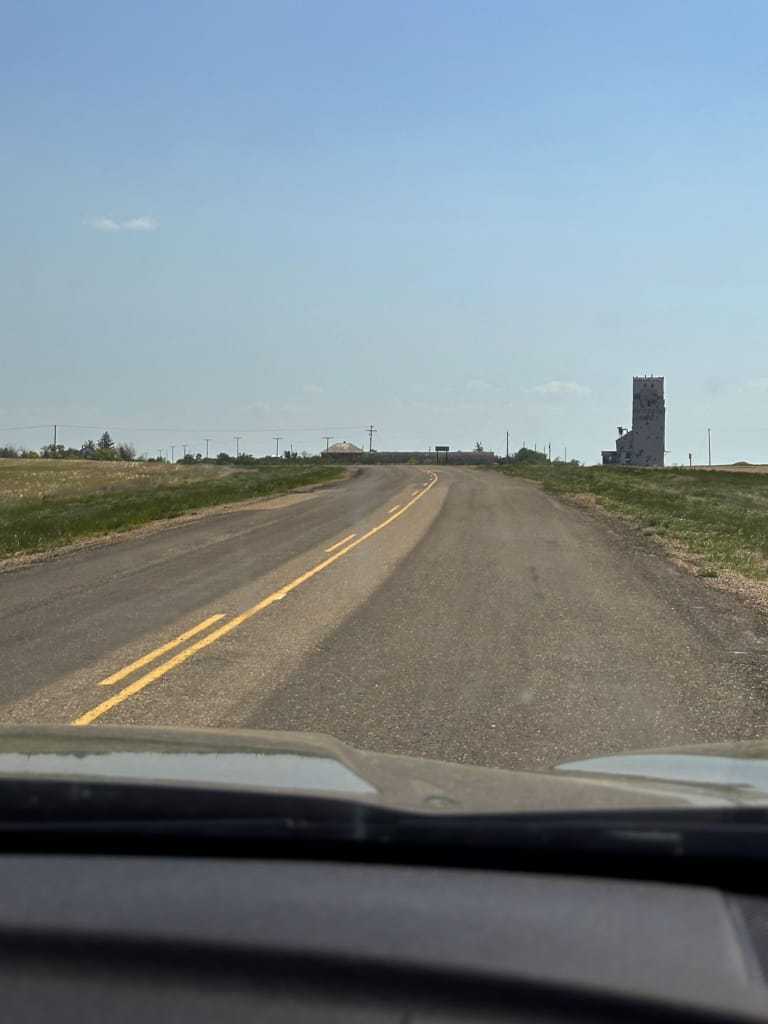
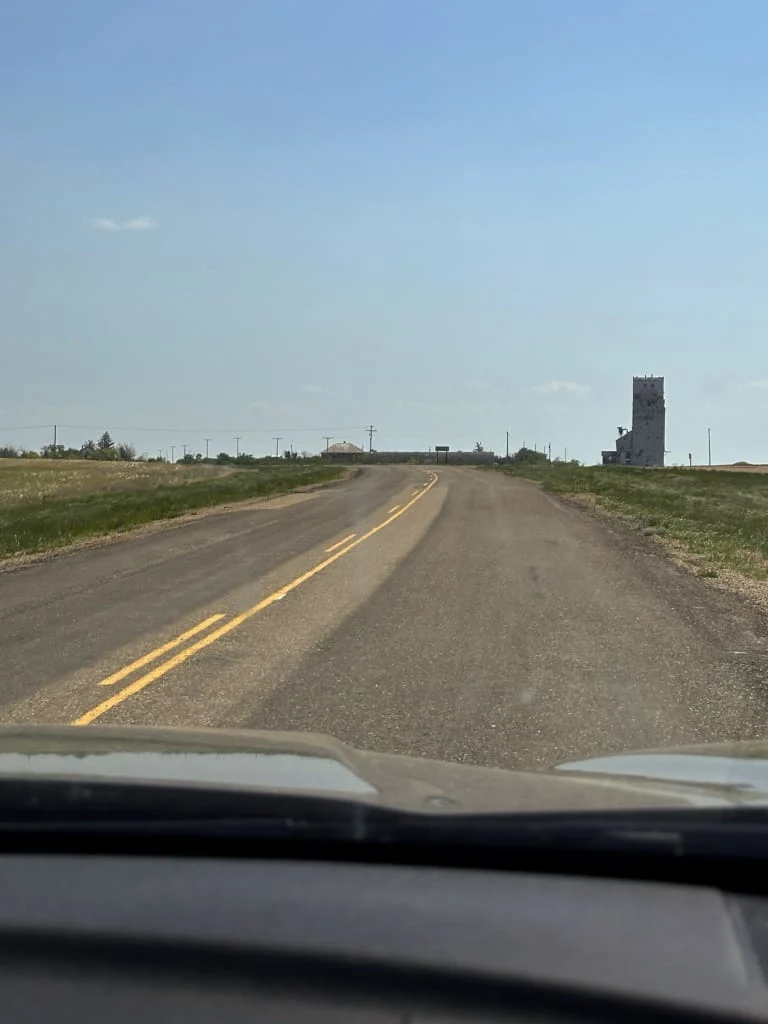
To get to the park from Highway 1, you’ll drive on small two-lane highways. They can be bumpy and narrow, but are fine if you go the speed limit or a little under. Use Google Maps directions and pay attention to road signs. Be careful because Google Maps may try to send you on some unmarked gravel road through farmlands. It’s faster to stick to the paved official highways.
Driving Between the West Block and East Block
It’s a 2-hour drive between the West Block and East Block of Grasslands National Park. The entire drive is on quiet 2-lane highways with signs at major junctions. There are a few tiny towns along the route, but most do not have groceries or gas. (More details on that in the restaurants, groceries, and gas section below.)
Getting Around the Park
There is no public transportation inside Grasslands National Park, so you will need to drive yourself.
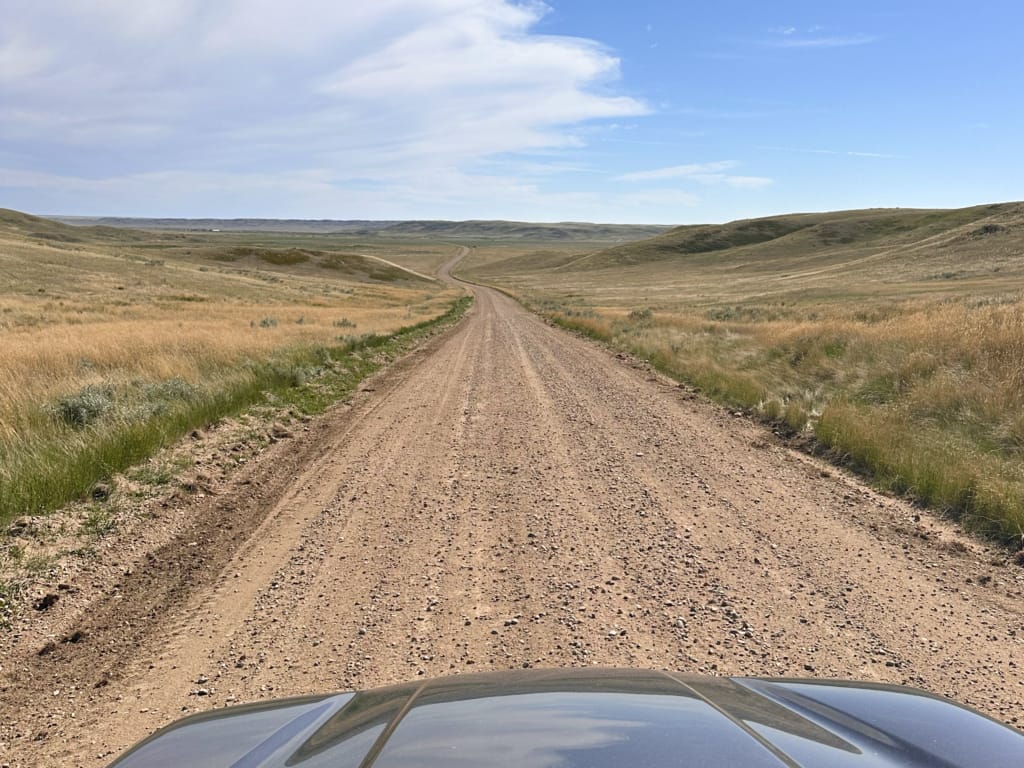
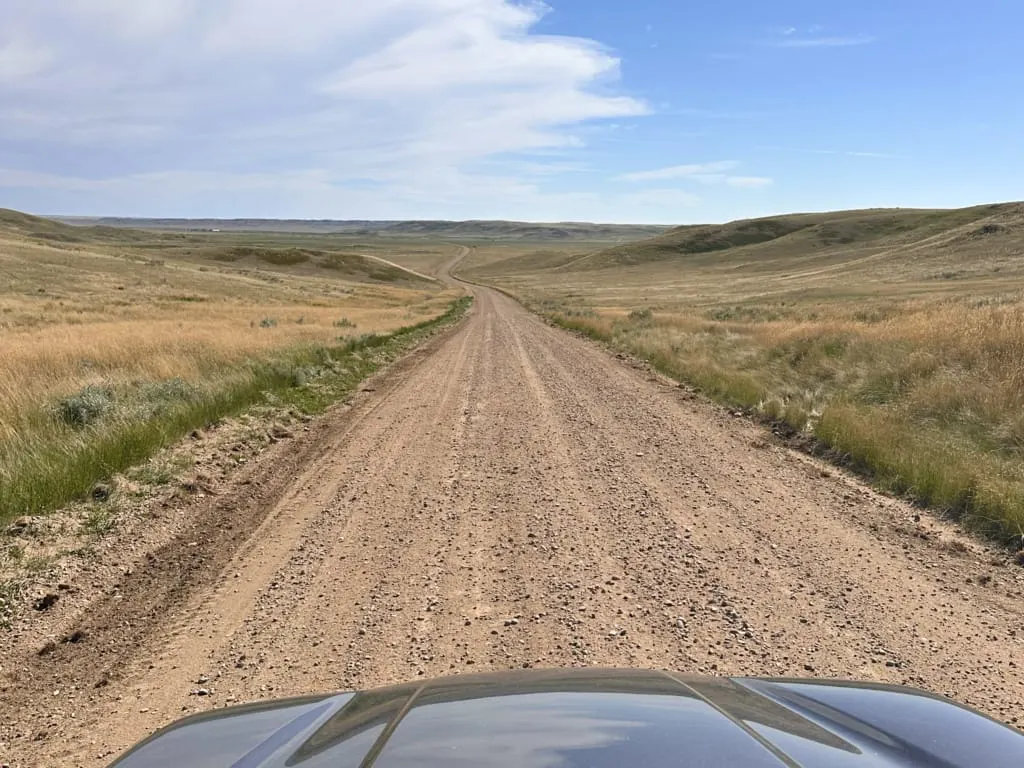
The roads inside both the West Block and East Block are gravel. In general, they are in good shape and easy to drive as long as you go slow. They can be dusty, so you’ll want to drive with your windows up and air recirculation on.
However, after it rains, the park roads can be muddy. The remote roads in the West Block are rougher and can become impassable when they are wet.
National Park Passes
You must purchase a Parks Canada pass to enter Grasslands National Park. Buy one at the Visitor Centre in the town of Val Marie outside of the West Block or at the Visitor Centre at the Rock Creek Campground in the East Block.
You will need to display your park pass on the dash of your car whenever you are parked in the park.
Admission fees are quite reasonable: $7.25 for adults or $15 for a family/group in the same vehicle. You can also use a Parks Canada Discovery Pass, which gives you access to all National Parks and Historic Sites for one year.
Good news: The Canada Strong Pass applies in Grasslands National Park from June 19 to September 7, 2026. Park entry is free during that time period.
How Long to Spend
I think the ideal amount of time to spend in Grasslands National Park is two to three days. I recommend spending one or two nights in the West Block and one night in the East Block.
In general, there are more things to see and do in the West Block. Allow at least one full day for exploring the West Block. Add on an extra day if you want to do any of the hikes.
The East Block is also beautiful, but it doesn’t require as much time – you can get away with a half day here. If you want to do any of the longer hikes, add on an extra day or two.
I spent two nights in the West Block and one in the East Block. I wish I had a bit more time in the East Block to go for a longer hike.
Best Months to Visit
I visited in late May, and we had great weather and saw lots of wildflowers. It was warm but not incredibly hot.
In general, the best months to visit Grasslands National Park are May, June, and September. The park has no shade and can be brutally hot in July and August.
Weather
Summer weather in Grasslands National Park is generally warm to hot, with temperatures in the mid-20s °C to low-30s °C. It doesn’t rain often – you can expect intermittent afternoon thunderstorms in the summer, especially in June and July, but not a ton of actual rain. We had to cancel plans to hike one afternoon when a thunderstorm rolled in.
The park can also be quite windy, especially in the afternoon. If you are camping, bring a quality tent that can stand up to wind and stake it out really well.
The Canadian government produces weather forecasts for the West Block and East Block of Grasslands National Park.
What to Pack for Grasslands National Park
Grasslands National Park is a remote and rugged place, so pack for function over looks.
Bring clothing for the weather. You’ll want quick-drying clothing for hiking. I recommend wearing a long-sleeved sun hoodie so you don’t have to worry about sunscreen application as often. You’ll also want a sun hat, sunglasses, and sunscreen.
Ticks can be an issue in the park, so I recommend wearing lightweight long pants tucked into socks. Insect repellent with DEET can also help. (I actually didn’t spot any ticks in Grasslands, thankfully, but I did see them elsewhere in Saskatchewan.)
It can get colder at night or when it is windy, so a fleece jacket, lightweight puffy, or windbreaker is a good idea. I brought a toque and ended up wearing it at night.
The trails are maintained to a National Park standard, so they aren’t that rough. You can bring hiking boots, but I wore trail runners and found them sufficient.
The wildlife watching opportunities in the park are great, so bring binoculars. I have a pair of tiny Pentax binoculars that are light and compact enough to hike with.
You can get drinking water at the campgrounds and visitor centre. Parks Canada recommends you have 2 to 3 litres of water per person per day. I used my insulated Hydro Flask bottle to keep my water cold.
There is nowhere to buy food inside the park, so you’ll need to bring your own. See the restaurants, groceries, and gas section below for more info.
If you plan to camp, you’ll need standard camping gear: tent, sleeping bags, sleeping pads, stove, cooler, etc. I’ve got more info about the campground facilities in the where to stay section above.
Cell Phone Service and Wifi
While there is good cell phone service in most of southern Saskatchewan, Grasslands National Park is the exception. Cell phone service is spotty or non-existent in most of the park.
You will get good 5G service in the town of Val Marie and at the West Block Visitor Centre. You’ll also get some LTE service on the western edge of the West Block and on the first part of the Ecotour Scenic Drive.
However, as you drive further into the park, you’ll hit a big dead zone. There is weak wifi at the Frenchman Valley Campground at the Coulee Centre. Otherwise, except no cell phone service further into the West Block of Grasslands National Park.
The East Block of Grasslands National Park does not have good cell phone service either. You may get some 4G service on the eastern edge of the park, but it drops off quickly as you drive into the park and along Badlands Parkway.
You will also drive through some dead zones with no cell service when you drive between the West Block and the East Block.
Thankfully, all of the roads are well-signed, and you can pick up good maps at the visitor centres, so you won’t get lost, even without cell service.
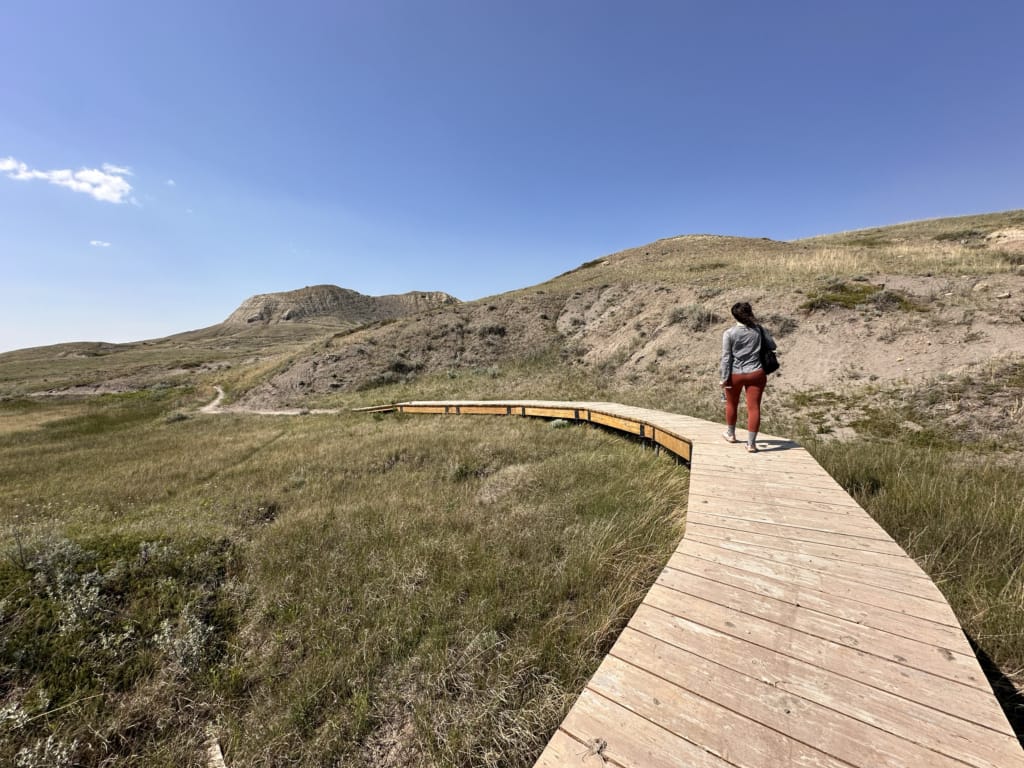
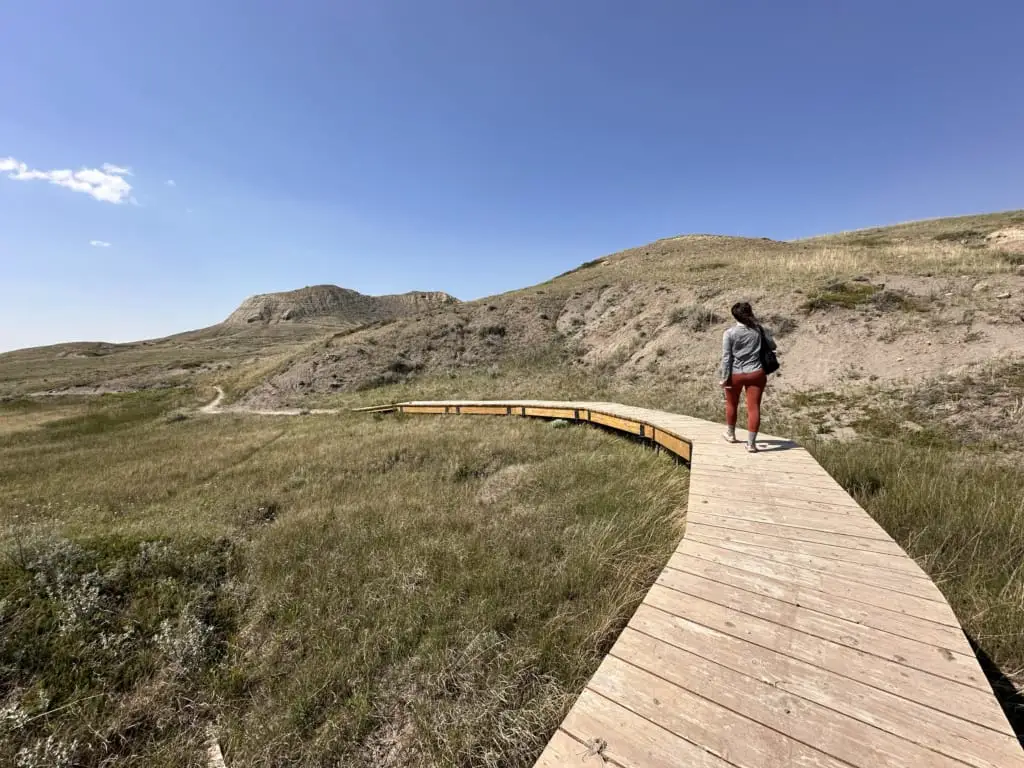
If you are going hiking, use a GPS app like AllTrails+ or Gaia GPS and download an offline map before you go. You will usually have no cell service on hiking trails. I recommend putting your phone in airplane mode while hiking. That will preserve the battery. If you leave it on, it just keeps looking for signal, which drains the battery.
Restaurants, Groceries, and Gas
Grasslands National Park is a VERY quiet part of Saskatchewan. The towns nearby are tiny and have few services. I recommend getting groceries in larger towns on the way to the park.
Gas stations are also fairly spread out here. Fill up before you head into the area and try to keep your tank fairly full in case your route doesn’t have many gas stations.
Here is a run-down on what you can expect in the area.
Near the West Block
Val Marie is by far the biggest town near the park. It is located near the entrance to the West Block and is home to the Visitor Centre.
It has a restaurant called the Val Marie Bar and Cafe that serves Chinese and Western food, but I didn’t eat there, so I can’t give it a review.
There is a tiny grocery store called VM Grocery and Liquor. It’s tiny, but it does have milk and other basics. It also has a small selection of souvenirs and sometimes serves to-go meals. It’s the closest place to buy ice near the park.
Val Marie also has a gas station. It is a cardlock, but it is open to the public as long as you have a credit card. Follow the printed instructions in the booth to use this old school, self-serve pump.
Near the East Block
There are no towns with services close to the East Block. The town of Rockglen is 45 minutes east of the park. It has a few restaurants, a small grocery store, and a self-serve cardlock gas station.
Between West Block and East Block
The drive between West Block and East Block passes through or near several tiny towns. Mankota and McCord have self-serve cardlock gas stations but no other services.
On the Way to the West Block
If you’re coming from Highway 1 to the West Block, it makes the most sense to get supplies in Swift Current, 1.5 hours away. It has gas stations, restaurants, and several large grocery stores.
Another option if you’re coming from the west is to turn off Highway 1 at Gull Lake and head to West Block via the town of Shauavon. It’s a big town with restaurants, gas stations, and a grocery store. On my trip, I stocked up on groceries and ice here.
On the Way to the East Block
If you’re driving from Highway 1 to the East Block, the best place to get supplies is the small city of Moose Jaw, about 2.5 hours away. Moose Jaw has lots of restaurants, gas stations and grocery stores.
There are a few gas stations along the route between Moose Jaw and the East Block of Grasslands National Park. You can find them in the towns of Mossbank, Assiniboia, and Limerick.
Assiniboia is the largest town and the best place to stop. It also has restaurants and a grocery store. We even found a small coffee shop here!
Indigenous Context
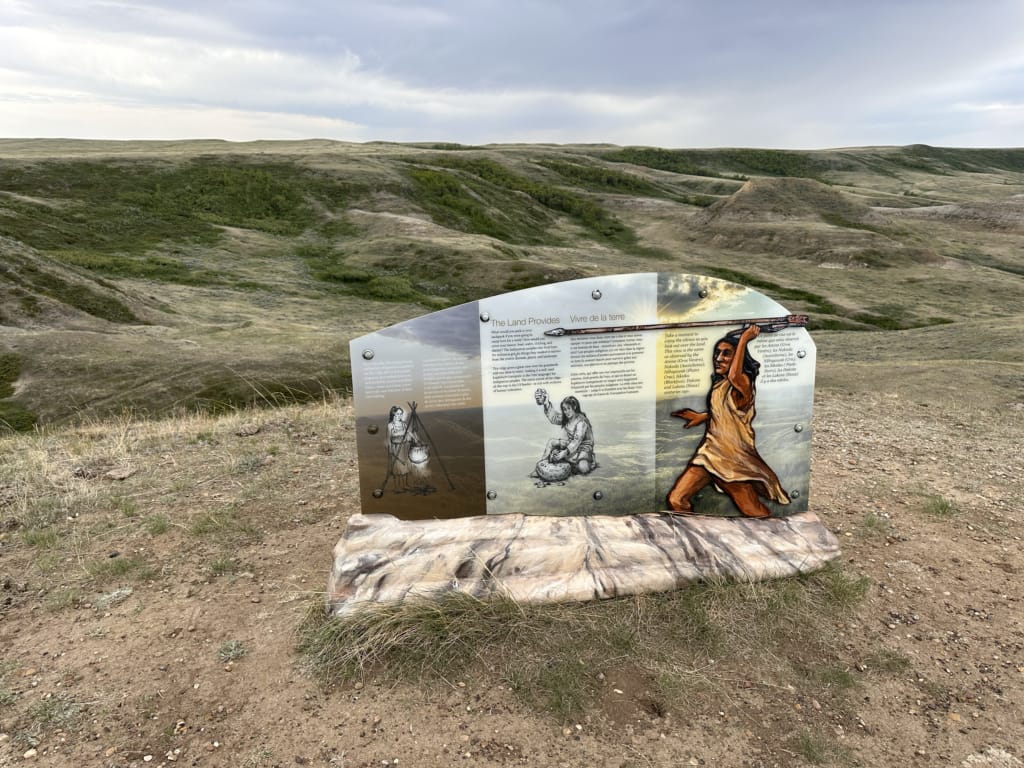
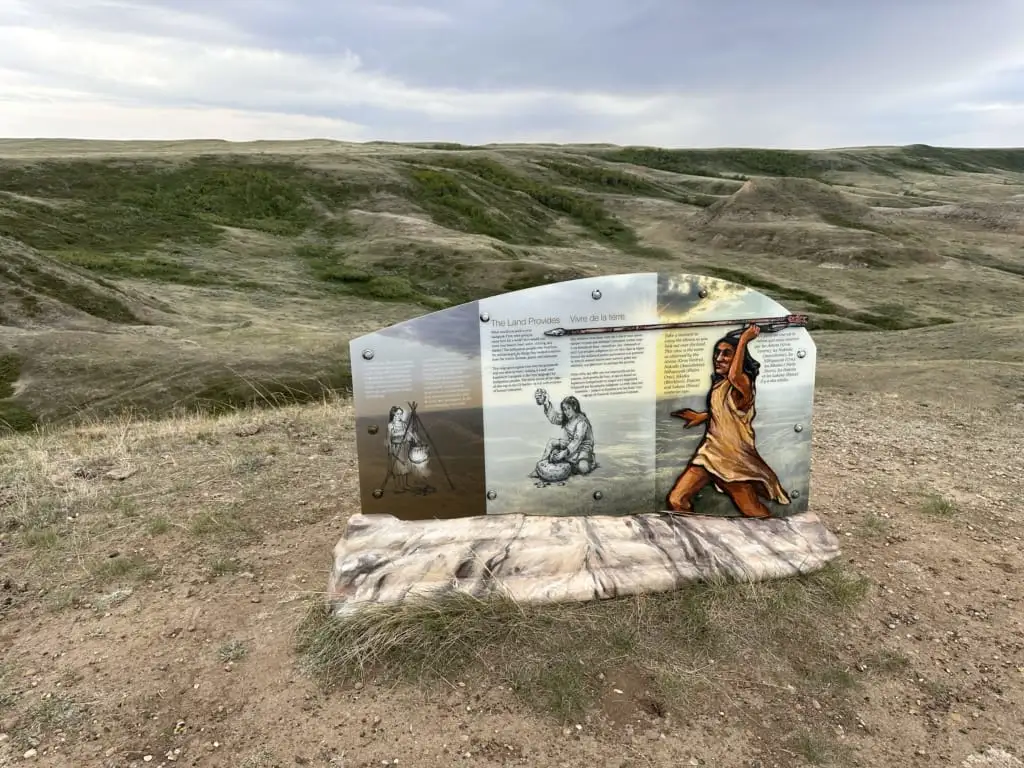
Grasslands National Park is the traditional Indigenous territory of the Metis, Nakoda (Assiniboine), Nehiyawak (Plains Cree), Niitsitapi (Blackfoot), Dakota and Lakota (Sioux). Historically, these Nations followed the bison migration through the region.
Once the bison were hunted into extinction, Indigenous people moved elsewhere. The Wood Mountain Lakota First Nation Reserve near East Block is home to some of the remaining Indigenous people in the area.
You can still see lots of evidence of Indigenous culture in Grasslands National Park. The most obvious examples are over 20,000 tipi rings found throughout the park. These circles of rocks mark the locations where tipis were erected in summer and winter camps.
Final Thoughts
Canada is a huge place, and the Rocky Mountains and coastlines seem to dominate travel media. We tend to skip over the middle of the country… and that’s a real shame.
I loved my time in Saskatchewan, but Grasslands National Park was my favourite. It’s quietly beautiful in a way that invites you to slow down. I loved watching the grass blow in the breeze and the clouds drift past at sunset. I also loved how relaxed Grasslands was – no crowds, no drama!
If you’re looking to get off the beaten path, I encourage you to plan a trip to Grasslands National Park and to Saskatchewan in general. If you have questions about planning your trip, ask in the comments!
READ NEXT:
- 10 Best Things to Do in Saskatchewan
- The Best Things to Do in Saskatoon
- How to Take an Epic Canadian National Parks Road Trip
- Things to Do in Twillingate, Newfoundland: Icebergs, Hiking, and More - August 24, 2026
- 20+ Best Things to do in Squamish, BC (From a Local) - August 22, 2026
- Tenquille Lake Trail Hiking and Backpacking Guide - August 10, 2026